Every myth carries a truth older than the civilization that told it.
Showing 691–700 of 1003
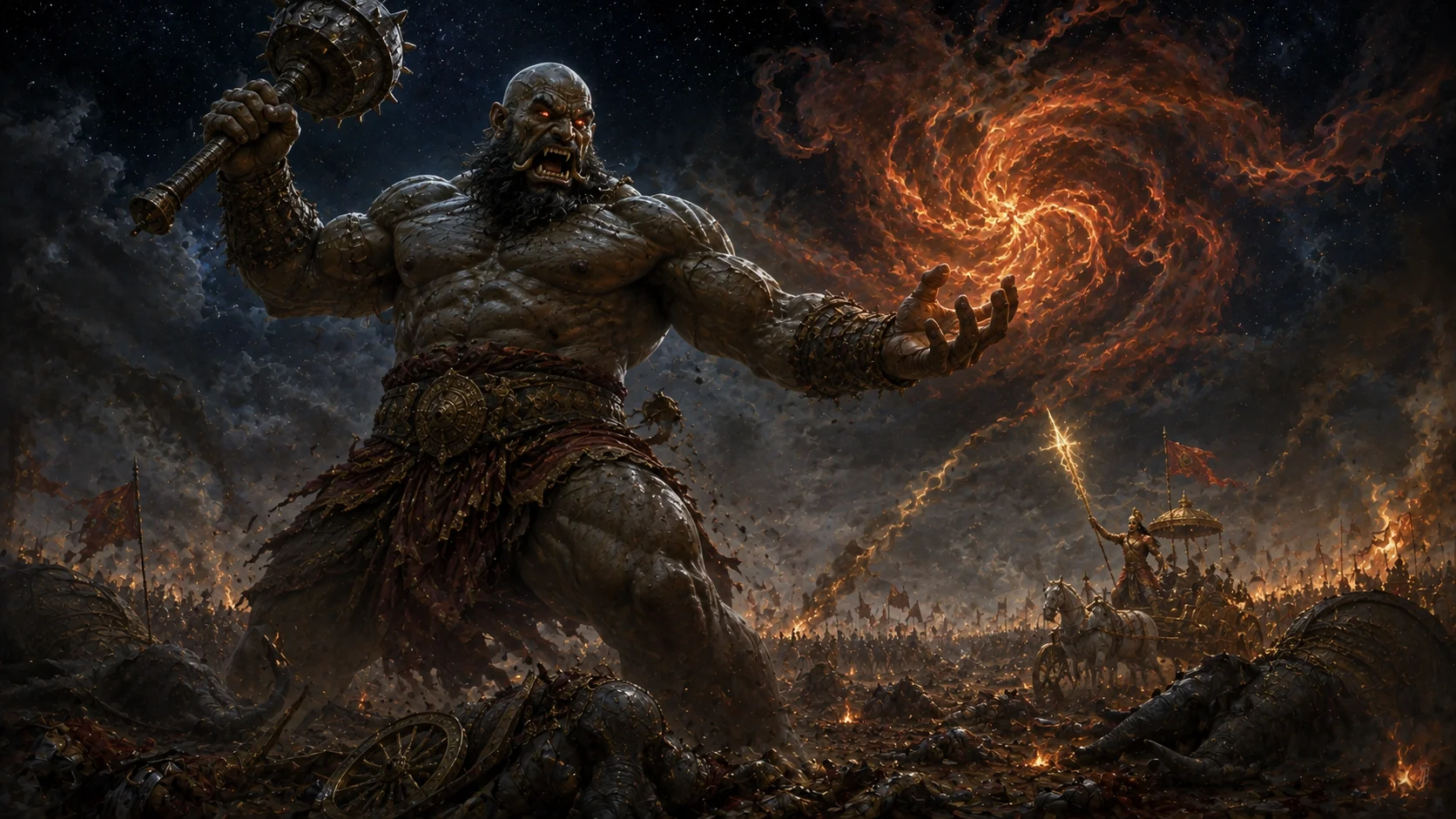
Ghatotkacha — the heroic half-rakshasa giant of the Mahabharata, son of Bhima, whose night-battle rampage forced Karna to spend his infallible spear,
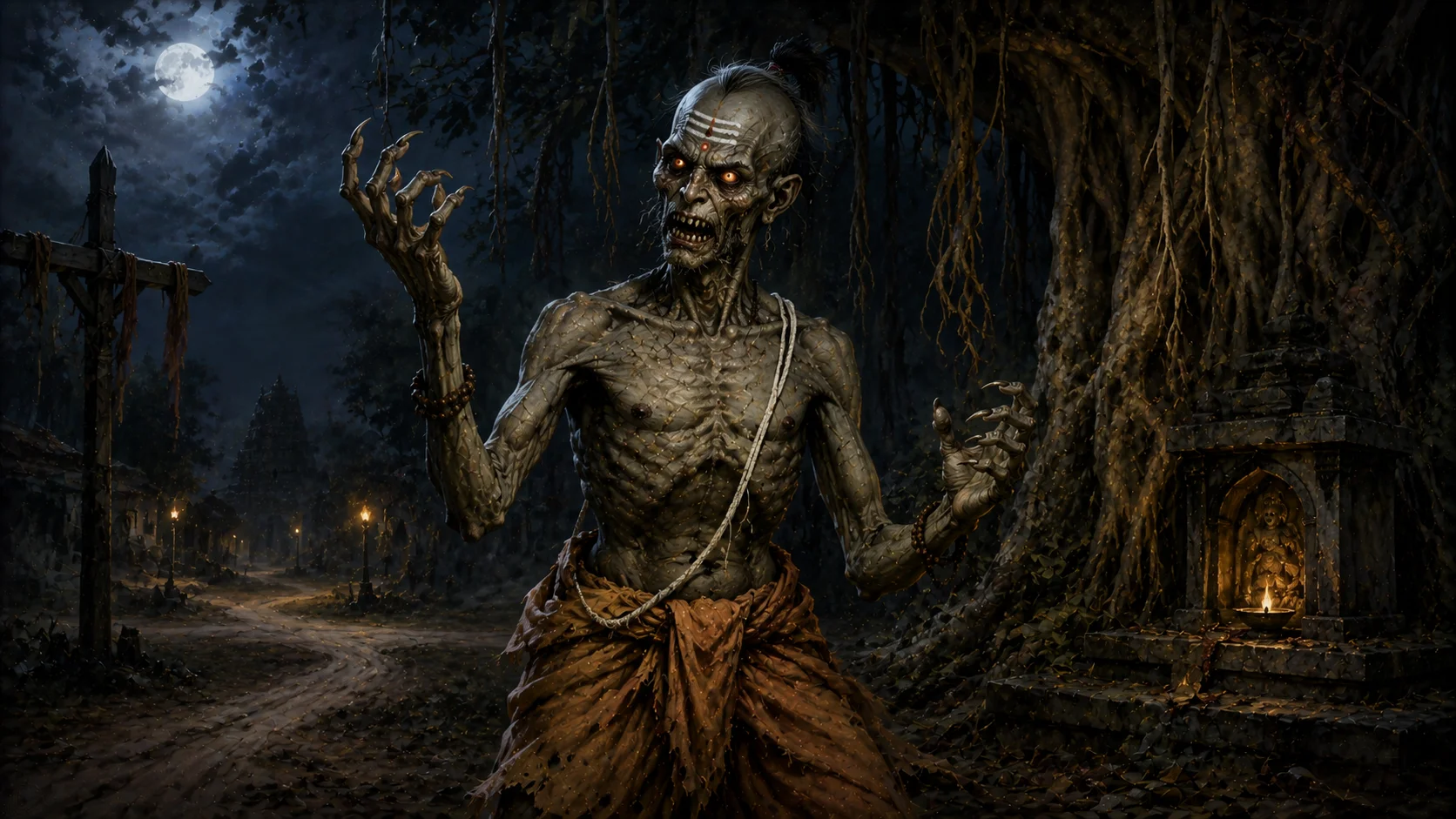
The brahmarakshasa — the wrathful ghost of a learned brahmin who misused sacred knowledge, blending demon cruelty with scholarly power, feared above all
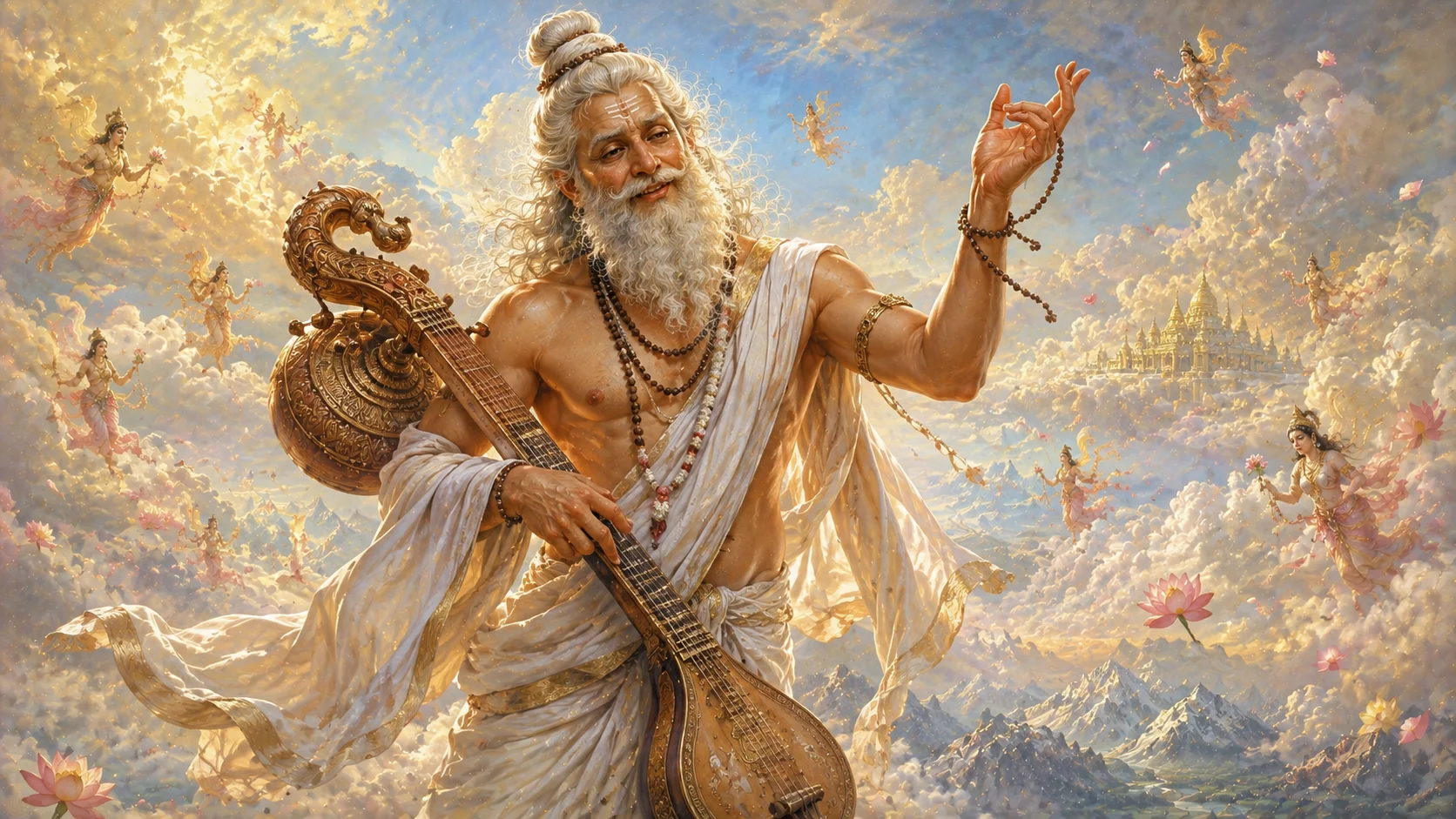
Narada Muni — the vina-playing divine sage, mind-born son of Brahma and supreme devotee of Vishnu, whose mischievous interventions set countless Hindu
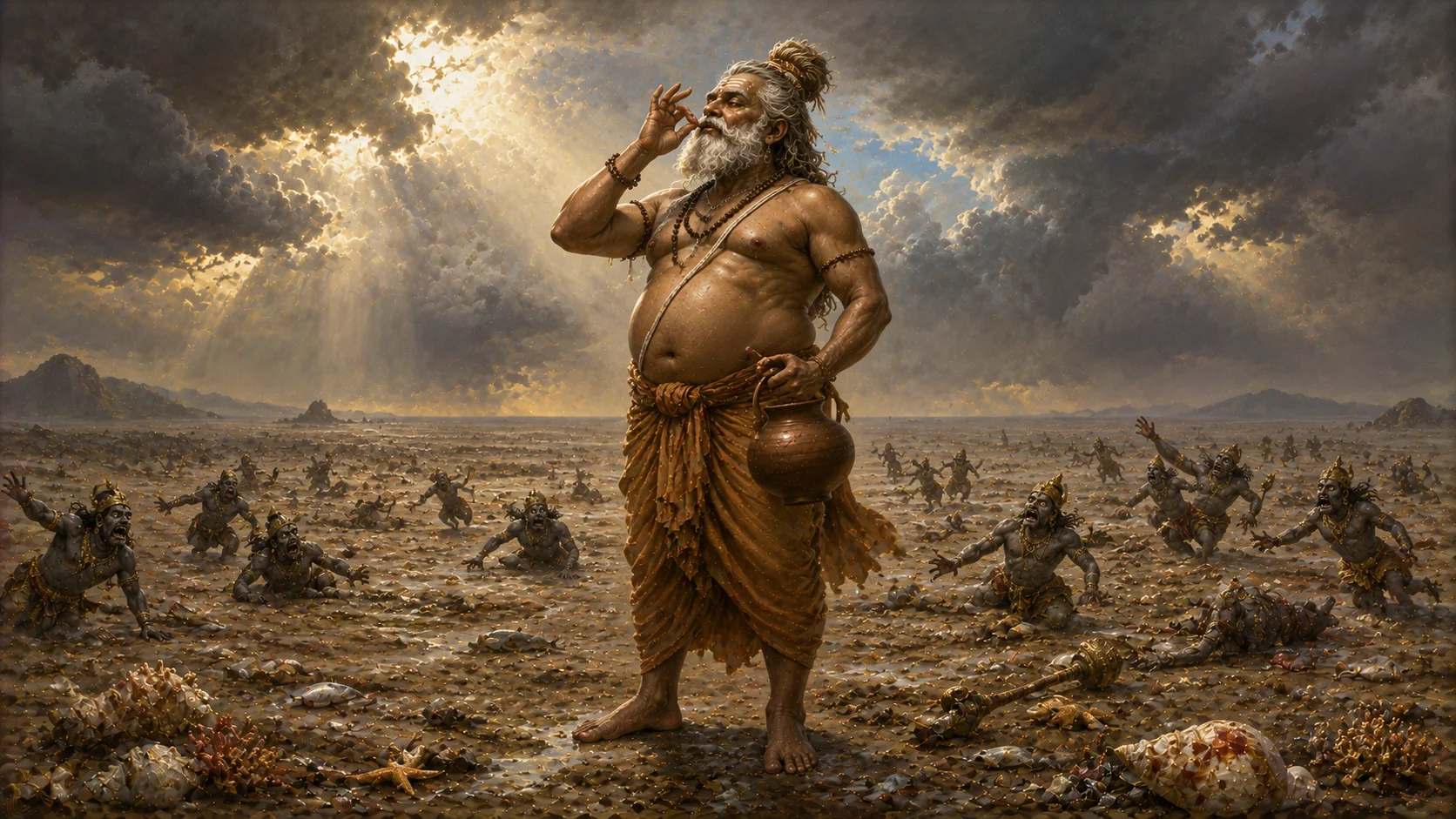
Agastya Muni — one of the seven saptarishi who drank the ocean dry, humbled the Vindhya mountains, carried the Vedas south, and founded Tamil grammar and
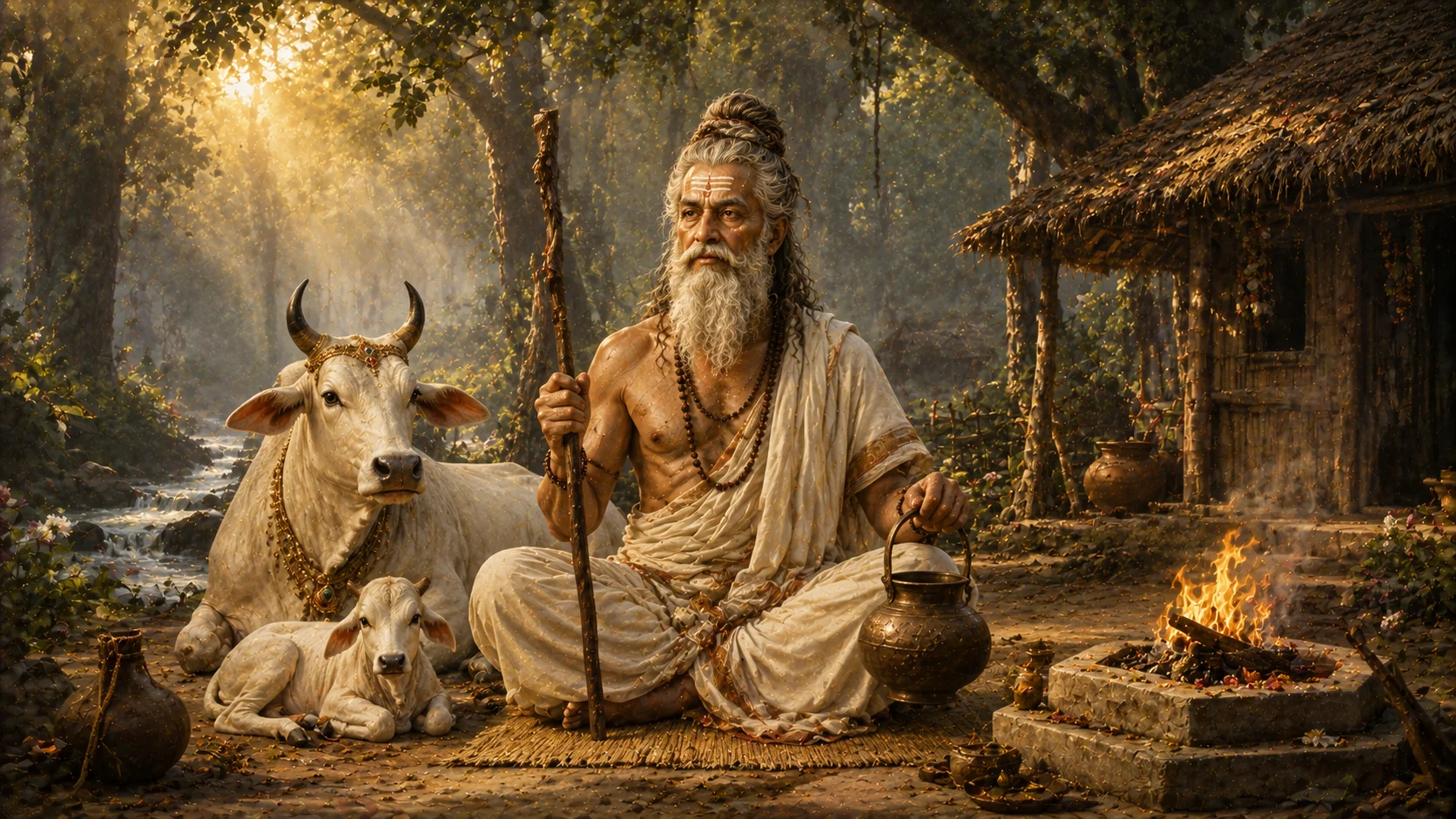
Vasishtha — greatest of the seven saptarishi, guru of Rama's solar dynasty and owner of the wish-cow Nandini, whose serene forbearance against Vishvamitra
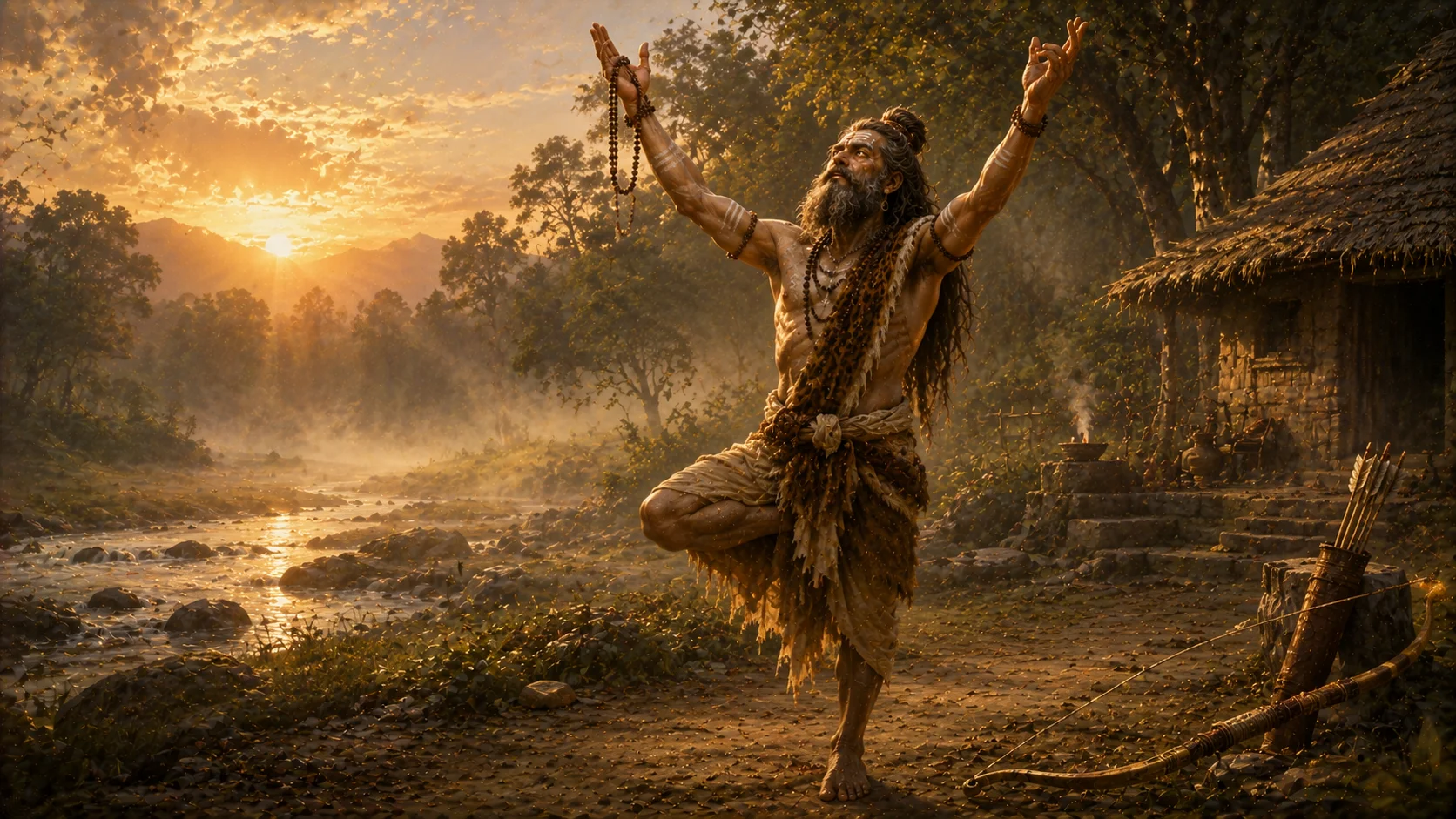
Vishvamitra — the warrior-king who renounced his throne and won the rank of Brahmarishi through fierce penance. Seer of the Gayatri Mantra, builder of a
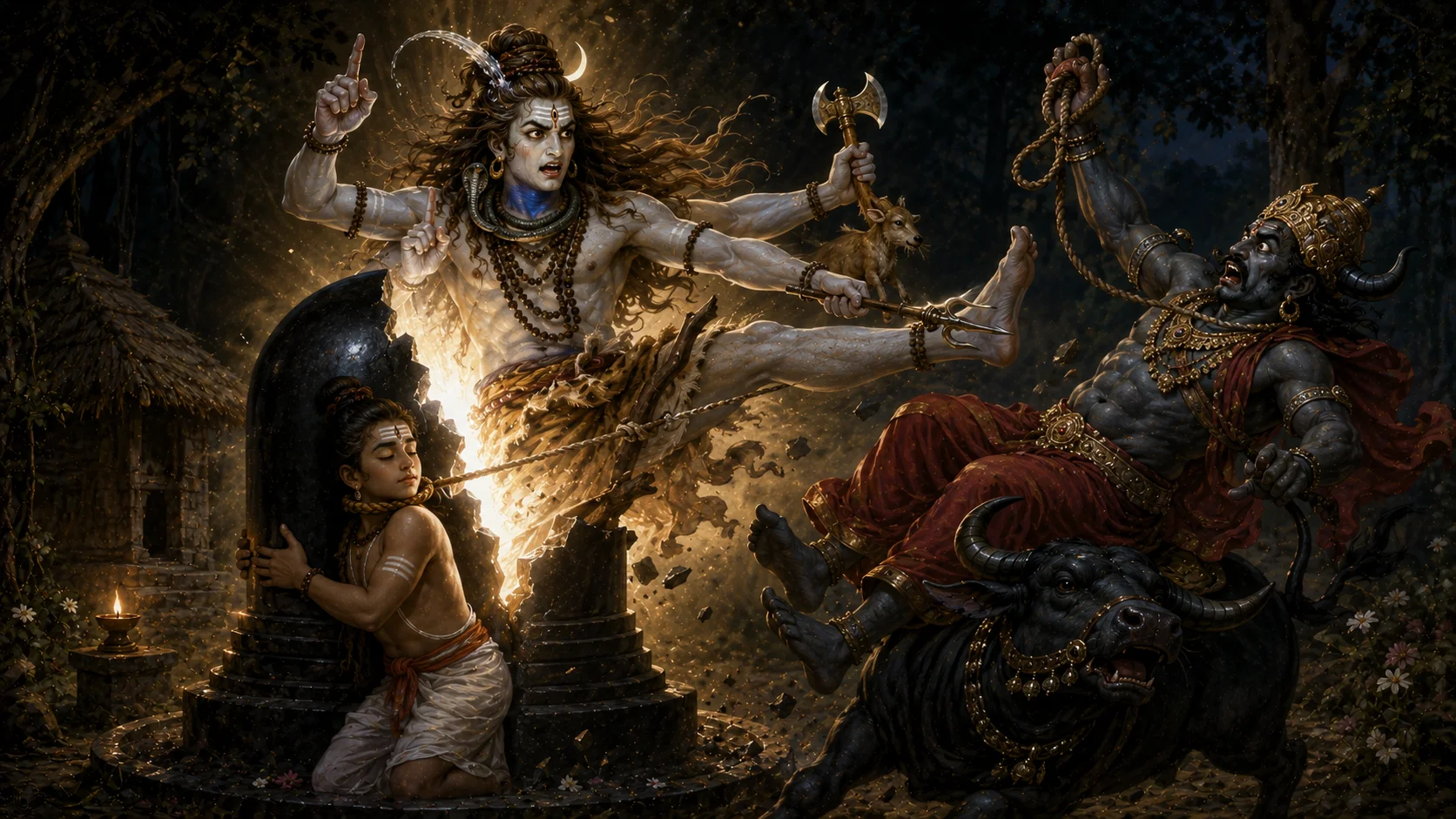
Markandeya — the boy-sage whose devotion led Shiva to defeat Yama and grant him eternal youth. The deathless witness who survives cosmic dissolution and
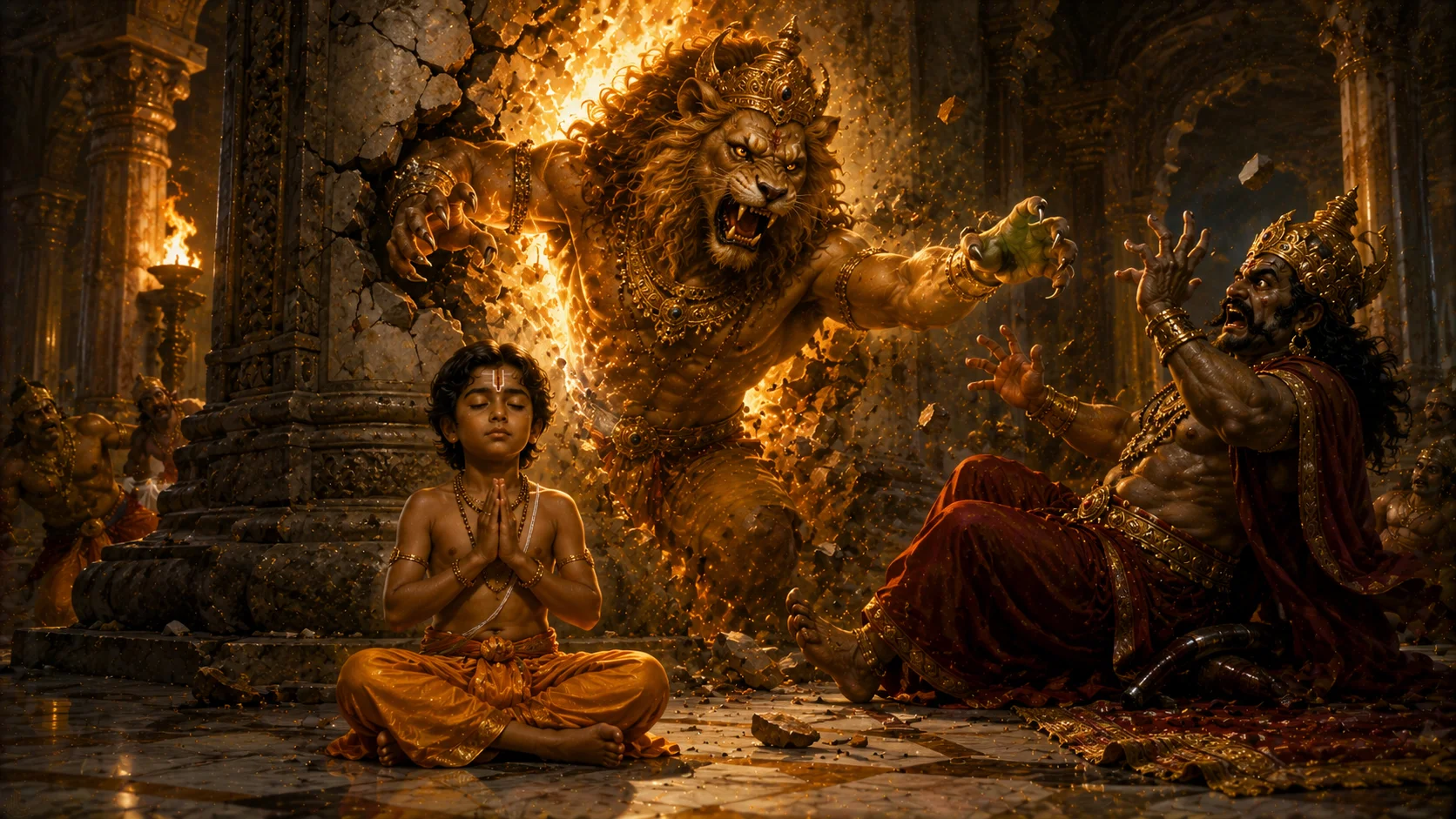
Prahlada — the asura boy-saint whose unbreakable devotion to Vishnu survived every torture his demon-father devised, summoning the man-lion Narasimha. His
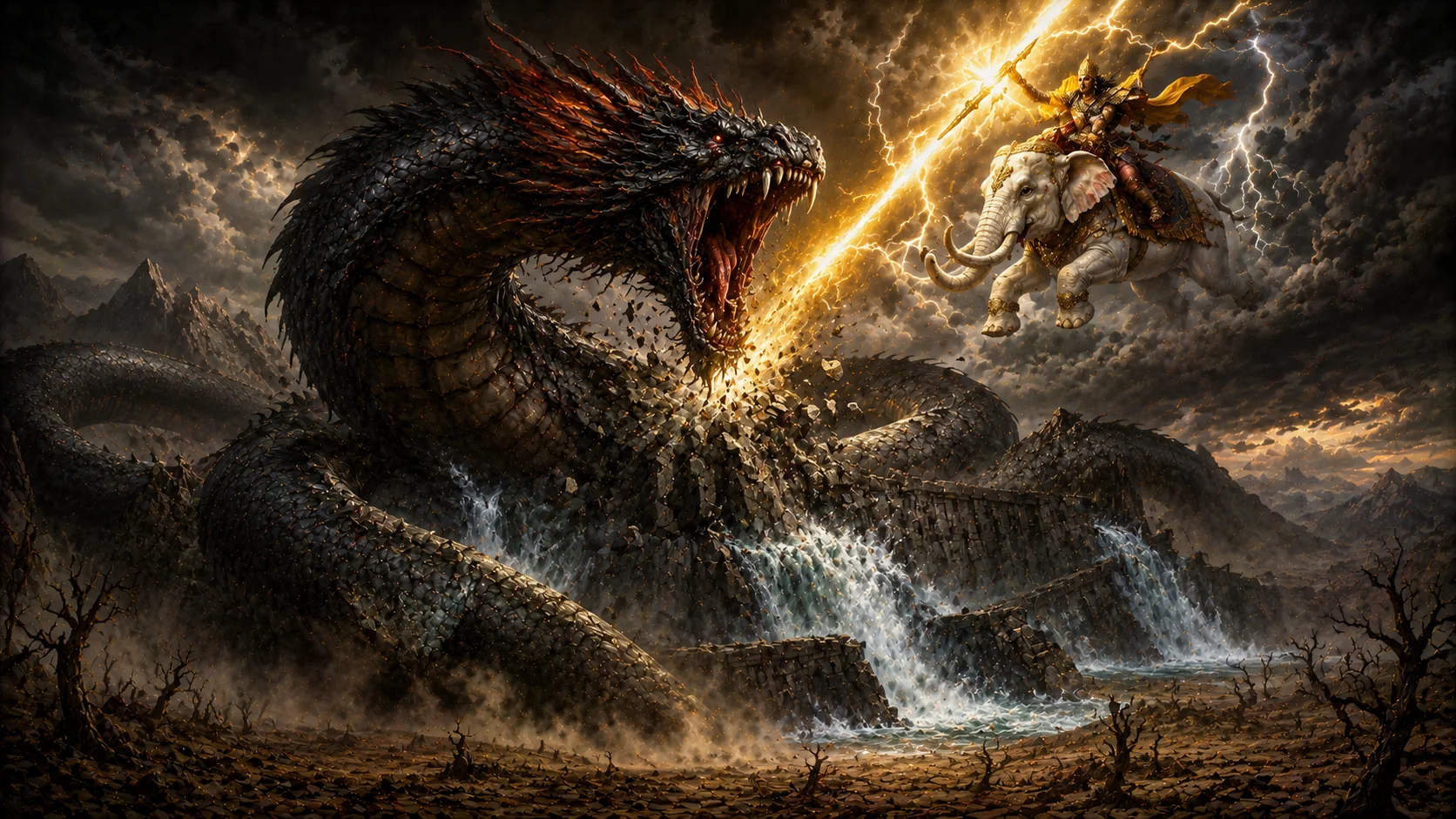
The myth of Vritra: the great serpent-demon of drought in Hindu myth, the cosmic dragon who imprisoned the world's waters, coiling around the mountains to
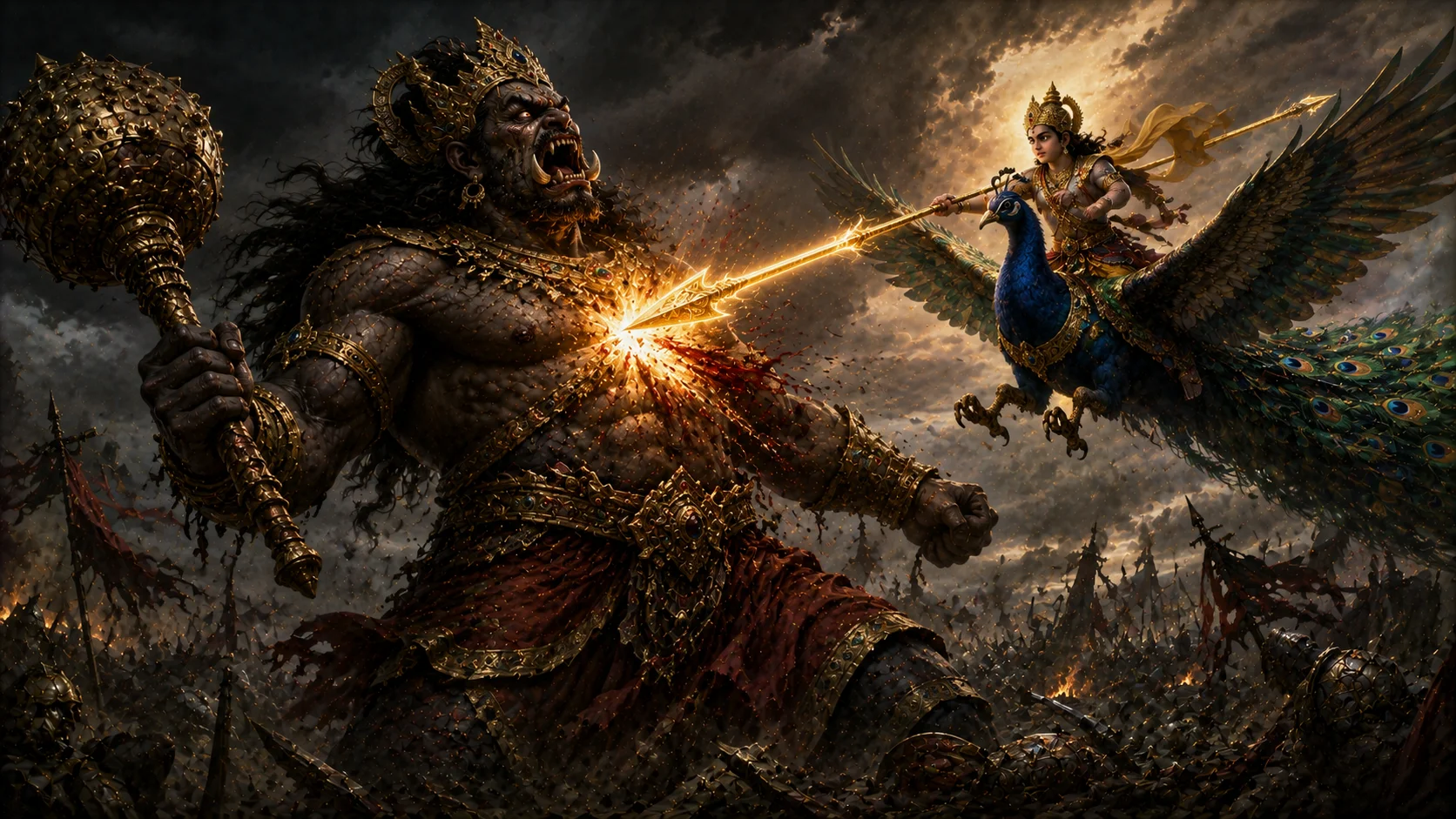
Tarakasura wrung from Brahma a boon that only a son of Shiva could kill him — forcing the gods to engineer the birth of the war-god Kartikeya, his