Every myth carries a truth older than the civilization that told it.
Showing 41–50 of 98
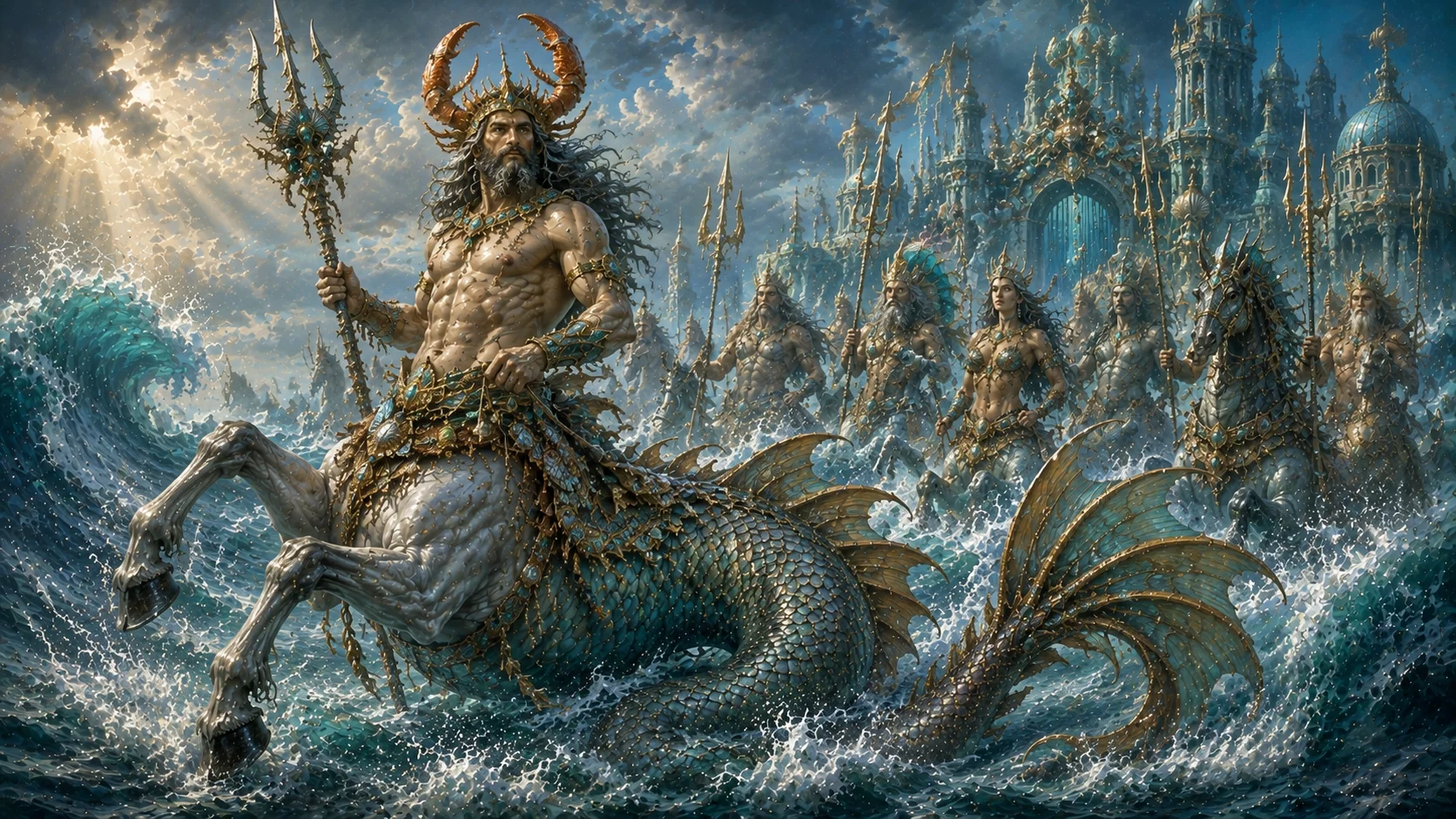
The myth of the Ichthyocentaurs: gentle sea-centaurs with a man's torso, horse's forelegs and fish's tail. The brothers Aphros and Bythos, half-brothers
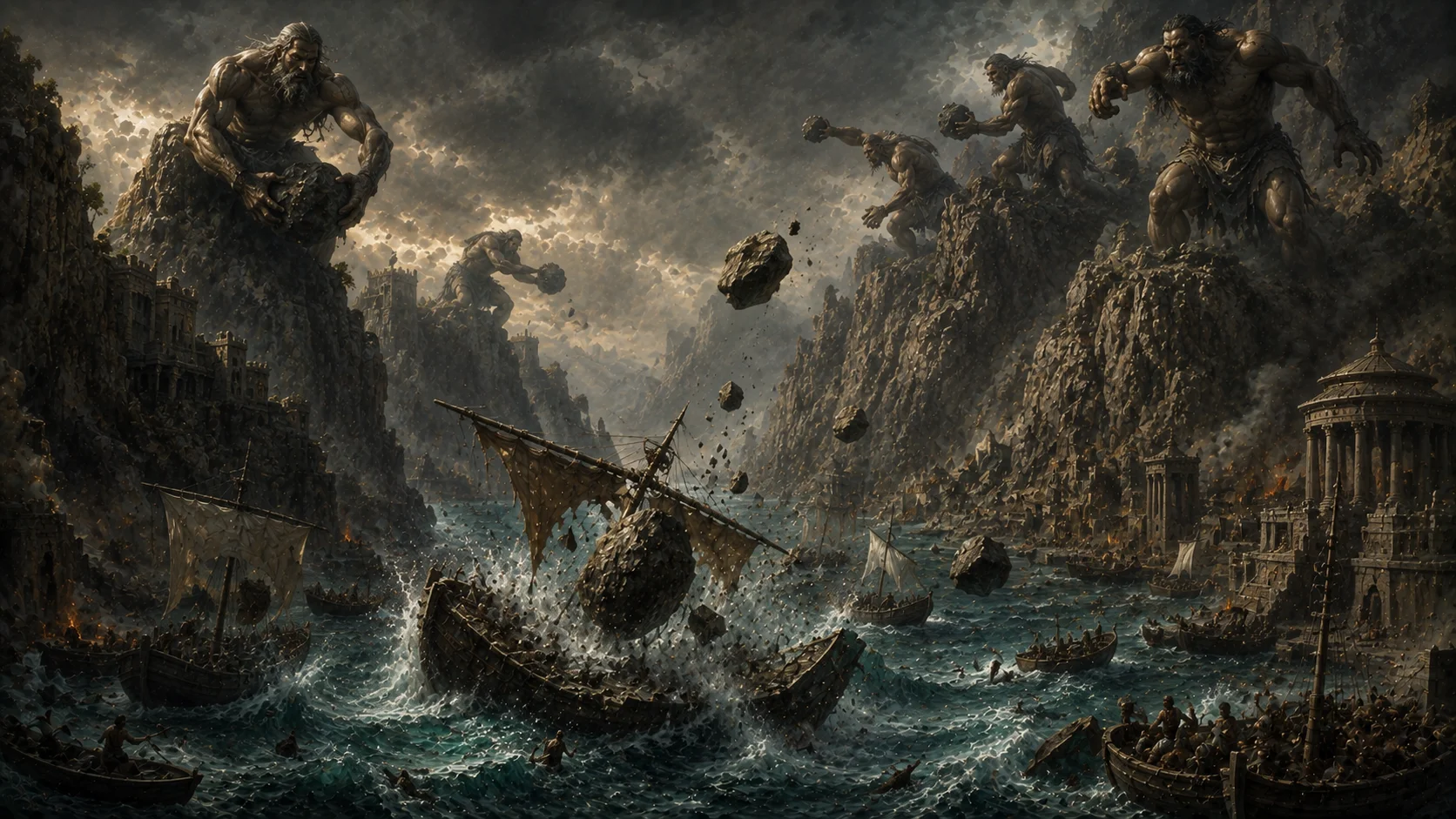
The myth of the Laestrygonians: a race of giant man-eating cannibals ruled by King Antiphates who destroyed eleven of Odysseus' ships in their
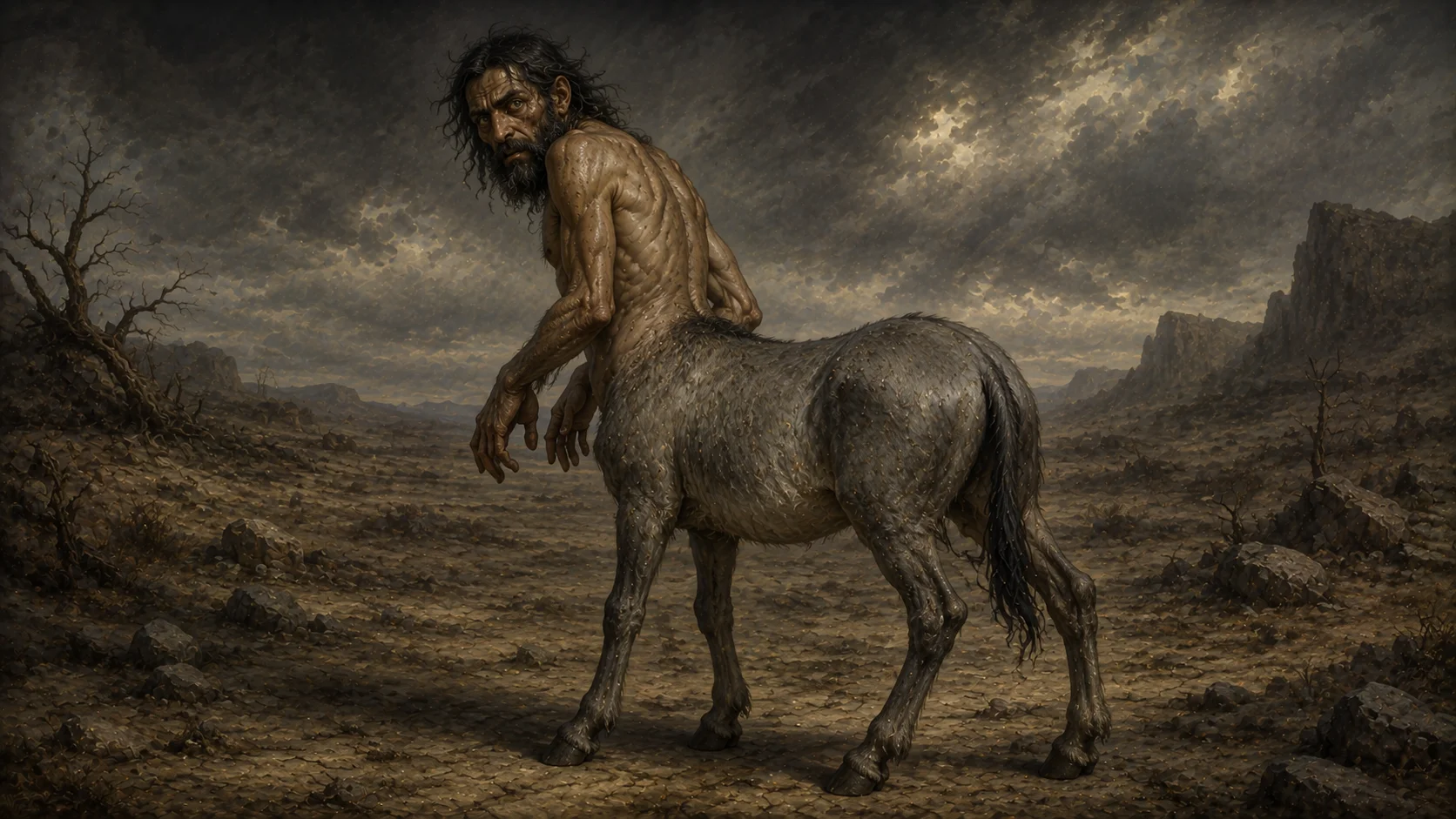
The myth of the Onocentaur: a hybrid with the upper body of a man and the body of a donkey, the asinine cousin of the horse-centaur, moralised in the
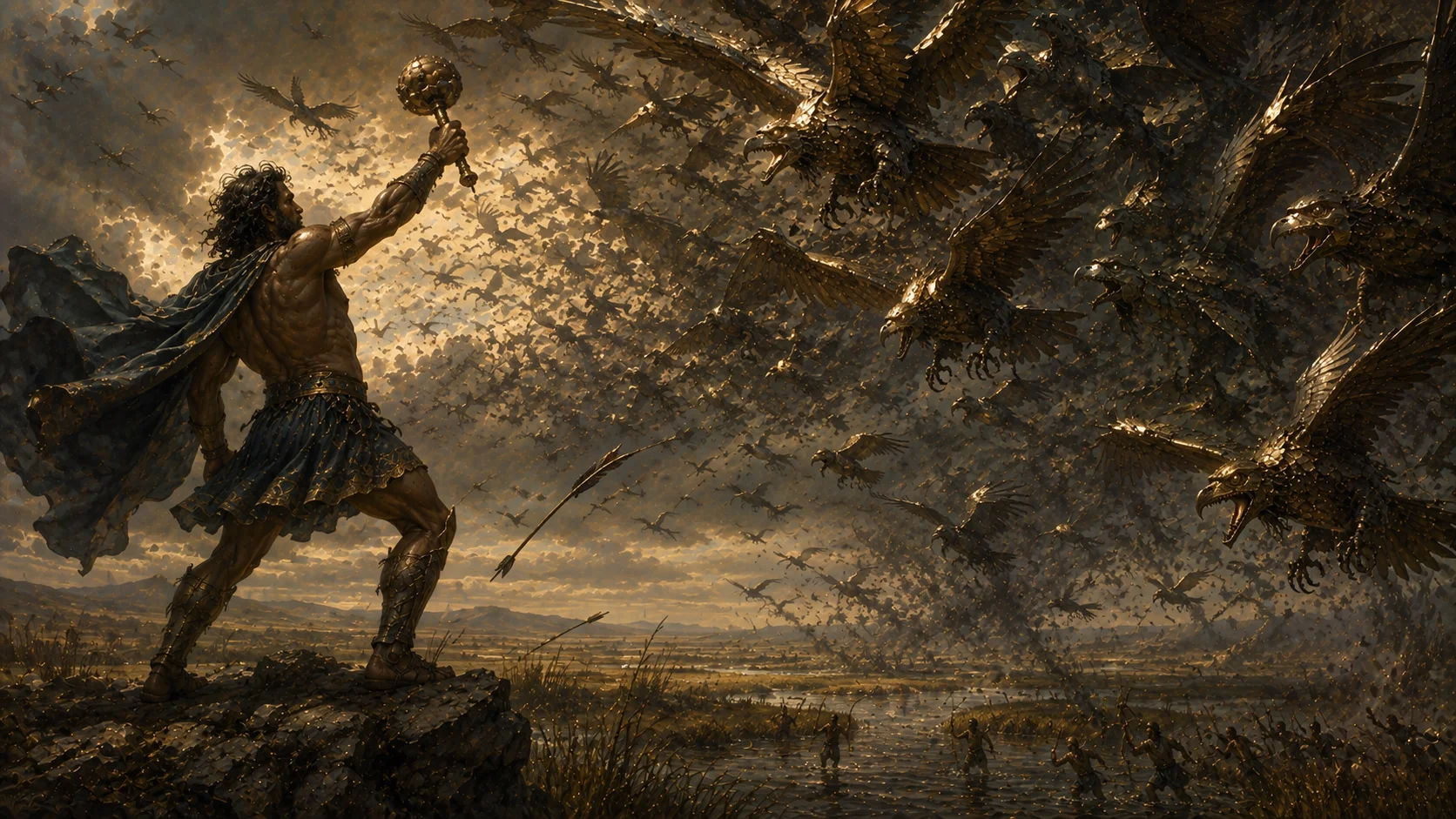
The myth of the Stymphalian Birds: a flock of monstrous man-eating birds with bronze beaks and dart-like feathers infesting Lake Stymphalia, the sixth
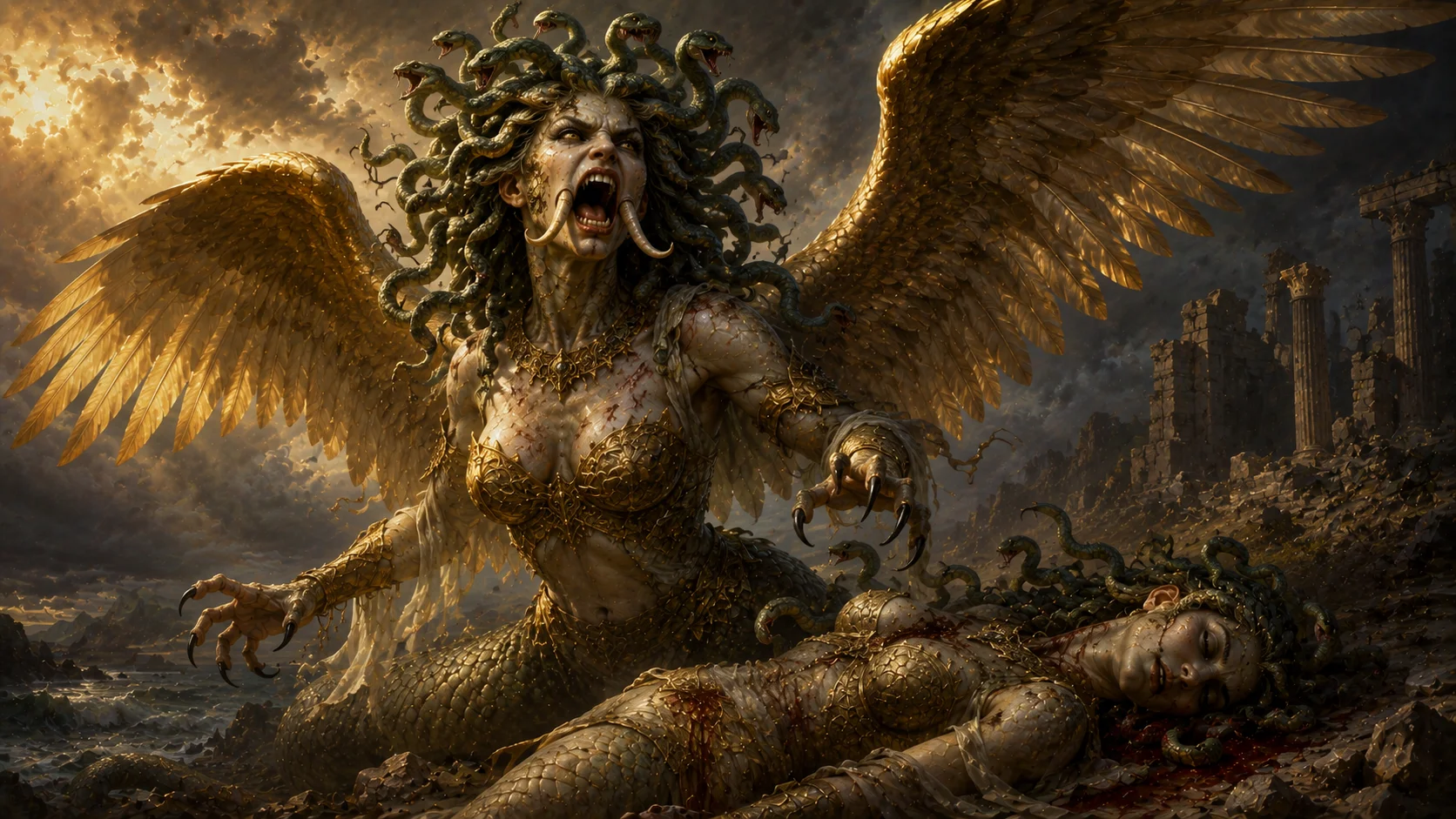
The myth of Stheno: the eldest, immortal Gorgon sister of Medusa, said to be the deadliest of the three, who pursued Perseus after he slew the only mortal
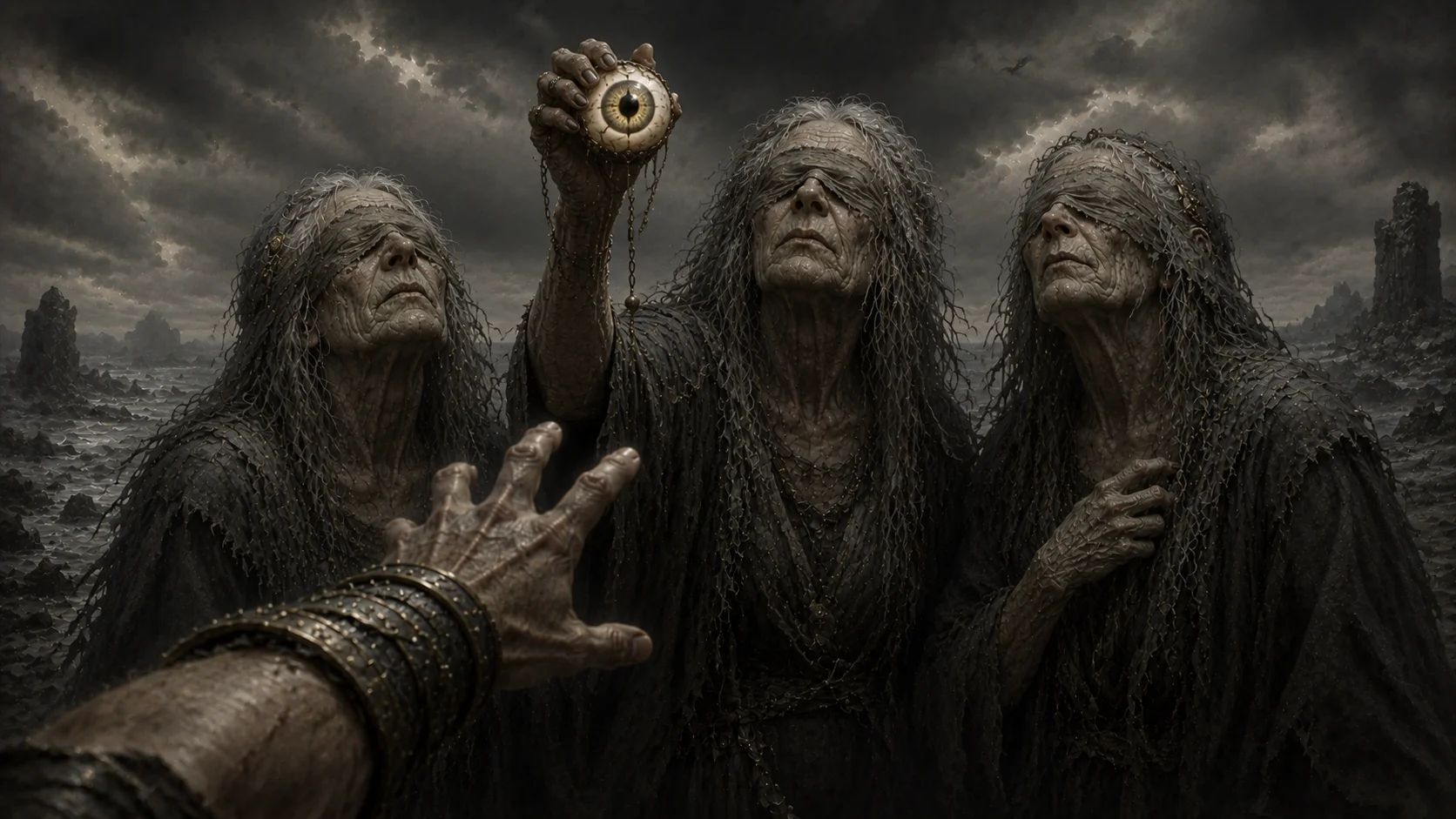
The myth of the Graeae: the three grey-haired witch-sisters of the Gorgons who shared a single eye and tooth, robbed by Perseus at the moment of exchange
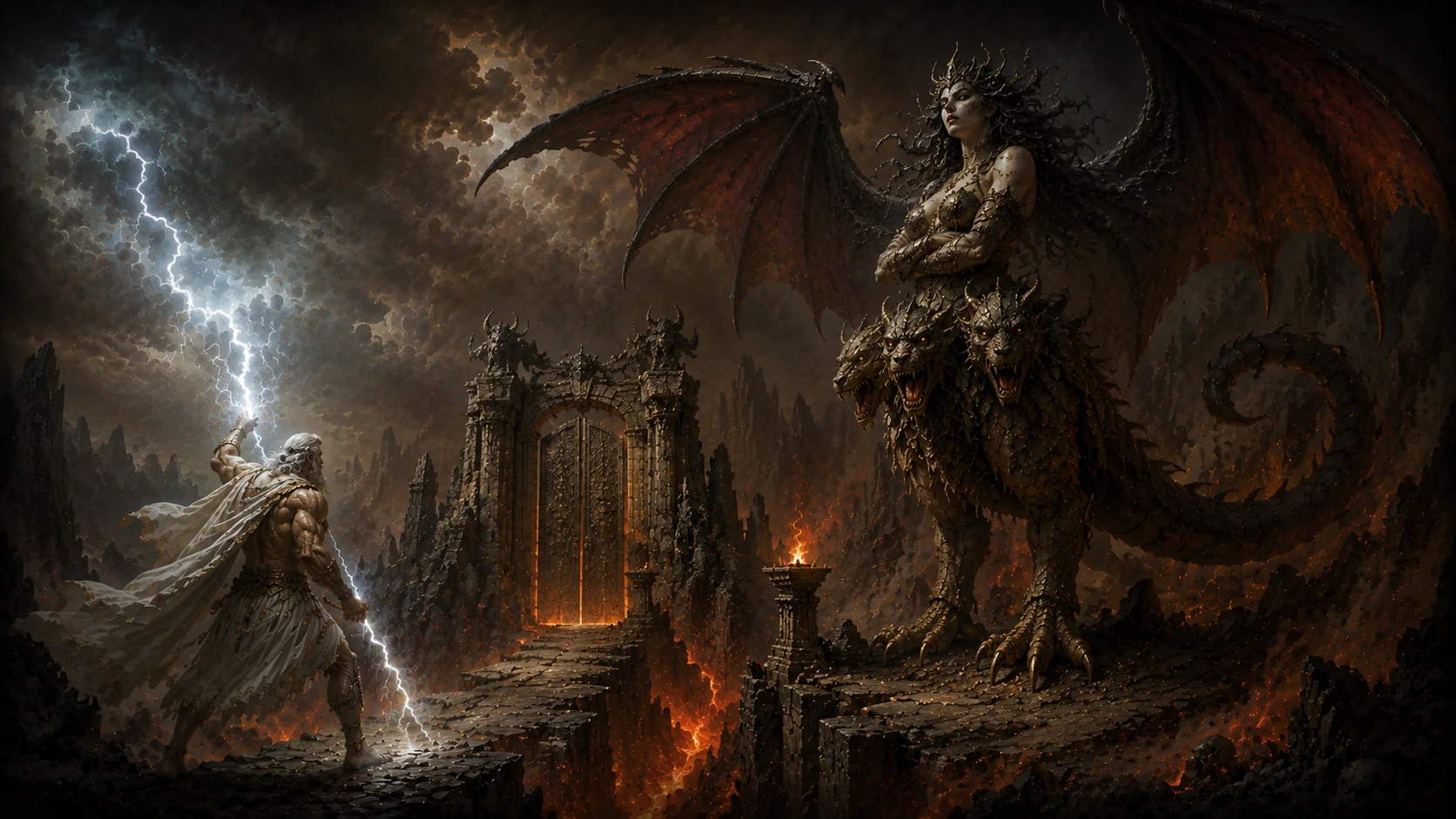
The myth of Campe: the monstrous composite she-dragon Cronus set to guard the Cyclopes and Hundred-Handers in Tartarus, slain by Zeus to free the allies
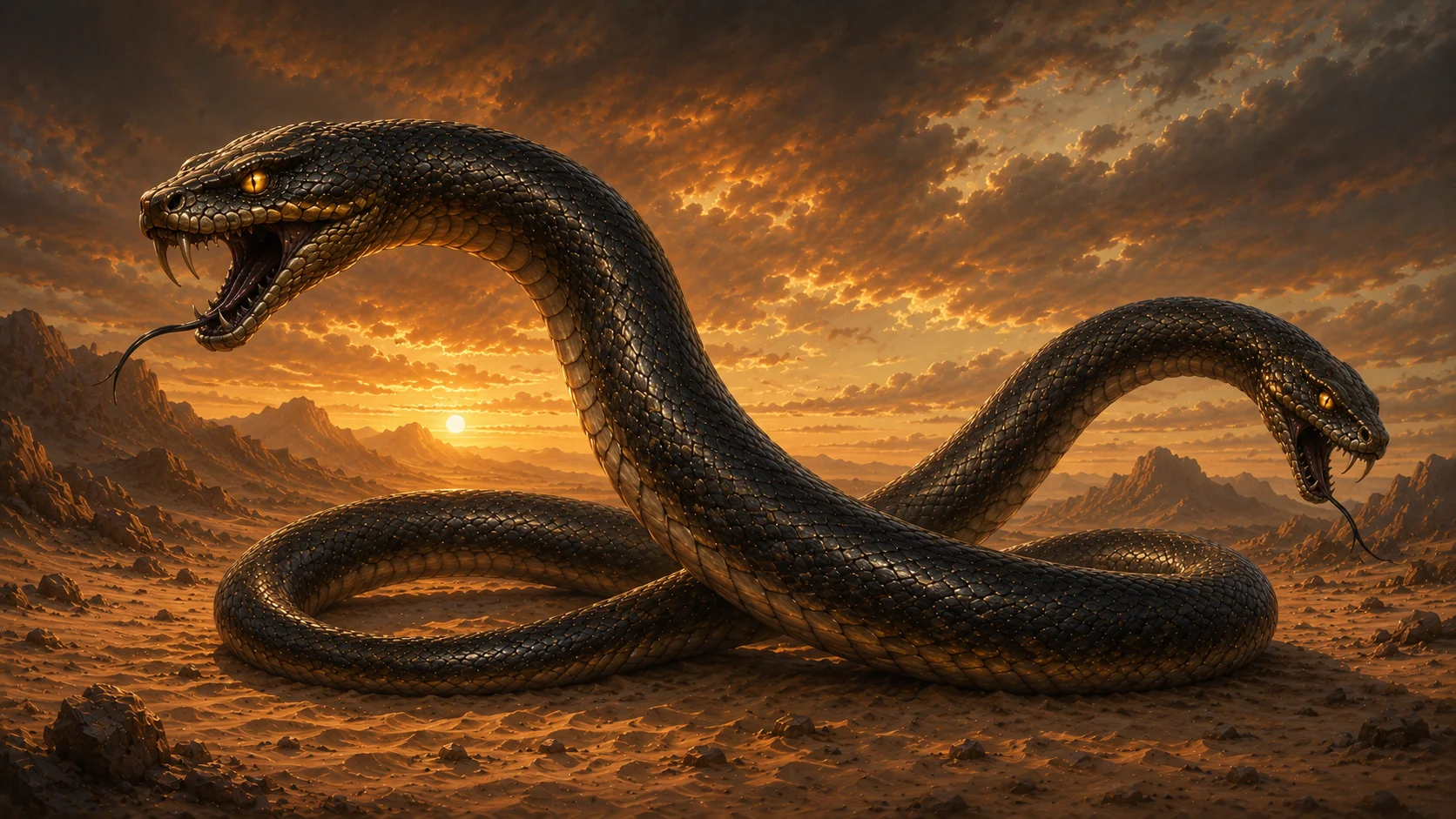
The myth of the Amphisbaena: the venomous serpent with a head at each end, born of Medusa's blood, that moves in either direction and can never be
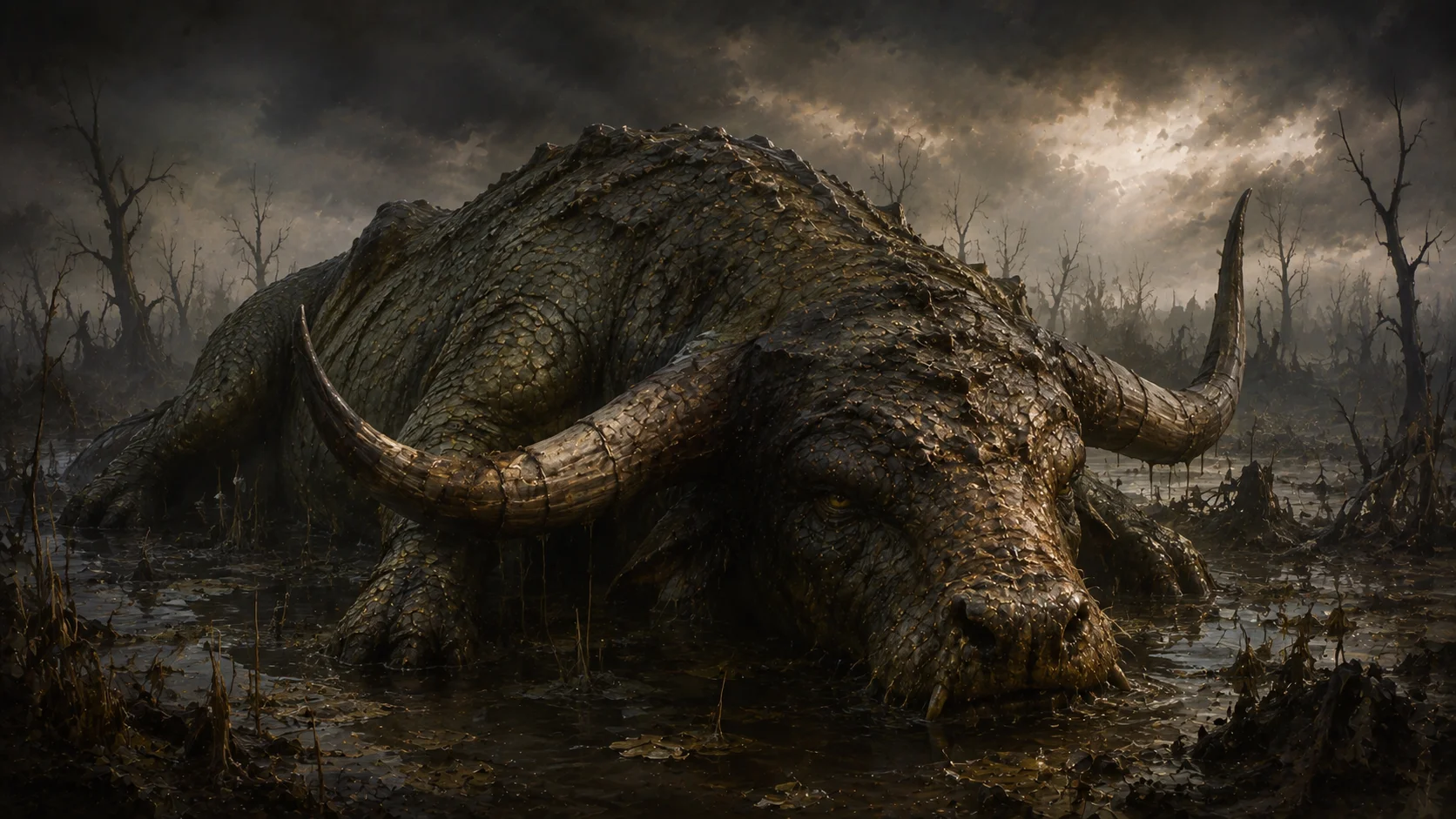
The myth of the Catoblepas: the heavy African beast whose head was too heavy to lift — fortunate, since its downward gaze and poisonous breath killed any
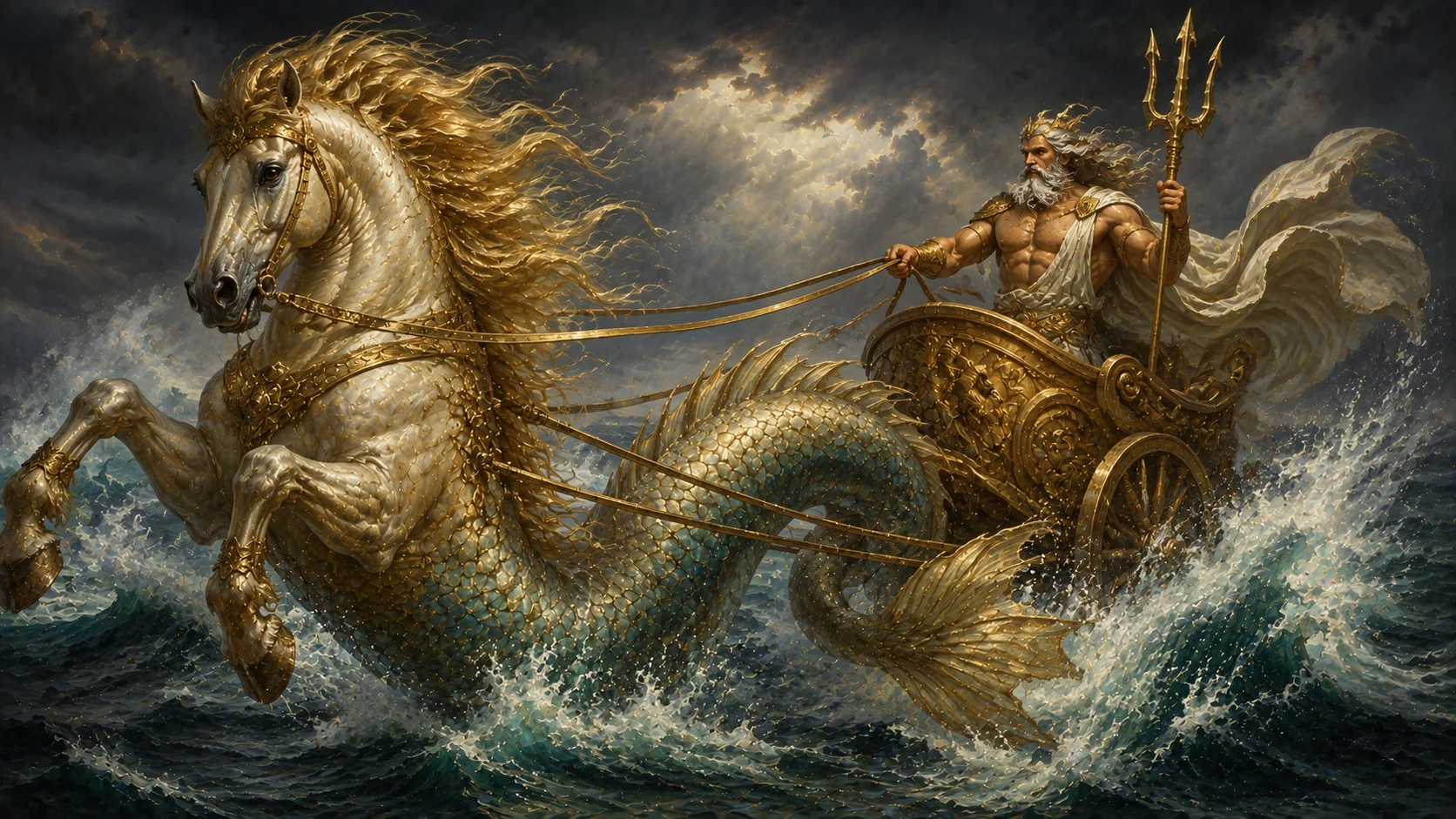
The myth of the Hippocampus: the "sea-horse" with a horse's forequarters and a fish's tail that drew the chariots of Poseidon and the sea-gods — namesake