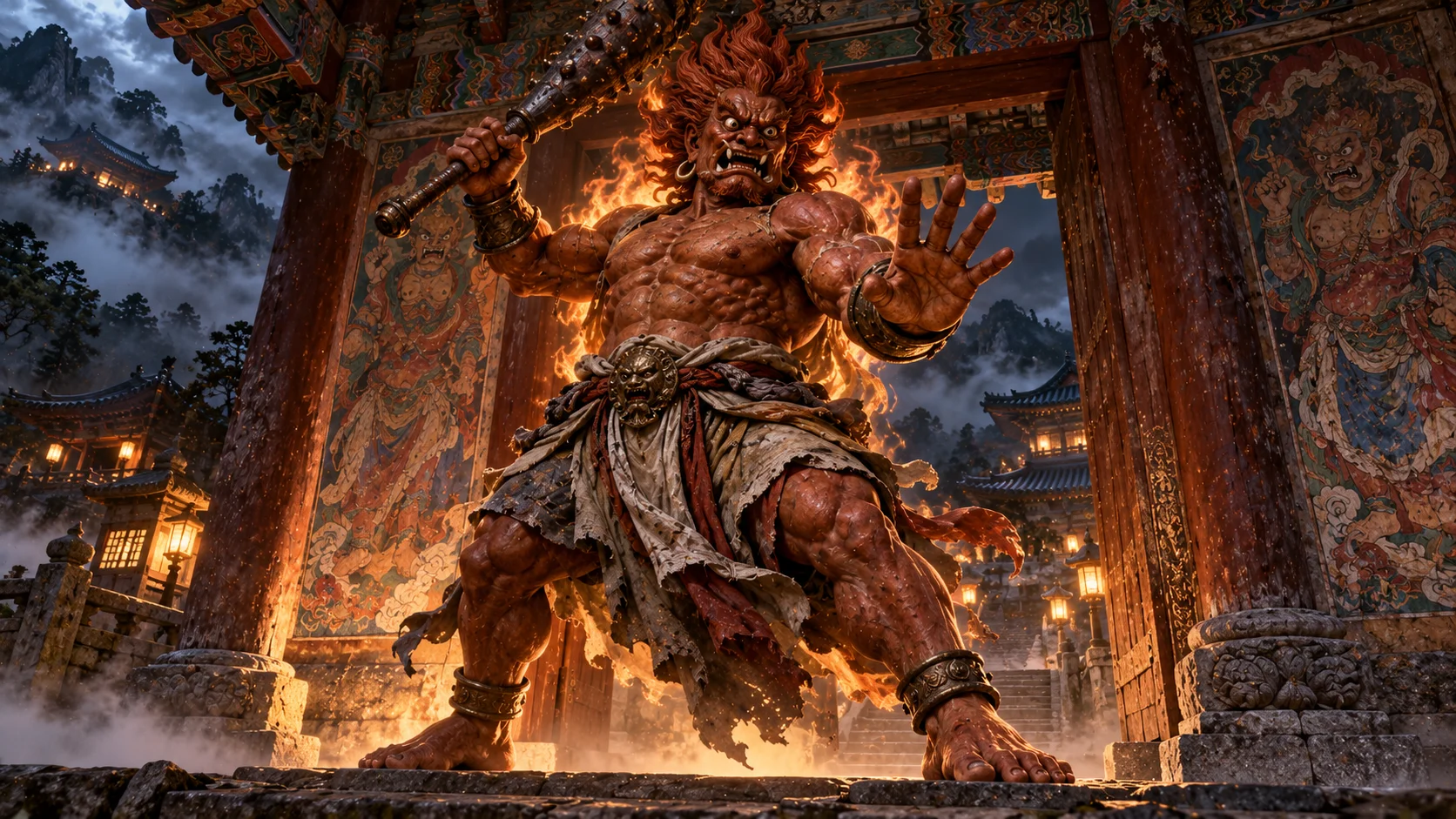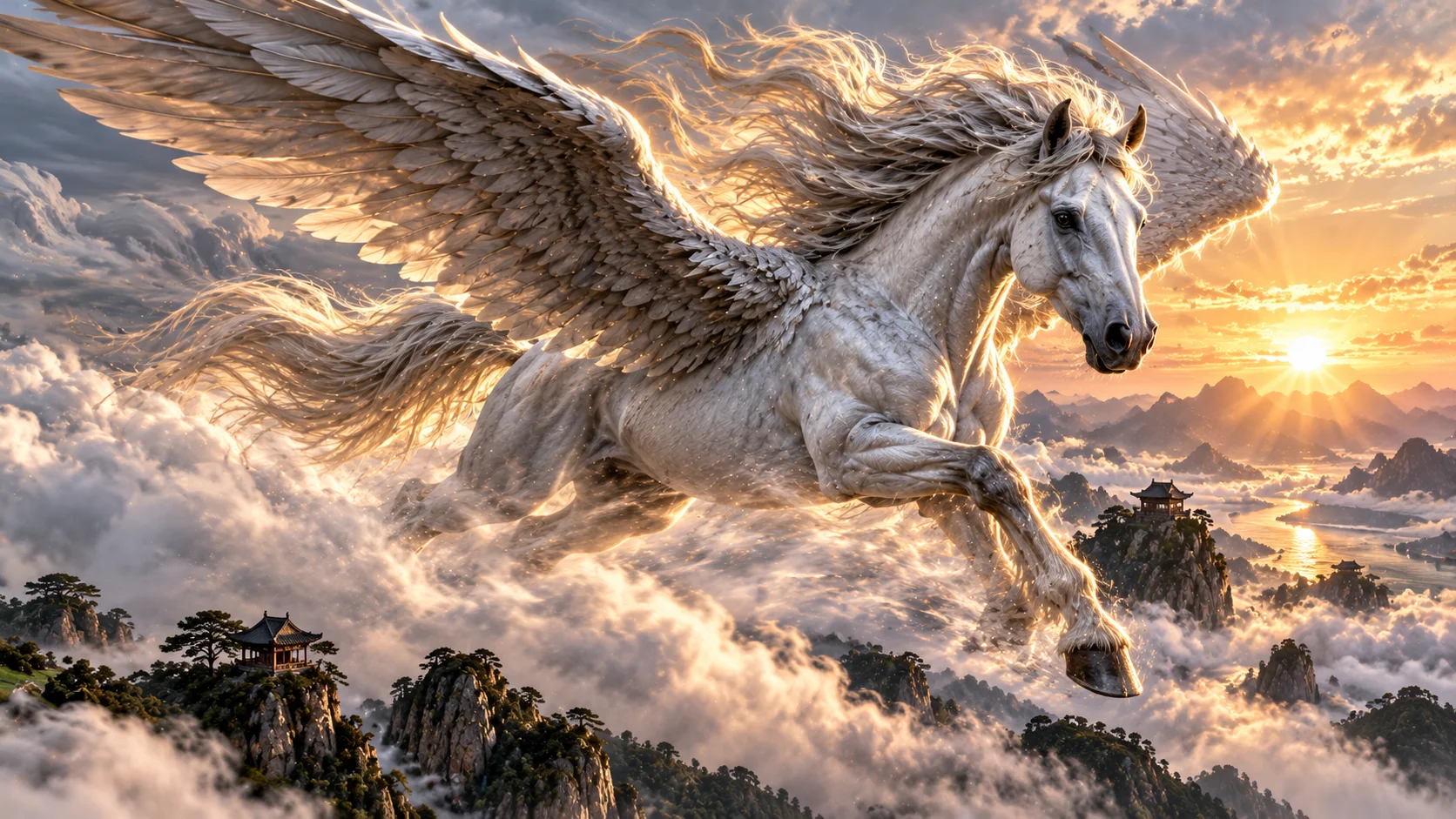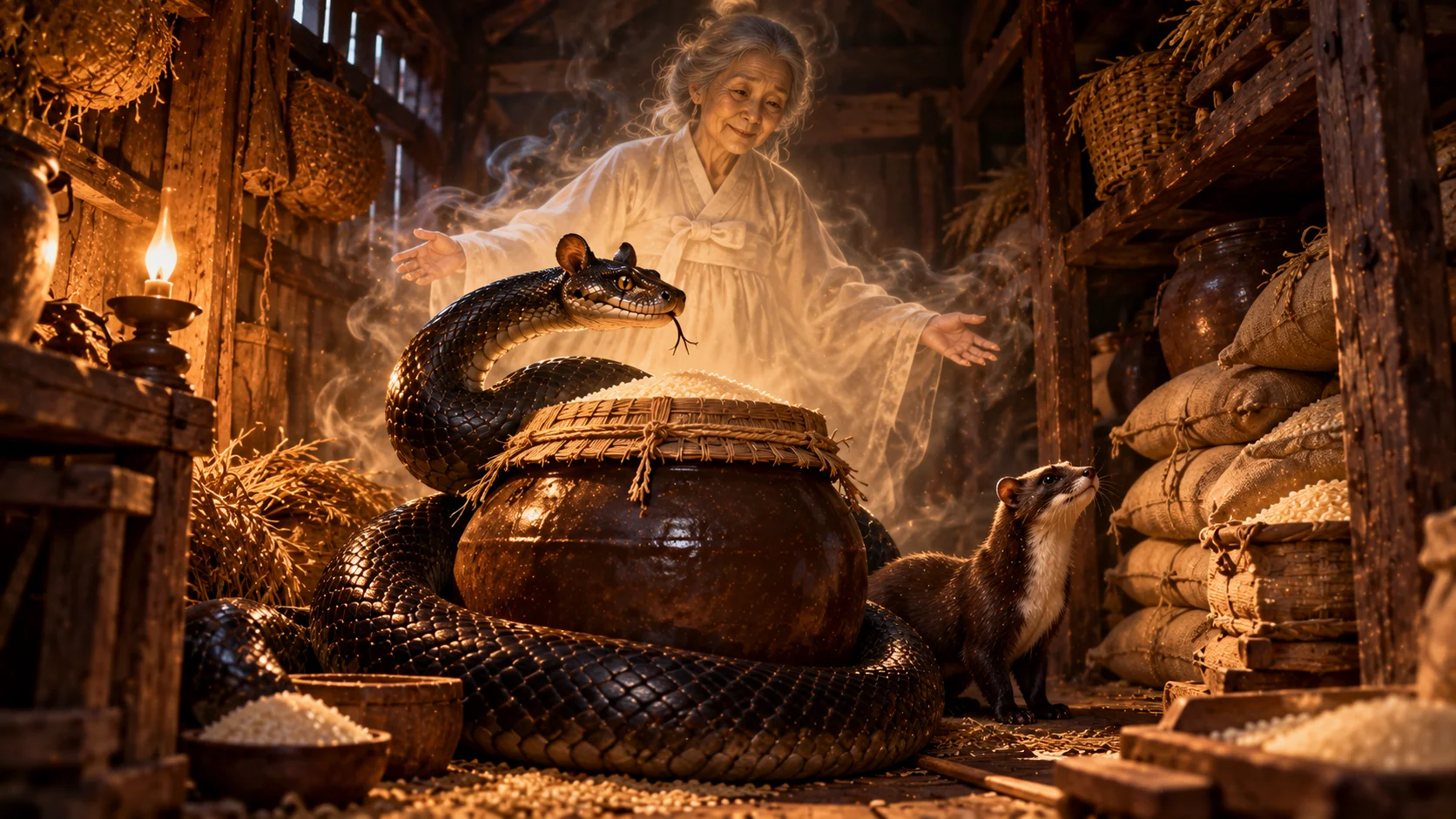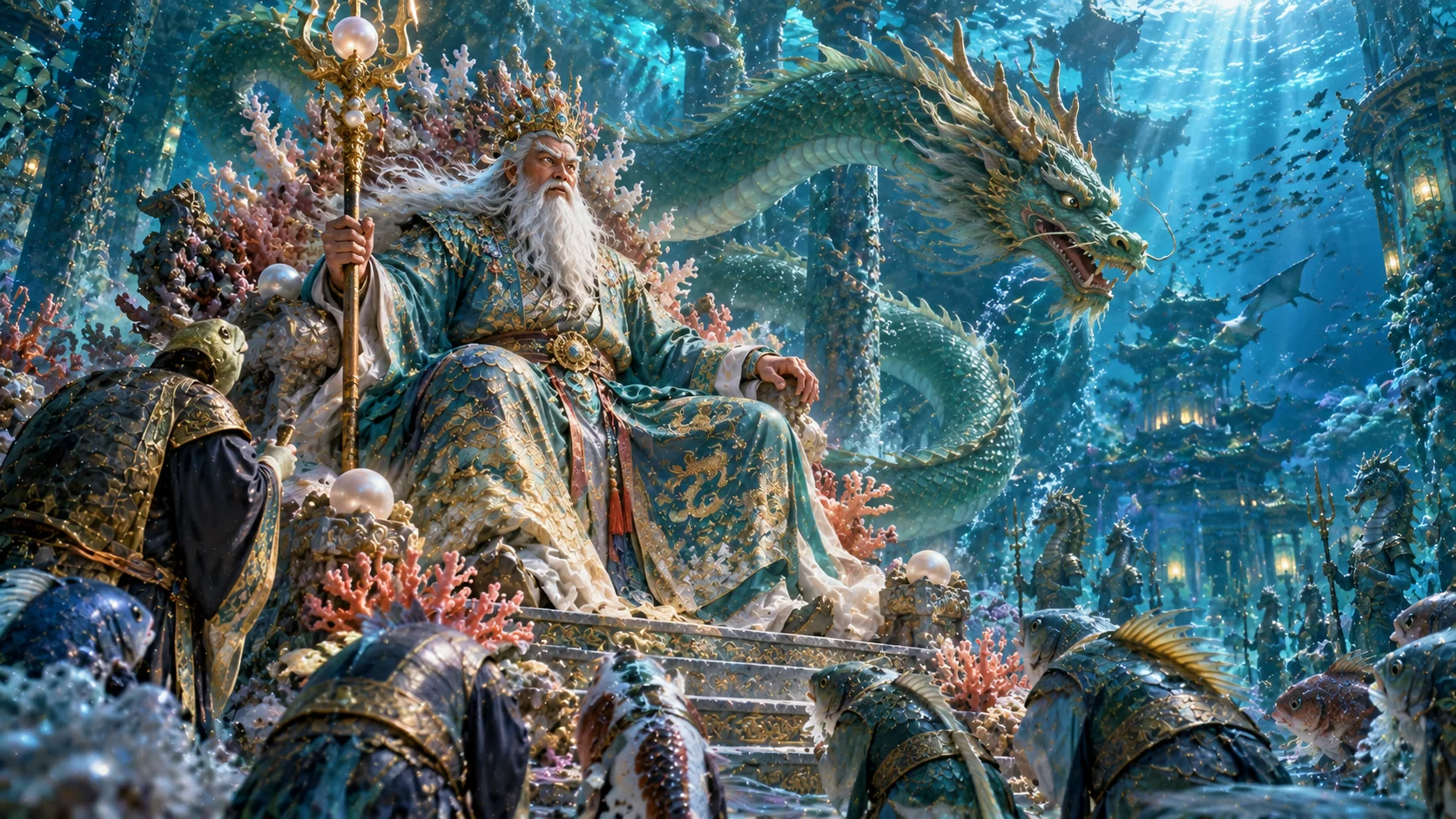
Yongwang (용왕), the Dragon King, is the sovereign of the seas and master of water and rain in Korean belief, ruling every river, lake, and tide. Where the sky belongs to Cheonji-wang and the realm of the dead answers to Yeomra, Yongwang governs the world of water — the element on which a peninsula nation's fishermen, farmers, and sailors have staked their lives for millennia.
Lord of the Waters
Yongwang rules seas, rivers, wells, and rainclouds alike, holding dominion over every surface and depth where water gathers. He is not one god among many equal to him but the single supreme aquatic sovereign of Korean tradition — unlike the fourfold Dragon Kings of the Chinese seas, whom Korean belief absorbed and folded into one crowned ruler.
The Palace Beneath the Waves
Yongwang's court is Yonggung, an undersea palace where the Dragon King is said to hold audience. Korean storytellers describe it as a kingdom hidden beneath the surface, ruled with the authority of any earthly royal court — though the tradition offers little further description of the palace itself.
The Rabbit, the Turtle, and the Dragon King's Illness
Yongwang is the central figure of Korea's beloved Sugungga, also known as the Byeoljubu-jeon — the Tale of the Rabbit and the Turtle. In the story the Dragon King falls gravely ill, and a turtle (or terrapin) is sent to the land to lure a rabbit's liver back to the palace to cure him. The tale endures as both entertainment and allegory — a meditation on loyalty, deception, and the wit of the powerless against the schemes of kings, with Yongwang cast not as a villain but as a suffering monarch whose court's desperation puts an innocent creature at risk.
Invoked at the Shore: Yongwang-gut
Yongwang holds a central place in Korean shamanism, or muism, as one of the major spirits summoned during gut, the shamanic ritual ceremonies performed across the peninsula. Coastal and fishing communities in particular perform Yongwang-gut, a ritual addressed directly to the Dragon King to secure safe voyages and abundant catches. These rites persist not as folklore recitation but as living religious practice, performed by real communities facing the real uncertainty of the sea.
Dawn Offerings on the Coast
Village shrines and rituals honoring Yongwang are still practiced today along Korea's coastline, especially around Jeju Island and other fishing villages. At dawn, offerings of rice cakes and rice wine are carried to the water's edge and given to the sea. This is a living tradition, not a museum piece — an ongoing relationship between coastal communities and the deity they credit with either sparing or claiming their kin.
Rain-Prayers and the Farmer's Dragon King
Because Yongwang commands the clouds as surely as the sea, he became the addressee of Korea's historical rain-prayer rites, the giu-je, performed by farmers and officials alike during drought. This association ties Yongwang as tightly to agriculture and the rhythms of the farming calendar as to the fishing fleets that depend on calm seas.
The Jewel of Authority: Yeouiju
Korean dragon iconography, Yongwang included, centers on the Yeouiju, the wish-fulfilling jewel held in a dragon's claws or mouth. The jewel symbolizes spiritual power, sovereign authority, and command over weather and water — the very attributes that make Yongwang king rather than merely another sea creature. This same jewel is the object of pursuit for a very different kind of water-being: the Imoogi, a creature that has not yet earned the right to hold one.
The Imoogi's Long Wait
Where Yongwang sits crowned in his palace, the Imoogi occupies the opposite end of the same mythic ladder — a giant serpent, a hornless proto-dragon, that must wait in a lake, river, or deep pool for an age often given as a thousand years before it may complete its transformation into a full yong and ascend to heaven.
Swallowing the Wish-Fulfilling Jewel
In most Imoogi tales the creature cannot ascend by patience alone — it requires a catalyst, and that catalyst is almost always the Yeouiju itself. To swallow or obtain the wish-fulfilling jewel is to complete the transformation from serpent to dragon, the same jewel that marks Yongwang's authority once the change is made.
The Fatal Gaze at Sunrise
A widespread motif holds that the Imoogi's ascension fails if a human witnesses the transformation at its critical moment, most often described as sunrise. Being seen at that instant is a fatal taboo: the sighted Imoogi falls back to earth or is destroyed outright. This motif gives Korean Imoogi tales their distinctive tragic register — the creature is not thwarted by a rival or a hero's blade but by the simple, accidental presence of an onlooker.
Kin to the Chinese Jiaolong
The Imoogi is etymologically and functionally linked to the Chinese jiaolong, a hornless flood-dragon that likewise must undergo age and trial before becoming a true dragon. This kinship reflects the broader absorption of Sinitic dragon lore into the Korean mythic landscape, much as Yeomra's role as underworld judge descends from the Sanskrit Yama by way of Chinese Yanluo Wang. Korean cosmology did not develop its water and dragon lore in isolation; it received, translated, and localized continental traditions while giving them a distinctly peninsular shape — Yongwang as a single sovereign rather than four regional kings is itself an example of that localization.
When the Serpent Turns Malevolent
Not every regional telling casts the Imoogi as a sympathetic aspirant. Some legends portray it as inherently cursed or malevolent, guarding hoarded treasure or terrorizing a village's water source until a hero arrives to end its reign of fear. In these versions the Imoogi is closer to a monster than a dragon-in-waiting — a reminder that Korean folklore never insists on a single, uniform account of any being. This contrast sharpens the distinction between the Imoogi and the yong it hopes to become: Korean dragons are traditionally benevolent, wise water deities tied to kingship and rainfall, so a failed or corrupted Imoogi is treated as a genuine tragedy rather than merely another monster meeting its end.
A Vertical Cosmos of Sky, Earth, Water, and Underworld
Set beside Yongwang, the Imoogi's story illuminates a larger structure in Korean myth. Cheonji-wang, the Heaven and Earth King, presides over cosmic origin from the Jeju creation narrative Cheonji-wang Bonpuri, in which he descends to earth and fathers twin sons, Daebyeol-wang and Sobyeol-wang, with the human woman Baekju. Those twins compete in a flower-growing contest to determine who will govern the living and who the dead, a contest Sobyeol-wang wins through trickery — an origin story, myth-tellers say, for the injustice and disorder found in the human world. This creation myth is preserved and transmitted chiefly through Jeju's simbang, the island's shamans, as part of the General Bonpuri cycle recited during the Cheongung-maji ritual.
The Judge Who Reads Every Deed
Beneath the earth, Yeomra presides over the judgment of the dead as King of the Underworld, weighing each soul's fate against the record of its earthly life. He is commonly counted among the Siwang, the Ten Kings of the Underworld, each of whom judges the dead at successive intervals after death, from the first seven days out to the forty-ninth and beyond. Korean Buddhist temple art renders this judgment in the Siwangdo, paintings of the Ten Kings that show Yeomra seated in solemn authority, flanked by demon attendants and scribes recording sin and virtue alike in the ledger known as the saengsabu. Yet Yeomra is not beyond the reach of mortal ingenuity: the Jeju shamanic tale of Gangnim Doryeong tells of a human messenger sent to fetch Yeomra himself into the mortal world to correct a miscarriage of justice, portraying even the King of Hell as a figure who can be summoned, confronted, and outwitted when the moral order demands it.
Four Realms, One Water Kingdom
Together these four figures map a layered Korean mythic universe — Cheonji-wang ruling heaven and cosmic origin, Yeomra ruling the underworld and the judgment of souls, and Yongwang ruling every sea, river, and raincloud between them. The Imoogi belongs to none of these fixed domains; it is a liminal being, a creature of transition occupying the space between the mundane waters Yongwang commands and the divine status the Dragon King has always held. Its long wait in a still pool, its need for the Yeouiju, and its vulnerability to a stranger's glance at dawn all read differently once set against Yongwang's settled, crowned authority — and Korean tradition has kept faith with both figures for centuries, from temple paintings of the Ten Kings to shamans still greeting the sea at sunrise on Jeju's shore.
Sources & traditions
- EncyclopediaWikipedia — Dragon King
- TraditionKorean texts, oral tradition and village tellings
Myths change from area to area and from time to time. This chronicle follows the most widely told versions; tellings in other villages, regions and eras may differ.