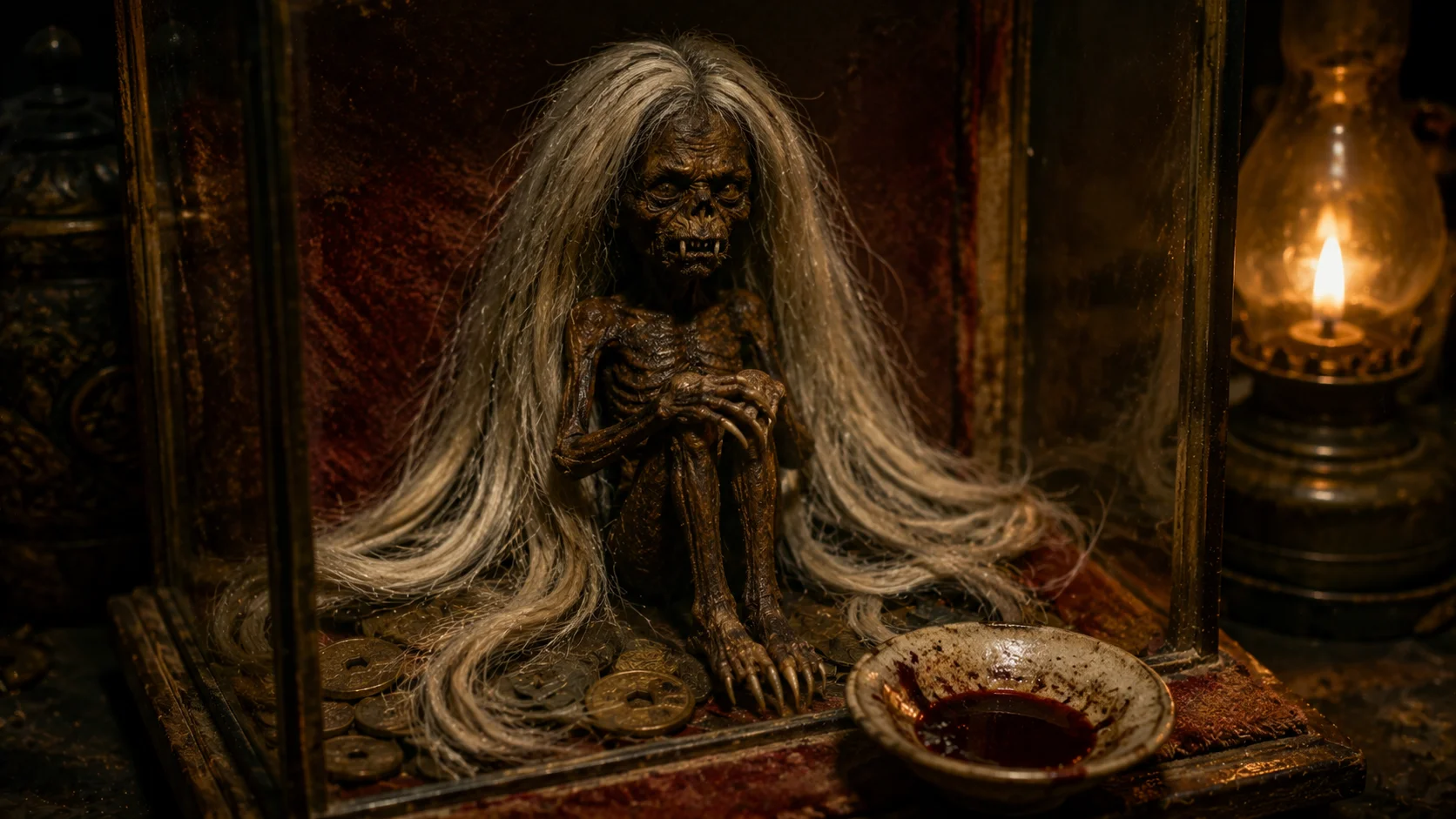
Tala is the goddess of the stars in Philippine mythology: the radiant deity of the morning and evening star and of all the stars of the night sky, sister of the sun-god [apolaki] and the moon-goddess [mayari], who scatters the lights across the heavens and guides travelers and sailors by her shining. She is the bright star-maiden of the Filipino cosmos.
The Goddess of the Stars
Tala is the goddess of the stars — the lights that fill the night sky — and especially of the brightest star, the morning and evening star (the planet Venus, called Tala in Tagalog to this day). A daughter of the supreme creator [bathala], she is one of the celestial children, the sister of the moon-goddess Mayari and the sun-god Apolaki, and with them she divides and adorns the heavens: Apolaki the day, Mayari the night, and Tala the stars that shine within it.
Last updated .
The Light of the Heavens
By the myths, it is Tala who brings out the stars at evening and gathers them in at dawn — or who, with her star-light, holds back the darkness. The morning star (Tala) appears before the dawn, the herald of the coming day, and the evening star follows the setting sun; and so Tala is the goddess of these bright lights that bracket the night, the first to appear and the last to fade. Her stars guide the way of travelers by land and sea, and her shining is a comfort and a guide in the darkness.
The Star-Maiden
In the celestial family of the children of Bathala, Tala the star-goddess completes the trio of sun, moon, and stars — the radiant maiden of the night’s lights, sister to the sun and moon, scattering her stars across the heavens. Her name endures in Filipino language and culture as the word for star, a living trace of the old goddess. In Tala, Filipino myth gave form to the stars and the guiding lights of the night — the radiant star-goddess, sister of the sun and moon, who brings out the stars at evening and shines as the morning and evening star, the bright star-maiden of the Philippine heavens.
What the Oldest Records Actually Say
Of all the individual stars over the Philippines, exactly one had a name the Spanish thought worth writing down. In his Relación de las Costumbres de los Tagalos of 1589, the Franciscan Juan de Plasencia set out to catalogue what the Tagalogs believed so that the colonial church would know precisely what it had come to dismantle — and in the middle of that inventory he recorded that they revered the sun and the moon, that they did not know the stars by name as Europeans knew the planets, and that there was one exception: the morning star, which they called Tala.
That single line is the bedrock. Everything else written about Tala — and a great deal has been written — is built on top of a friar’s brief, disapproving note that the people he had come to convert had already given the brightest thing in their pre-dawn sky a name of its own.
What Plasencia does not supply is just as important. He gives Tala no parents, no siblings, no throne, no myth. The neat celestial family — a creator and his three luminous children dividing day, night and stars between them — is a later assembly, drawn together across centuries from separate regional traditions and consolidated in twentieth-century compilations of Philippine mythology. Apolaki and Mayari are genuinely attested, but chiefly in Kapampangan tradition, and with their own violent story of two siblings fighting for rule. Tala’s place beside them is a modern piece of tidying-up: the impulse to give a scattered, archipelagic body of belief the shape of a pantheon, because that is the shape Europeans expected divinity to come in.
None of which makes her less real. It only means the goddess and the star are not the same age. The star was named first.
Bituin and Tala: Two Words for One Sky
Tagalog has never treated all stars as equal, and its vocabulary proves it. Bituin is the ordinary word for a star — any of the thousands. It descends from a word reconstructed for Proto-Austronesian, the ancestral tongue carried out of Taiwan by the seafarers who eventually settled everything from Madagascar to Rapa Nui, and it survives across that whole enormous range: Malay bintang, and cognates scattered through Indonesia and the Pacific. It is one of the oldest words the language has.
Tala is different. It does not mean a star among stars. It means the star — the one so bright it hangs alone in a sky the sun has already begun to bleach, the one that can throw a faint shadow on still water. Venus.
Where the word came from is genuinely unsettled. Sanskrit tārā, ‘star’, is an obvious and tempting comparison, and Tagalog absorbed a real layer of Sanskrit vocabulary indirectly, through Malay trade contact, centuries before any Spaniard arrived — the name Bathala itself is generally traced to Sanskrit bhaṭṭāra, ‘noble lord’. Whether tala belongs to that borrowed layer or is native and merely resembles it is not something the evidence settles. It is worth sitting with that ambiguity rather than resolving it prematurely: the possibility that the Philippine star-goddess wears a name that travelled by sea from India is unproven, and the sound-alike may be coincidence.
The Working Sky: Balatik and Mapolon
Tala was never an ornament. In an archipelago without a written calendar, the sky was the calendar, and the same passage of Plasencia that names her goes straight on to the two star-groups that mattered most to people who had to eat.
Mapolon is the Pleiades, and Plasencia connects it directly to the turning of the seasons. Balatik is the more evocative of the two. A balatik is not a picture of a god or a hero — it is a machine. It is the spring-spear trap set along a game trail for wild boar: a bent shaft under tension, a tripline, a shaft driven through the animal that touches it. Modern Philippine ethnoastronomy identifies Balatik with the three aligned stars of Orion’s Belt, that unmistakable straight line of light which no one who has once had it pointed out ever loses again. Plasencia instead glossed the name as the Great Bear — one of many places where a friar’s notes and the tradition they were taken from do not quite line up.
The choice of image says a great deal. Greek observers looked at those three stars and saw a hunter’s belt; Tagalog and Visayan observers looked at the same three and saw the hunter’s weapon — the trap itself, cocked and waiting. Sky-lore is autobiography. People put into the stars the tools their lives actually depended on.
This is not an antiquarian point. Star-timed swidden agriculture is not a dead practice in the Philippines; indigenous communities across the archipelago still read the rising of the Pleiades and of Balatik to time the clearing, burning and planting of upland fields, and still hold that knowledge as knowledge, not folklore. The stars Tala was said to bring out are, in living practice, a working instrument.
Bitoon, and the Shattering of the Sky-Children
Move south out of Tagalog country and the star acquires a different name and a far bloodier origin. A creation story told in the Bikol region begins with the sky, Languit, and the water, Tubigan. From the marriage of their children — the sea and the wind — come four more: Daga the land, Adlao the sun, Bulan the moon, and Bitoon the star. Daga, strongest of the four, leads his brothers and sister in an assault on their grandfather’s sky, and Languit strikes them out of the air with thunderbolts.
What survives of them is light. Adlao’s fierce body became the sun. Bulan, softer, became the mild lamp of the moon. Daga’s body fell and became the earth. And Bitoon was smashed apart entirely — every fragment of the shattered child becoming a star. A Visayan telling of the same catastrophe names the star-child Lisuga and gives her a body of silver, broken into a thousand pieces. In these versions the night sky is not a goddess scattering jewels for the pleasure of travellers. It is wreckage: the pieces of a punished rebel, still glowing, spread across the whole dome of heaven.
Set the traditions side by side and you can watch the archipelago thinking. Tagalog Tala is singular, radiant, a herald. Bikol Bitoon is plural by violence, the remains of a body. Both are true accounts of what people saw when they looked up, and neither one is the ‘correct’ version of the other.
A Goddess With No Surviving Face
There is no ancient statue of Tala. No temple, no relief, no painted wall — and not, in the main, because such things were destroyed, but because the Tagalogs did not build that way. Plasencia records flatly that they had no temples at all. Worship happened at home: a shed raised for the occasion beside the house, or the house itself given over to the gathering. Plasencia gives the name of that temporary shed as simbahan — which is still the ordinary Filipino word for a church, a pre-colonial word conscripted to name the buildings that replaced what it originally described.
Presiding was the catalonan, the Tagalog ritual specialist, most often a woman — the counterpart of the Visayan babaylan, and the first entry in Plasencia’s list of what he called the priests of the devil. Tagalog religion ran through household offerings, through the anito — the ancestral and tutelary spirits, and the carved figures made for them — and through the mouth of a woman speaking in a voice not quite her own. It was portable, domestic, and comparatively invisible to an occupying church, which is one reason so little of it was written down, and one reason fragments of it lasted so long. No rite addressed specifically to Tala survives in the record; what survives is her name.
So every image of Tala you will ever see — every luminous star-crowned maiden in an illustration, a graphic novel, a mural — is a modern act of imagination. That is worth stating plainly rather than pretending to an iconography that does not exist. The Filipino artists drawing her now are not restoring a lost portrait. They are making the first one.
Why the Morning Star Kept Her Name
Four centuries of colonisation stripped an enormous amount out of Philippine belief. Bathala was flattened into a synonym for the Christian God. The catalonan were driven out, and the women who had spoken for the spirits were written up as servants of the devil long before babaylan was reclaimed as a banner. Yet tala never left the language. It survives beside bituin — the higher, more luminous of the two words, the one a songwriter reaches for — and it has come back hard in recent decades, in song titles and shopfronts and on birth certificates, as young Filipinos went looking for the pantheon the friars had catalogued in order to erase.
The survival is not an accident of language. The morning star is the one celestial object that reliably keeps company with human beings in their worst hour. It is there for the fisherman pushing off before light, the sentry at the end of a watch, the sick and the sleepless. It rises when the night has gone on long enough to feel permanent, and it is the first hard evidence that the night is going to end.
A culture will let a great many gods go. It tends to keep the one that shows up in the dark and proves the dawn is coming.