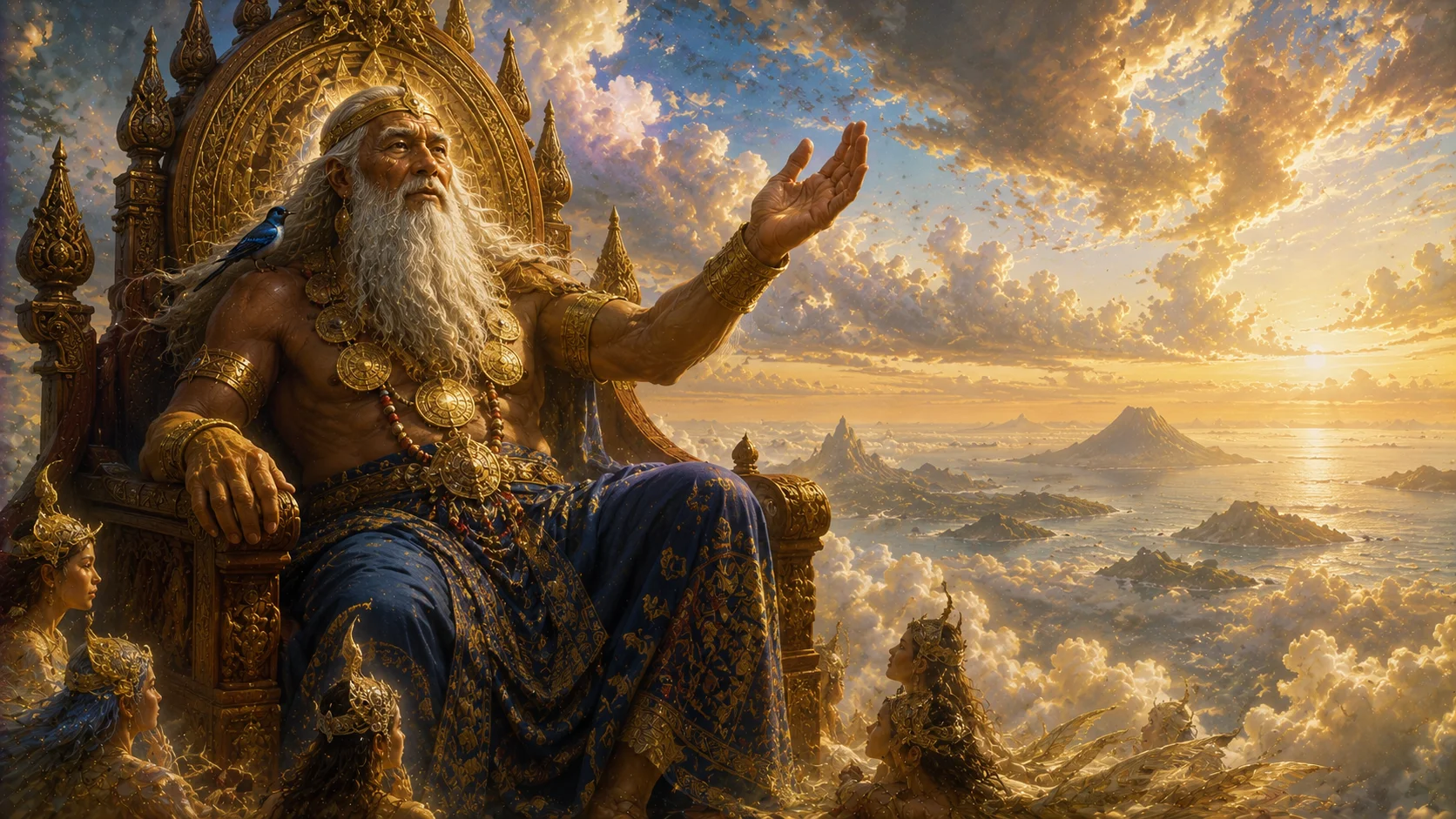
Bathala, more fully recorded as Bathala Maycapal, is remembered as the supreme deity of the pre-colonial Tagalog people of the Philippines — an all-powerful, all-knowing creator set high above the countless lesser spirits who filled the everyday religious life of the islands. What survives of him comes chiefly through a single, imperfect window: a Spanish friar's report written a generation after the conquest began, and the long echo the name has left in the Filipino language itself.
A Name Recorded by a Foreign Hand
Almost everything known about Bathala as a documented figure, rather than a modern reconstruction, traces back to one text: Fr. Juan de Plasencia's 1589 account, the "Relacion de las Costumbres de los Tagalos" — "Customs of the Tagalogs." Plasencia, a Spanish Franciscan friar, produced the earliest substantial written record of pre-Hispanic Tagalog religion, and it is in his pages that the name "Bathala Maycapal" first appears in writing, glossed by him as "Bathala, the Creator," an all-powerful and all-knowing being. It is worth holding that origin in mind throughout: the account of a supreme Tagalog god comes to us filtered through a colonial missionary's eyes, recording a religion he had been sent to replace.
Last updated .
The Chief Creator, Set Apart
Within Plasencia's account, Bathala is described as a chief creator deity of the Tagalogs — functioning as a high or supreme god rather than as a deity approached through frequent, direct ritual. He stands at the summit of the cosmology Plasencia describes, but his position there is one of remove. Bathala is not portrayed as a god constantly petitioned at the household shrine or invoked at every harvest; he occupies a more distant, elevated station, the kind of role scholars recognize elsewhere in the world as a "distant high god" — present at the origin and summit of things, but not the figure to whom daily devotion was chiefly addressed.
Where the Everyday Worship Actually Went
That distinction matters, because Plasencia is explicit that everyday Tagalog worship was directed mainly toward the anito — ancestor spirits and nature spirits — rather than toward Bathala himself. The anito were regarded as intermediaries, intercessors standing between ordinary people and the distant creator above them. A household's ancestors, the spirits bound to a particular tree or river, the guardians of a family's fortune: these were the beings addressed directly, asked for favor, thanked or placated. Bathala's presence was felt behind them, at one remove, the ultimate authority the anito were understood to serve and represent.
A Name That May Have Traveled by Sea
The word "Bathala" itself carries a history that predates any Spanish record. Linguists generally connect the name to a Sanskrit-derived root belonging to Hindu-Buddhist religious vocabulary — terminology that spread through maritime Southeast Asia via Indianized polities such as Srivijaya and Majapahit long before Spanish ships ever reached the archipelago. This is a conclusion reached through historical linguistics, tracing sound and form across languages and centuries, rather than something proven outright by any surviving text. It suggests that Tagalog religious vocabulary, and perhaps the concept it named, absorbed influence from the wider trading world of the region — Indianized kingdoms whose religious language left its mark on cultures far beyond their own borders — well before Bathala was ever set down in a Spanish friar's report.
Kin Concepts, Not the Same God
Bathala was not the only such figure recorded among the many peoples of the Philippine archipelago, and it is a mistake — a common one — to treat every comparable sky or creator deity as simply Bathala under another name. Among the Cordilleran, or Igorot, peoples of northern Luzon, the figure occupying a broadly similar position is Kabunian; in some Visayan traditions to the south, that role is held by Laon. Scholars treat these as parallel but genuinely separate "supreme being" concepts, arising within their own distinct ethnolinguistic traditions rather than as regional dialects of one Tagalog original. Collapsing Kabunian, Laon, and Bathala into a single unified figure flattens real cultural and linguistic differences between distinct peoples, even when the deities they describe occupy comparable places at the top of their respective cosmologies.
The Household That Grew in Later Retelling
Much of what popular audiences now know as "Bathala's family" — a divine household including figures such as Apolaki and Mayari, tied to the sun and moon — comes not from Plasencia or any other primary sixteenth-century source, but from twentieth-century popularizations: textbooks, folklore anthologies, and later comics and media that gathered scattered regional material into an expanded genealogy. This layer of the tradition is real as literature and as a living, evolving body of Filipino storytelling, but it is far less directly attested than the bare account of a supreme creator god. It belongs to the realm of later literary and folkloric elaboration, not to confirmed pre-colonial doctrine, and the two should not be mistaken for one another.
No Single Surviving Scripture
In the same vein, no single authoritative pre-colonial text preserves a full Bathala creation epic. The vivid, complete creation narratives that circulate today under Bathala's name are, in the main, compiled and harmonized by later folklorists and writers, drawing together fragmentary regional sources into a single coherent story. They are best understood as reconstructed and literary works — meaningful and often beautiful as such — rather than as verbatim ancient scripture handed down intact from before the conquest.
A Different Tier Entirely
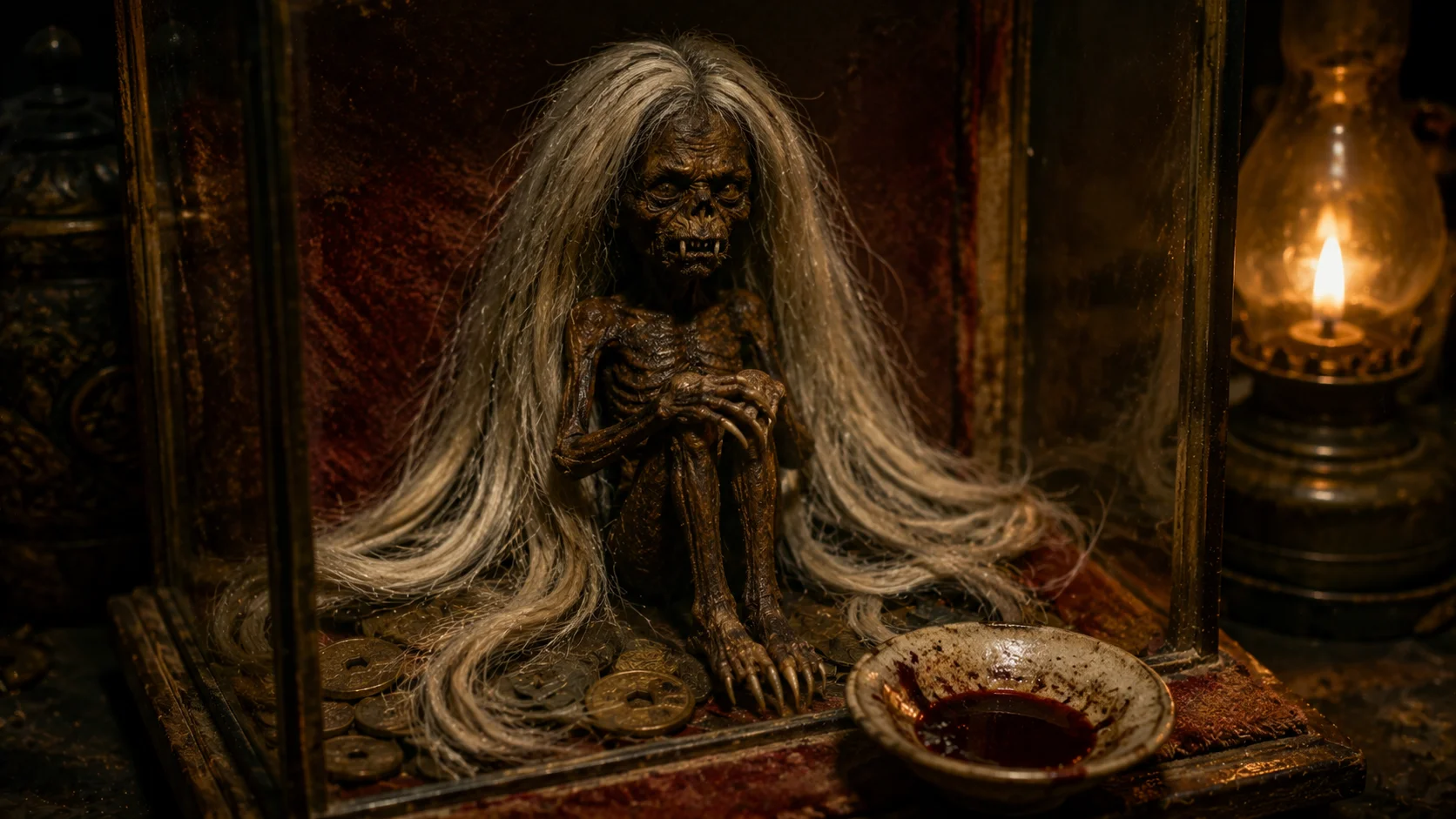
Bathala belongs to what might be called the high tier of pre-colonial Tagalog cosmology — the summit occupied by a creator and the spirits who serve as intermediaries beneath him. This places him in a categorically different position, and resting on a different base of evidence, from the lower mythological figures and creatures that populate other strands of Philippine folklore, such as the aswang. Bathala's record comes from Plasencia's ethnographic account of belief and cosmology; the aswang and its kin belong to a separate body of folk narrative concerning malevolent or liminal beings encountered in ordinary life. The two must never be merged into one continuous pantheon-and-monster narrative without flagging that they rest on entirely different tiers of tradition and entirely different kinds of evidence.
What Colonization Left Behind
Following Spanish colonization and the mass conversion of the lowland Tagalogs to Catholicism, active cultic worship of Bathala as a distinct religious practice largely ceased within a few generations. It survived thereafter mainly in historical record and in language, rather than as an unbroken living cult centered specifically on Bathala by name. Some less thoroughly Christianized indigenous and animist communities did retain anito-based practices into the modern era — but continuous, documented worship specifically addressed to Bathala, as opposed to related concepts carried under other names within other traditions, is not well attested as an unbroken practice, and that distinction should not be flattened into a claim of an ongoing organized "Bathala religion."
The Word That Outlived the Cult
What did endure, robustly and to the present day, is the word itself. "Bathala" persisted in Tagalog and modern Filipino as a poetic or archaic term for "God" or "the Almighty," used in literature and in colloquial religious expression — distinct from "Diyos," the standard term drawn from Spanish Catholic vocabulary. A name once attached to a specific pre-colonial creator deity became, over centuries, a dignified alternate word for God in general, carried forward in speech and writing long after the particular religious system that first gave it meaning had faded from lived practice.
A Symbol Reclaimed
In more recent times, Bathala has been invoked in Filipino nationalist and cultural-revival contexts as a symbol of pre-colonial indigenous spirituality, held up in deliberate contrast to imported Catholicism. The name appears across literature, komiks, games, and film, and it holds a place in contemporary indigenous-spirituality and revivalist circles sometimes grouped under the label "Anitism." These are modern-era movements, born of a wish to reconnect with what colonization interrupted — and they should be understood on those terms, as acts of revival and reclamation, rather than mistaken for unbroken pre-colonial continuity stretching directly back to Plasencia's century.
What the Record Actually Supports
Set against the fuller, later mythology that has grown up around him, the documented Bathala is a comparatively spare figure: a name and title recorded by a missionary, glossed as creator and all-powerful, positioned above a world of anito who did the daily work of Tagalog religious life, and connected by scholars to a much older current of Sanskrit-derived religious vocabulary carried across the sea. It is a modest record by the standard of a full mythology — and that modesty is itself part of the honest picture, a reminder of how much of a pre-colonial religious world survives only in the fragments a single outside observer chose, and was able, to write down.