Among the ranks of heaven named in scripture, few carry a charge as vast and as public as the Principalities, sometimes called the Princedoms. Where other angelic orders are given to the care of individuals, the Principalities are entrusted with something larger: the destinies of whole nations, cities, and institutions, the corporate bodies through which humankind lives out its history. They are the celestial princes who stand behind the thrones and councils of the earth, guiding the great collective undertakings of peoples rather than the private hopes of any one soul.
Their name enters Christian thought through the Greek of the New Testament, where the word archai — rulers, or principalities — appears repeatedly in the letters attributed to Paul. It is a striking term, because scripture does not use it to mean only one thing. In some passages it names an order of good and faithful angels; in others, it names hostile spiritual powers arrayed against the faithful. This double meaning is not a contradiction so much as a recognition that the same word describes a level of authority, a rank of governance over the affairs of this world, which can be exercised for good or turned toward opposition. It is a sobering thought embedded in the very name of this order: rule, at any level, carries the possibility of corruption, and the Principalities' high calling exists precisely because that danger is real.
Where Scripture Speaks of Rulers Above the Earth
The clearest scriptural references appear in the Pauline epistles. In the Letter to the Romans, principalities are numbered among the great cosmic forces that cannot separate the faithful from the love of God. In Ephesians, they appear twice: once as the audience to whom the many-sided wisdom of God is made known through the Church, and once among the spiritual forces that Christians are said to wrestle against, described there not as flesh and blood but as rulers, powers, and the spiritual forces of evil in the heavenly realms. In Colossians, principalities are named among the ranks of creation itself — thrones, dominions, principalities, and powers — declared to have been created through and for Christ, and are named again as powers that were put to open shame.
It is this passage in Colossians, placing principalities alongside thrones, dominions, and powers as things made "by him and for him," that later theologians would seize upon as the primary scriptural foundation for the idea of a graded, ordered angelic hierarchy — a great chain of heavenly rank descending from the throne of God down to the world of mortals, with the Principalities among its named links.
Pseudo-Dionysius and the Shaping of the Ninefold Choir
It was not scripture alone but the work of a mysterious and enormously influential writer, known to history as Pseudo-Dionysius the Areopagite, who gave the Principalities their settled place in the architecture of heaven. In his treatise on the celestial hierarchy, composed around the late fifth or early sixth century, Pseudo-Dionysius arranged the whole of the angelic host into nine choirs, gathered into three triads of three. The highest triad — Seraphim, Cherubim, and Thrones — dwells nearest the divine light itself. The middle triad — Dominions, Virtues, and Powers — mediates that light further outward. And the third and lowest triad, closest to the world of men, comprises the Archangels, the Angels, and, standing just above them, the Principalities.
It is a placement that says something essential about their office. The Principalities are not sequestered in the furthest reaches of contemplation; they are the point at which the ordered will of heaven turns outward to touch the governance of the earth. In the Dionysian scheme, it is their particular office to watch over nations, over peoples, and over earthly leaders and civic authorities — to guide the princes and rulers of the world and to oversee the affairs of the world's kingdoms, so that the shape of the divine will might be felt even in the workings of human government.
The Angel Behind the Throne
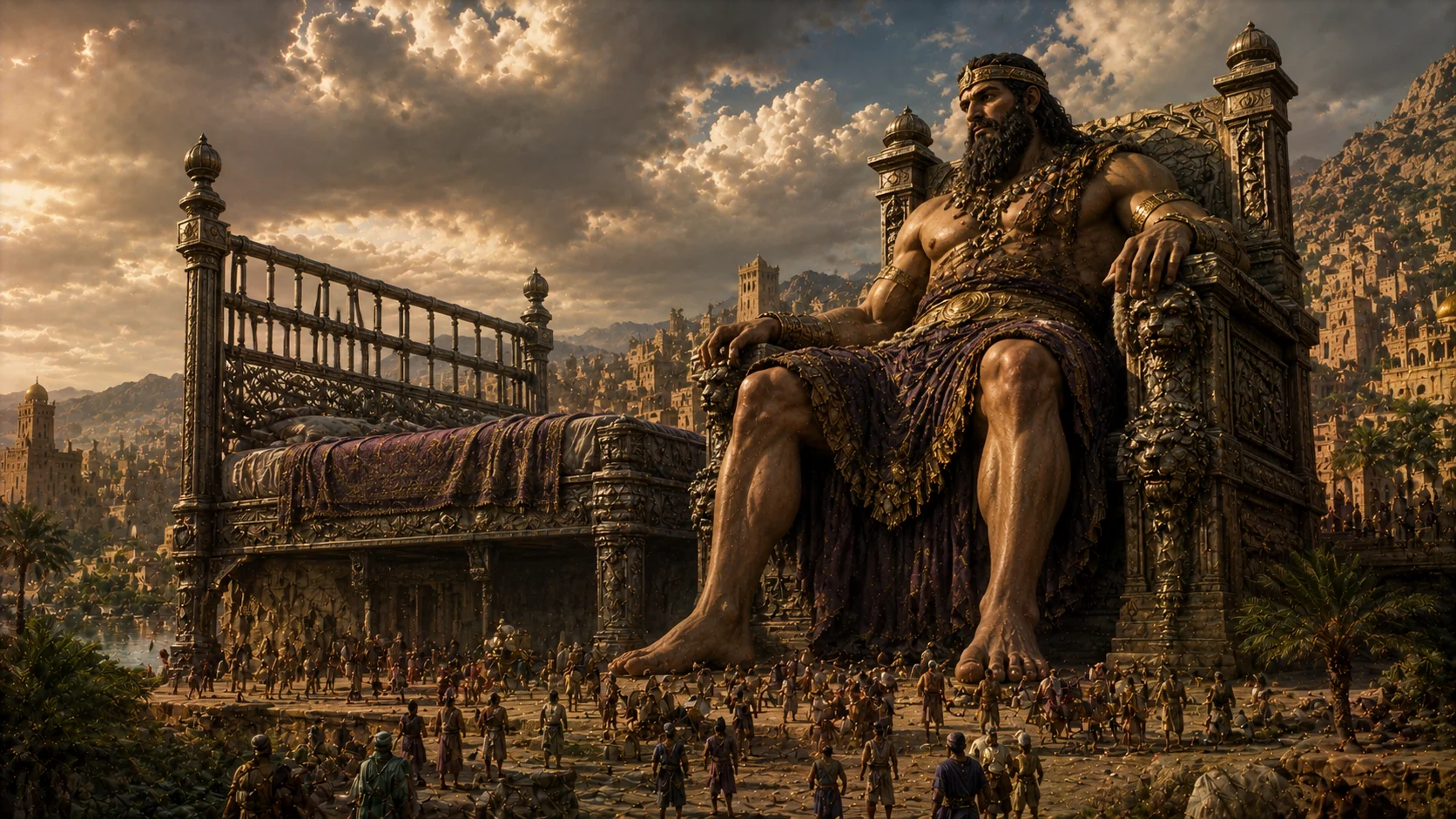
This is the idea that has given the Principalities their most enduring character in Christian tradition: they are the angels not of persons but of polities. A guardian angel, in the tradition, is given to a single soul; the Principalities are given to something larger and longer-lived than any one life — a nation, a city, an institution, a kingdom that will outlast the individuals who compose it at any given moment. Where an ordinary angel might be pictured at the shoulder of one believer, a Principality was imagined standing, unseen, behind a throne, a senate, a city gate, or a council chamber, shepherding the collective fortunes of the people gathered there.
This picture draws on a much older well of belief. In Jewish tradition that predates the Christian era, it was held that each nation had its own presiding angelic prince appointed over it in the courts of heaven, contending there on behalf of its people — most famously the archangel Michael, said to stand as the prince who presides over Israel. The Principalities of the Christian hierarchy inherit and generalize this older conviction: that the destinies of nations are not left to chance or to human will alone, but are watched over, argued for, and shaped by unseen princes in the courts of heaven.
Stewards of Kingdoms, Not Sovereigns of Kingdoms
It is worth being precise about what this office is and is not. The Principalities are not said to rule the nations in place of earthly kings, nor to override the freedom of human governments. Their role, as the tradition presents it, is one of guidance and oversight — administering, in a mediating and largely hidden way, the affairs of the world's kingdoms, so that the welfare of communities, the just rise and fall of rulers, and the spread of good order might be steered, however invisibly, toward the good. They watch the currents of history as they move through peoples and institutions, rather than commanding those currents outright.
Later theology would sharpen this further. Thomas Aquinas, writing in his great systematic treatment of the angels, took up the Dionysian scheme and affirmed the Principalities' particular function: they govern the transmission of the divine will into the sphere of human governance, and they exercise a guardianship that is territorial and national in scope rather than personal. In Aquinas's careful ordering, this is what distinguishes the Principalities from every rank below them — the office is collective and historical, concerned with the shape of a people's destiny across time, not the private welfare of any one member of that people.
Marshals of the Lower Choirs
Standing as they do at the head of the lowest triad, the Principalities are also traditionally understood to hold a position of command over the two ranks beneath them, the Archangels and the Angels. It is through the Principalities, in this reading, that the directives of the higher heavens are passed downward and put into effect — the Principalities receiving the shape of the divine will from the ranks above them, and seeing that it is carried out among the Archangels and Angels who deal most directly and intimately with individual men and women. In this sense the Principalities occupy a hinge point in the whole celestial order: the last rank whose concern is the wide sweep of peoples and nations, and the first rank whose subordinates concern themselves with the single human soul.
A Rank Without a Fixed Face
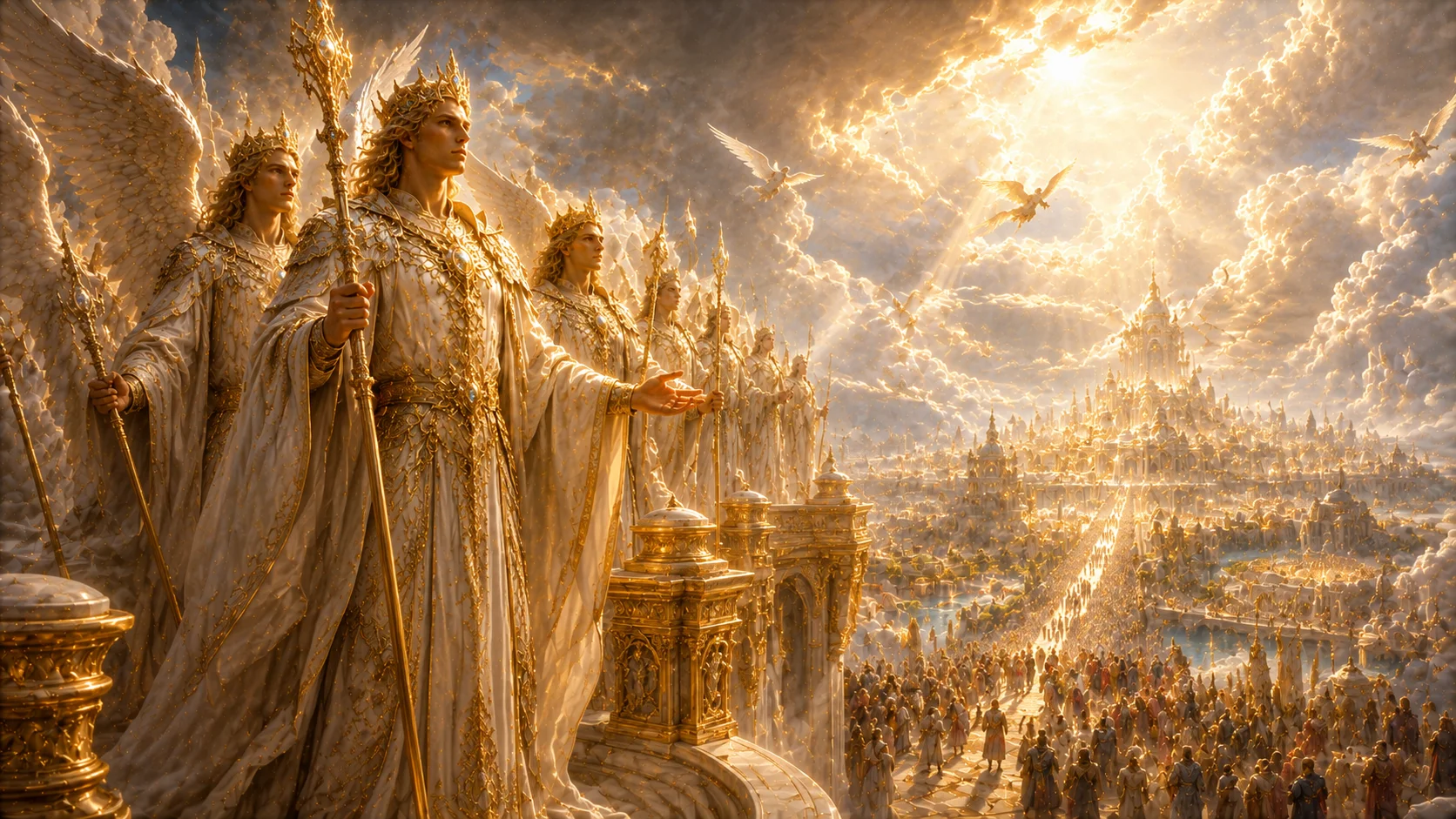
Unlike some other orders of the heavenly host, the Principalities were never given a settled iconography of their own. Christian art, when it undertook to illustrate the ninefold hierarchy at all — most often in manuscripts influenced by the Dionysian scheme — tended to render them with the generic attributes common to angelic figures generally: wings, and the emblems of rule, a crown, an orb, or a scepter, signifying their dominion over the earthly and political order without marking them out by any attribute unique to their choir alone. They are, in the visual tradition, princes among princes, distinguished more by what they are said to do than by how they are shown doing it.
Nor, notably, does the tradition supply the Principalities with a named captain in the way that other ranks are sometimes given a chief. No individual angel is canonically or widely traditionally identified as the head of the Principalities in the manner that other figures are associated with leadership of other choirs. Later esoteric and occult angelologies, standing well outside the mainstream of patristic writing, have at times proposed rulers for this order, but such attributions are late, unsupported by the earlier tradition, and disputed — offered here only to be set aside as peripheral to the received teaching.
A Rank Debated, Never Defined
It would be a mistake to imagine that the ninefold hierarchy, and the Principalities' place within it, was ever settled by unanimous or binding authority. Pseudo-Dionysius's ordering became by far the most widely received scheme, carried forward and systematized by Aquinas centuries later, but it was not the only one proposed by the Church's early teachers. Gregory the Great, writing in the sixth century in his moral commentary on the Book of Job and in his homilies on the Gospels, offered his own ninefold ordering of the angels — one that also includes the Principalities, but arranges their rank differently in relation to the Powers than Pseudo-Dionysius does.
This divergence among trusted authorities is itself instructive. The exact ordering and membership of the angelic hierarchy has never been dogmatically defined by the Church; the Dionysian and Thomistic scheme is traditional, widely received, and rich with theological meaning, but it is tradition rather than binding doctrine. The Principalities' rank as seventh among nine, their place at the head of the third triad, is therefore best understood as the settled shape of a long and reverent inquiry — authoritative by weight of use and by the great minds who refined it, but not a closed question in the way an article of faith would be.
What the Principalities Teach of Providence
Beneath the ranks and the names lies a theological conviction that the whole edifice of the celestial hierarchy was built to express: that divine providence does not act upon the world only directly and all at once, but works through mediating structures, ranked and ordered, that carry grace and governance downward by careful stages — from the ranks nearest the divine light, through the Principalities, and onward into the ordinary unfolding of human affairs. The Principalities are the point in that great descent where providence turns to face nations and cities and institutions specifically, addressing not the single believer but the collective body in which believers live, work, and are governed.
In this, the Principalities carry forward one of the oldest convictions of the biblical imagination: that the rise and fall of kingdoms is not a godless accident of history, that the founding of a city and the ordering of a people's common life are not left unattended by heaven. The princes of earthly power stand, in this understanding, beneath the watch of princes not of this earth — unseen, unnamed for the most part, but present at the threshold where the will of heaven meets the long labor of human government, guiding, contending, and interceding for the peoples entrusted to their care.
Sources & traditions
- TraditionHebrew texts, grimoires and later commentary
Myths change from area to area and from time to time. This chronicle follows the most widely told versions; tellings in other villages, regions and eras may differ.