The Grigori, the Watchers, are among the most fateful beings in Hebrew apocalyptic tradition: a class of angels set to watch over the earth and humankind who, ensnared by desire, broke their celestial trust, descended to take mortal wives, and loosed corruption and ruin upon the world. Their fall is remembered as the original sin of the angels, told at length in the Book of Enoch, and its aftershocks — giants, forbidden arts, restless spirits — echo through nearly every later account of fallen angels and demons.
The Meaning Carried in the Name
The name Grigori renders the Greek grēgoroi, "the ones who watch" or "the wakeful ones," itself a translation of the Aramaic and Hebrew ir, plural irin (עִיר / עִירִין). The term is not confined to apocryphal writing alone. It appears, briefly and without any hint of rebellion, in the Aramaic chapters of the Book of Daniel (4:13, 4:17, 4:23), where a holy ir, a watcher, descends in Nebuchadnezzar's dream to pronounce a decree. This is one of the rare places the watcher concept surfaces within the Masoretic canon itself — a single thread showing that the idea of heavenly "watchers" predates, and stands apart from, the fuller and darker story told of the Grigori who fell.
A Story Told Outside the Boundary of Scripture
The narrative most people mean when they speak of the Grigori comes not from the Hebrew Bible but from 1 Enoch, specifically its opening section, chapters 6 through 16, known as the Book of the Watchers. This is an apocryphal, pseudepigraphal work — attributed to Enoch but composed centuries after any such figure could have written it — and it holds scriptural status in only one living tradition: the Ethiopian Orthodox Tewahedo canon, where it is received as part of the Bible outright. Elsewhere, in normative rabbinic Judaism and in most Christian canons, it stands outside scripture, read and valued as ancient testimony rather than accepted as the word of God. The work survives complete only in Ge'ez, the classical language of Ethiopia, though its authenticity as an ancient composition is confirmed by Aramaic fragments recovered among the Dead Sea Scrolls at Qumran (catalogued 4Q201–4Q212) — proof that the story was already circulating, in something like its present form, well over two thousand years ago.
The Seed Left in Genesis
Behind this expansive apocryphal telling lies a passage of startling brevity in the Hebrew Bible itself. Genesis 6:1-4 says only that "the sons of God saw the daughters of men, that they were fair; and they took them wives... the Nephilim were on the earth in those days." Four verses, and no explanation. Who these "sons of God" — bene ha-elohim — actually were became one of the most contested interpretive questions in ancient and rabbinic literature: angels, in the reading 1 Enoch develops at length, or human nobles and judges, or descendants of Seth marrying outside a righteous line, in readings later rabbis came to prefer. The Book of the Watchers takes the terse, unadorned verse and builds a complete drama around it — names, motives, a mountain, an oath, a punishment — filling a silence the Torah itself chose to leave.
The Oath Sworn Upon Hermon
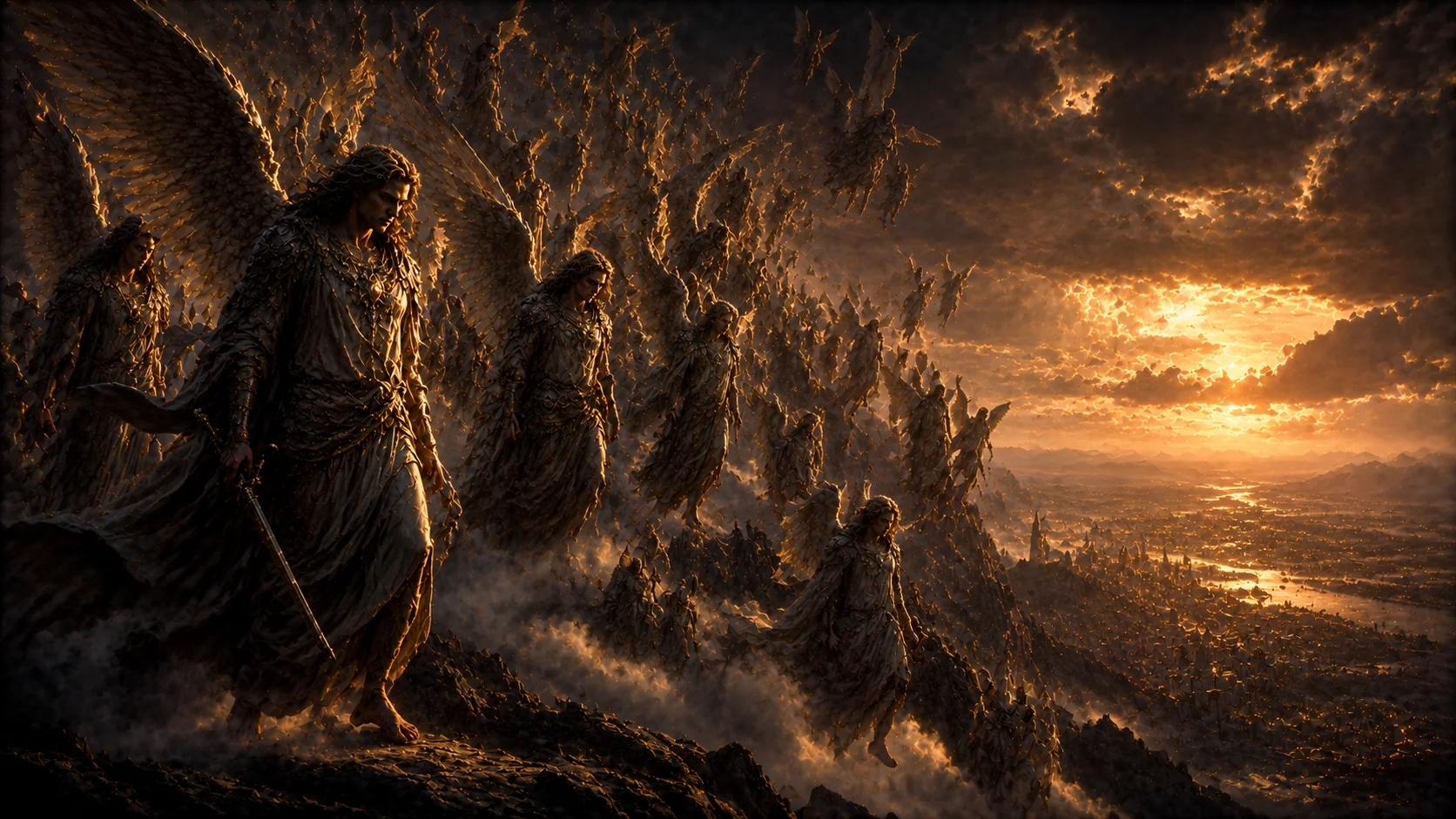
1 Enoch names the leader of the descent as Semjaza, also written Shemihazah (שמיחזה), who in chapter 6 proposes the plan to two hundred of his fellow Watchers and, tellingly, hesitates — he fears bearing the guilt of the deed alone should the others abandon him. So the two hundred bind themselves by a mutual oath, cursing one another to hold to the plan, and descend together upon Mount Hermon. The text explains the mountain's very name through this act, tracing it by folk etymology to the Hebrew ḥerem, meaning ban or curse — the mountain forever marked by the vow sworn on its summit.
Azazel and the Arts That Should Not Have Been Taught
Among the two hundred, one figure is singled out for particular blame: Azazel (עזאזל), whose name elsewhere in scripture belongs to the wilderness recipient of the Yom Kippur scapegoat in Leviticus 16. In 1 Enoch 8:1-3 and 9:6, Azazel is charged not merely with taking a wife but with teaching humanity the making of metal, of swords and shields and armor, and the arts of adornment — cosmetics, dyed cloth, the ornaments by which the daughters of men were made yet more alluring. Other Watchers, the text goes on, taught sorcery, the reading of omens in the stars, the cutting of roots, and other secret knowledge never meant to pass from heaven to earth. It is Azazel who is remembered as the instigator of corruption through craft and vanity, distinct from the general sin of unlawful union, and it is Azazel who receives the harshest sentence of all the Watchers.
Children Never Meant to Walk the Earth
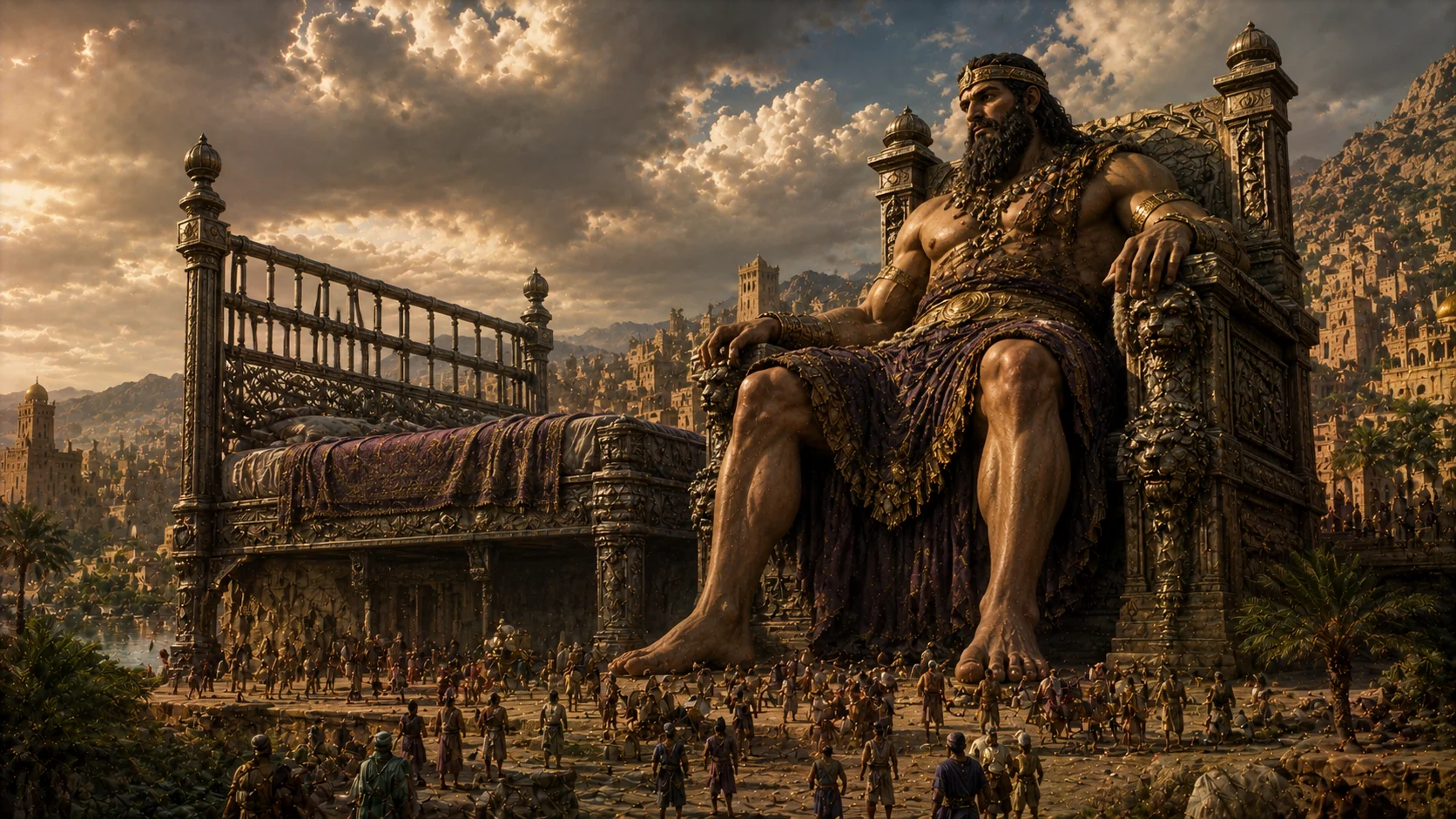
From the union of Watchers and mortal women came offspring unlike any born before: the Nephilim, also called the Gibborim, giants whose appetite exceeded what the earth could sustain. 1 Enoch 7 describes them consuming the whole produce of human labor and then, when that was not enough, turning upon humankind itself, and finally upon one another. Their violence and their hunger filled the world with bloodshed. It was this — the cry of a ravaged earth and a terrorized humanity rising up to heaven — that set in motion the judgment to come, a judgment that would fall upon Watchers, giants, and the corrupted world alike in the great Flood.
The Petition Enoch Carried and Could Not Win
Before their sentence was finally sealed, the fallen Watchers turned to a single mortal for help: Enoch, grandfather of Noah, revered in this tradition as scribe and prophet. In chapters 12 through 16, the Watchers beg Enoch to carry their plea for mercy before God, hoping that a human intercessor might soften a judgment they no longer dared approach themselves. Enoch takes up their petition and delivers it — and returns instead with God's refusal, a condemnation pronounced in full and without exception. The scene is one of the story's most human moments: beings of surpassing power and glory reduced to pleading through a mortal messenger, and denied all the same.
Bound Until the Appointed End
The sentence itself, set out in 1 Enoch 10, is carried out by name through the archangels God commissions for the task. Raphael is charged with Azazel specifically, binding him and casting him into darkness beneath jagged rocks in the desert wilderness — a punishment the text itself links back to the scapegoat ritual of Leviticus, tying Azazel's fate to the very wilderness rite that bears his name. Michael is charged with Semjaza and his companions, bound likewise, sentenced to remain confined for seventy generations, held fast until the day of final judgment arrives to settle their fate for good. Nothing in this telling suggests an immediate destruction; theirs is a long imprisonment, stretched across the ages, awaiting a reckoning still to come.
Spirits That Did Not Return to Dust
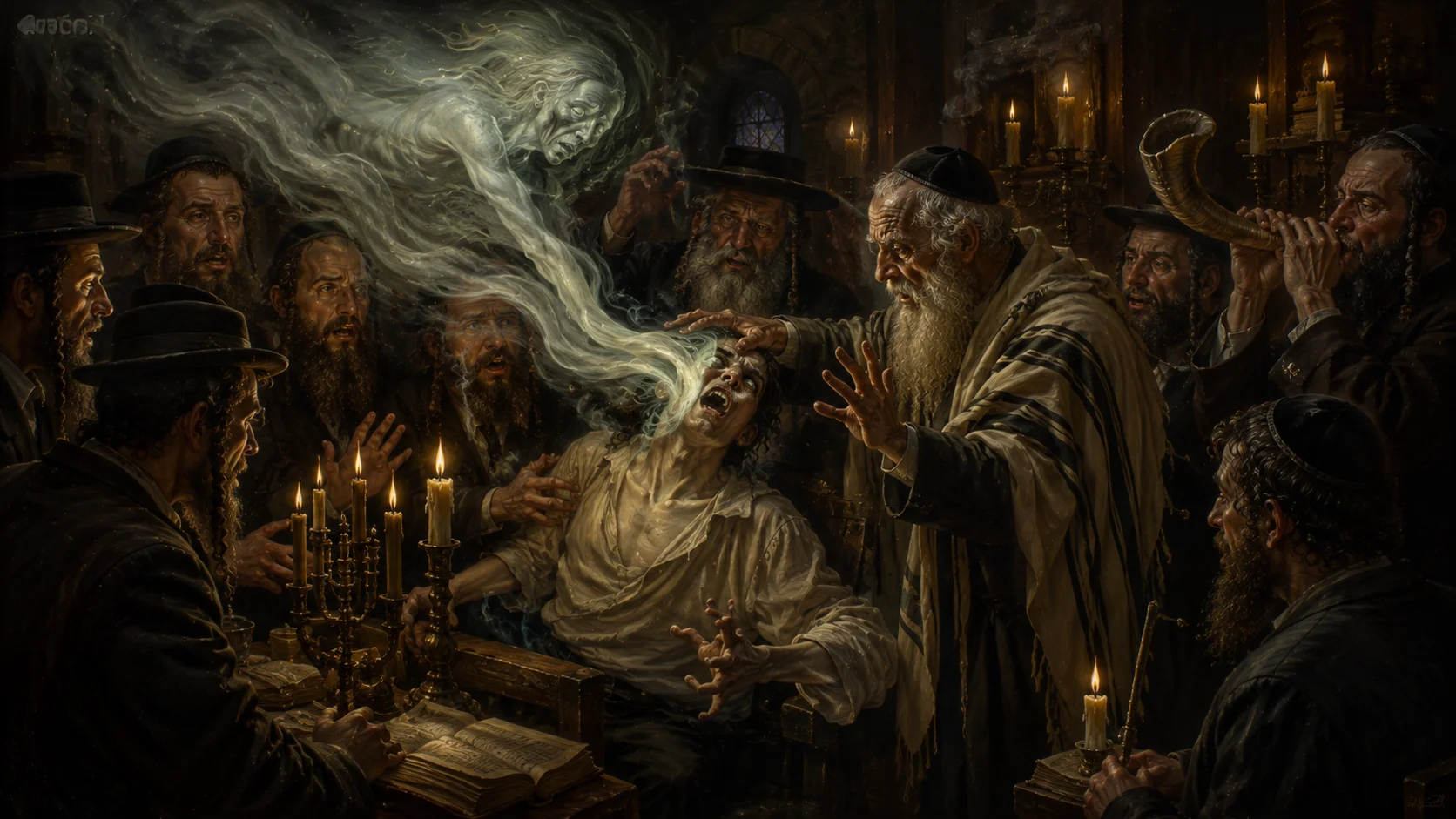
The story does not end with the giants' deaths in the Flood. 1 Enoch 15:8-12 makes a striking claim: the slain Nephilim did not simply cease to exist. Being born of both angelic and human nature, their bodies perished but their spirits endured, becoming the evil spirits — the demons — who continue to trouble and afflict humankind. In this account, the Watchers narrative is not only a story of angelic downfall but an origin story for evil itself, an explanation reached for by Second Temple Jewish writers seeking to understand where affliction, temptation, and demonic harassment came from. The same idea recurs in Jubilees, another apocryphal work of the period (chapters 5 and 10), and in documents found among the Dead Sea Scrolls, including the Damascus Document and the Genesis Apocryphon — evidence that this was no isolated tale but a current running through an entire stream of ancient Jewish thought.
How the Rabbis Turned Away From the Angels
Later rabbinic tradition largely stepped back from reading Genesis 6 as a story of angels descending to sin. Genesis Rabbah and, later, Pirkei de-Rabbi Eliezer generally favor understanding the "sons of God" as powerful men, nobles or judges, or as the line of Seth marrying beyond its bounds — readings far more comfortable than one in which heavenly beings possess bodies capable of lust and transgression. The discomfort is telling in itself: a corporeal, sinning angel sat uneasily within rabbinic theology. Yet the older names were not entirely erased. Strands of aggadic literature, including later midrashim and the Yalkut Shimoni, preserve figures called Shemhazai and Azael, clear echoes of Semjaza and Azazel, retold now as a cautionary tale warning against angelic pride and desire rather than as sacred history to be affirmed.
The Silent Watchers of the Fifth Heaven
A related and distinct tradition appears in 2 Enoch, the Slavonic Enoch, another apocryphal work whose date and place of composition remain disputed among scholars. There, "Grigori" is used explicitly as the name for a class of angels stationed in the fifth heaven, described as mournful and silent. This detail matters: it distinguishes Watchers who did not join the descent, or who repented of it, from the two hundred bound beneath the earth. Not every Grigori shares Semjaza and Azazel's fate in this telling — some remain in heaven still, grieving, apart from judgment, a quieter counterpoint to the violence of the Hermon narrative.
A Text Between Traditions
The Book of the Watchers occupies an unusual place in religious history precisely because its authority was never universally settled. It is absent from the Hebrew Tanakh and from the standard rabbinic canon, yet it survives in full only through Ethiopic translation, corroborated by ancient Aramaic fragments that prove its antiquity beyond doubt. Scholars have also noted its use among the Beta Israel, the Jewish community of Ethiopia, alongside its firm canonical status within Ethiopian Orthodox Christianity. It is, in other words, scripture in one living tradition and revered ancient testimony everywhere else — a single story that draws different lines of authority depending on where it is received, but which, in every telling, casts the Grigori as the first and most consequential of all the angels who watched, and then chose not merely to watch.
Sources & traditions
- EncyclopediaWikipedia — Watcher (angel)
- TraditionHebrew texts, grimoires and later commentary
Myths change from area to area and from time to time. This chronicle follows the most widely told versions; tellings in other villages, regions and eras may differ.