The Nephilim are the giant offspring of the fallen angels and mortal women — the monstrous half-celestial beings whose violence and corruption, in Hebrew tradition, brought the world to the brink of ruin and called down the great Flood. They are the dark fruit of the Watchers’ sin, the children who should never have been born.
The Sons of the Watchers
Their origin is told in the cryptic verse of Genesis: “The sons of God saw the daughters of men, that they were fair; and they took them wives... There were Nephilim in the earth in those days... mighty men who were of old, men of renown.” The Book of Enoch unfolds the tale: the fallen Grigori, led by Semyaza, descended and took human wives, and from these forbidden unions were born the Nephilim — giants of immense and terrible stature, neither fully angelic nor fully human.
The Devourers of the Earth
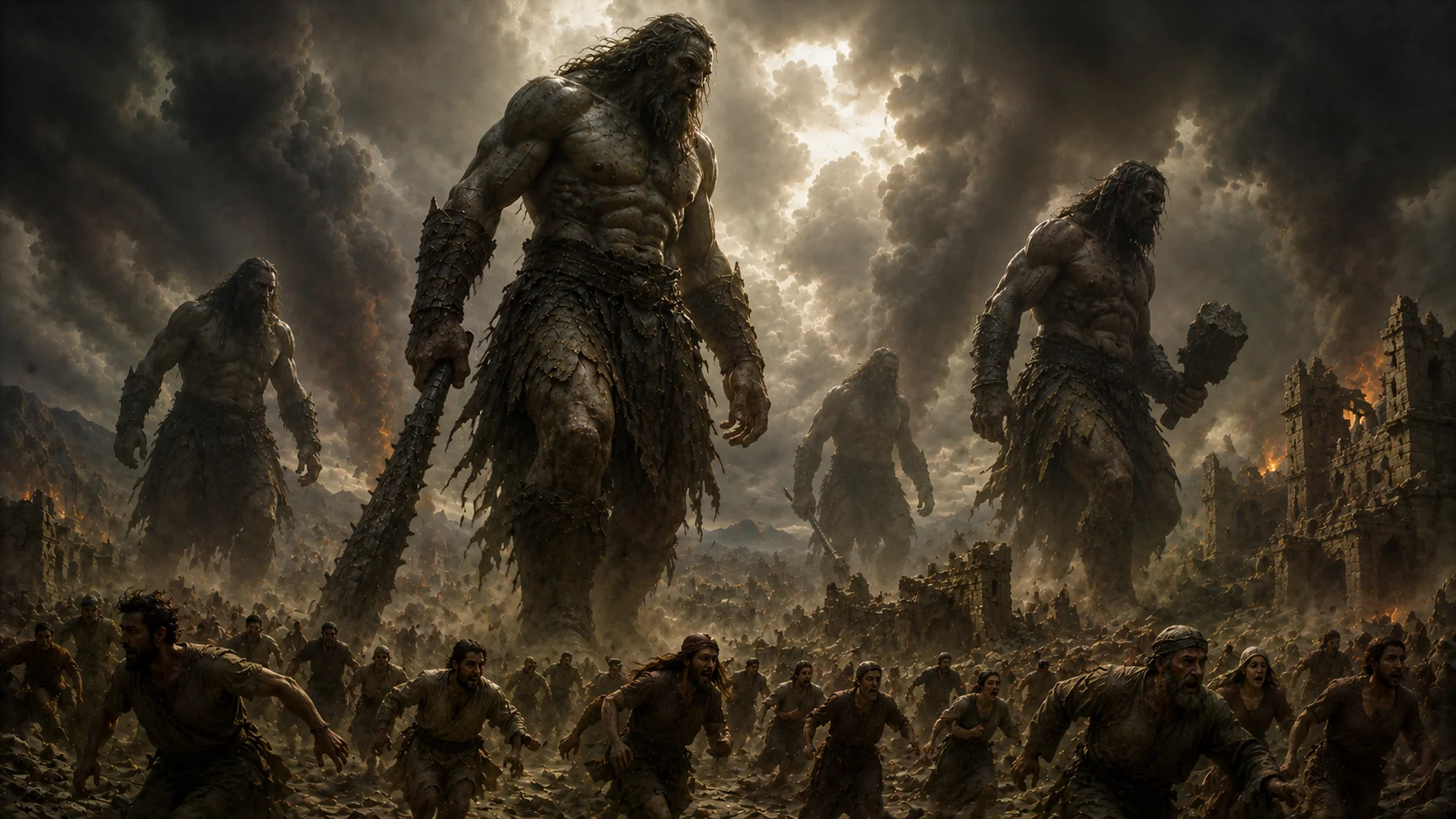
The Nephilim grew into a scourge upon creation. The Book of Enoch describes their insatiable appetite: they consumed all the labor of humankind until people could no longer sustain them, and then the giants turned against humanity itself, devouring flesh and drinking blood, and warring against the beasts and birds and fish. The earth, filled with their violence and bloodshed, cried out to heaven. Their very name is linked to the Hebrew root for “to fall” — the fallen ones, or those who cause others to fall.
Judgment and Remnant
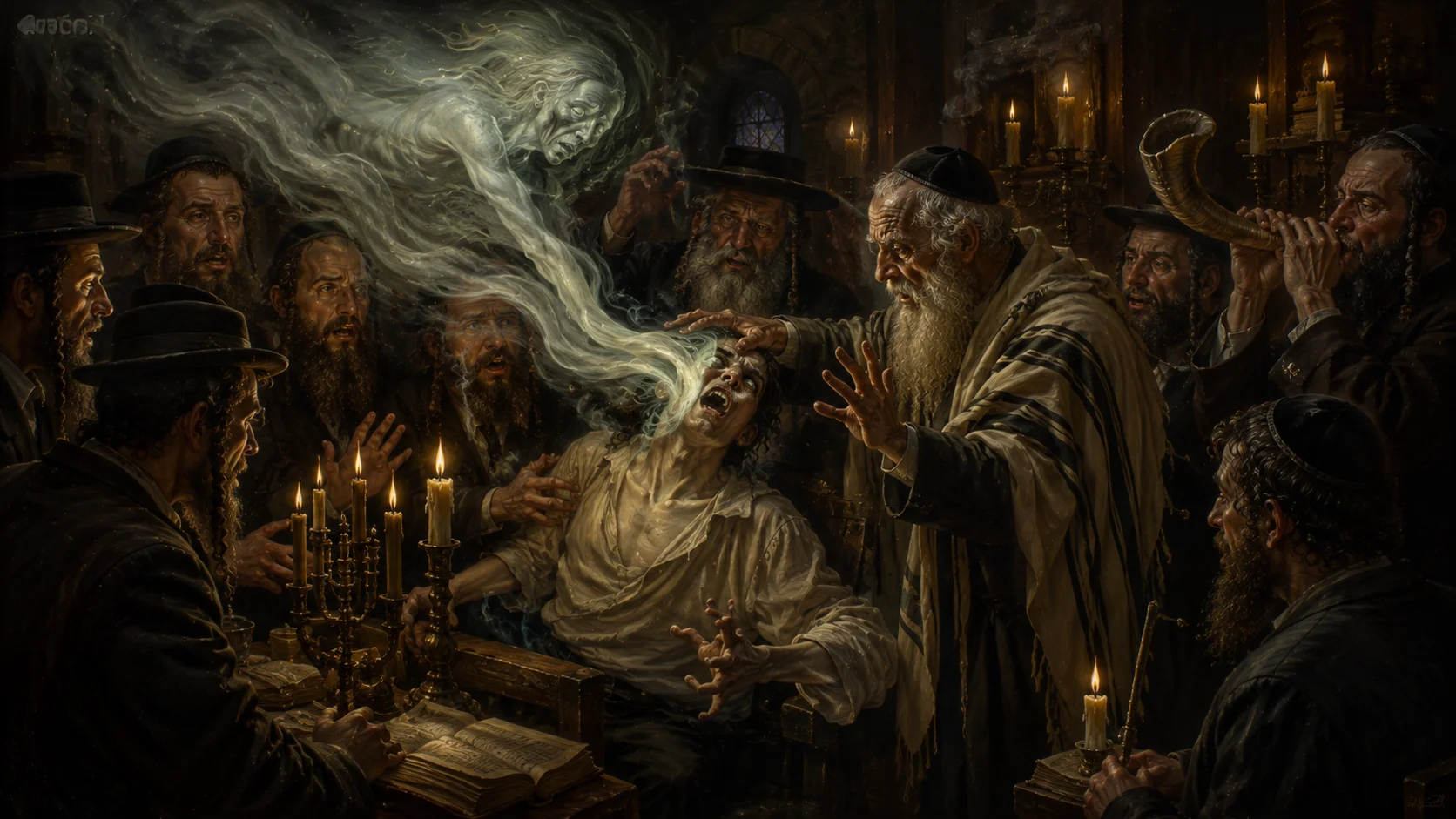
So great was the corruption loosed by the Nephilim that God resolved to cleanse the world with the Flood. The archangels were sent to bind the Watchers and to set the giants against one another, that they might destroy themselves in mutual slaughter; the waters then swept away what remained. Yet tradition held that the disembodied spirits of the dead Nephilim became the evil spirits and demons that afflict the earth thereafter — and that giants appeared again in later ages, the Anakim and Rephaim whom Israel encountered in the promised land. In the Nephilim, Hebrew tradition gave form to the terrible consequences of the mingling of heaven and earth — the monstrous progeny of a transgression that nearly unmade the world.
Two Ways to Read “Sons of God”
Two Hebrew words have divided readers for two thousand years: bene ha-elohim, “sons of God.” Genesis never says outright what kind of beings these are, and that silence opened a fault line running straight through Jewish and Christian tradition. The oldest readers — the authors of the Enochic literature, Josephus, and much of Second Temple Judaism — took the phrase at face value: these were heavenly beings, angels who had abandoned their proper place. Josephus, writing near the end of the first century, recorded the tradition plainly, describing angels who consorted with women and fathered sons of such overbearing violence that the Greeks would have called them giants. Philo of Alexandria took the allegorical route instead. In his treatise On the Giants he reads the episode as a parable of the soul, sorting humanity into the earth-born, who hunt bodily pleasure, and those who rise instead toward reason and God — corruption of the spirit rather than a literal race of monsters.
The angelic reading did not last unchallenged. As both traditions wrestled with the theological discomfort of angels possessing bodies and begetting children, rival interpretations gained ground — and they were not the same rival in each tradition. Rabbinic Judaism largely drained the phrase of the supernatural: Targum Onkelos renders it “sons of the nobles,” and in Genesis Rabbah, Rabbi Shimon bar Yohai reads the bene ha-elohim as judges, powerful men abusing their station. Christian writers took a different exit, identifying the “sons of God” with the righteous line of Seth and the “daughters of men” with the line of Cain — a story about intermarriage and moral decline rather than angels and monsters. Augustine gave that reading its most influential defence in The City of God, arguing that men could properly be called sons of God, and that giants were simply very large men, born as any man is born. Between them the two exits pushed the older, stranger story of angelic fathers to the margins, where it stayed alive in apocryphal literature and folklore long after it had ceased to be the official account of where the Nephilim came from.
Voices from Qumran: The Book of Giants
Among the scrolls hidden in the caves above the Dead Sea lay fragments of a text scholars now call the Book of Giants — part of the wider body of Enochic literature, and remarkable for telling the story from the giants’ own point of view. Here the giants are not silent monsters but characters: they dream troubling dreams of a garden destroyed by water and fire, argue in assembly over what the visions mean, and at last send one of their own, Mahaway, to Enoch himself to beg for an interpretation and, perhaps, a way out. Two of the giant sons of Shemihazah — the Watcher chief the Book of Enoch calls Semyaza — are named outright: Ohyah and Hahyah, and the fragments linger on their dawning fear as the shape of the coming judgment becomes clear to them.
Stranger still is where two other names in the text lead. Among the giants stands one called Gilgamesh, and another, Hobabish, whose name plainly echoes Humbaba — the hero and the monster at the heart of the far older Mesopotamian Epic of Gilgamesh. The Jewish scribes who composed the Book of Giants reached across cultures and centuries and folded Babylonian legend into their own account of the antediluvian world, casting the heroes of a foreign epic as monstrous offspring of the Watchers. Its afterlife runs further still: centuries later the Persian prophet Mani adopted the Book of Giants as one of his own scriptures, and Manichaean copies travelled the Silk Road, surviving in fragments recovered from the desert oasis of Turfan — a Jewish apocryphal text about the Nephilim, reborn as scripture for a religion founded hundreds of years later and a thousand kilometres east.
Og, Goliath, and the Giants of Canaan
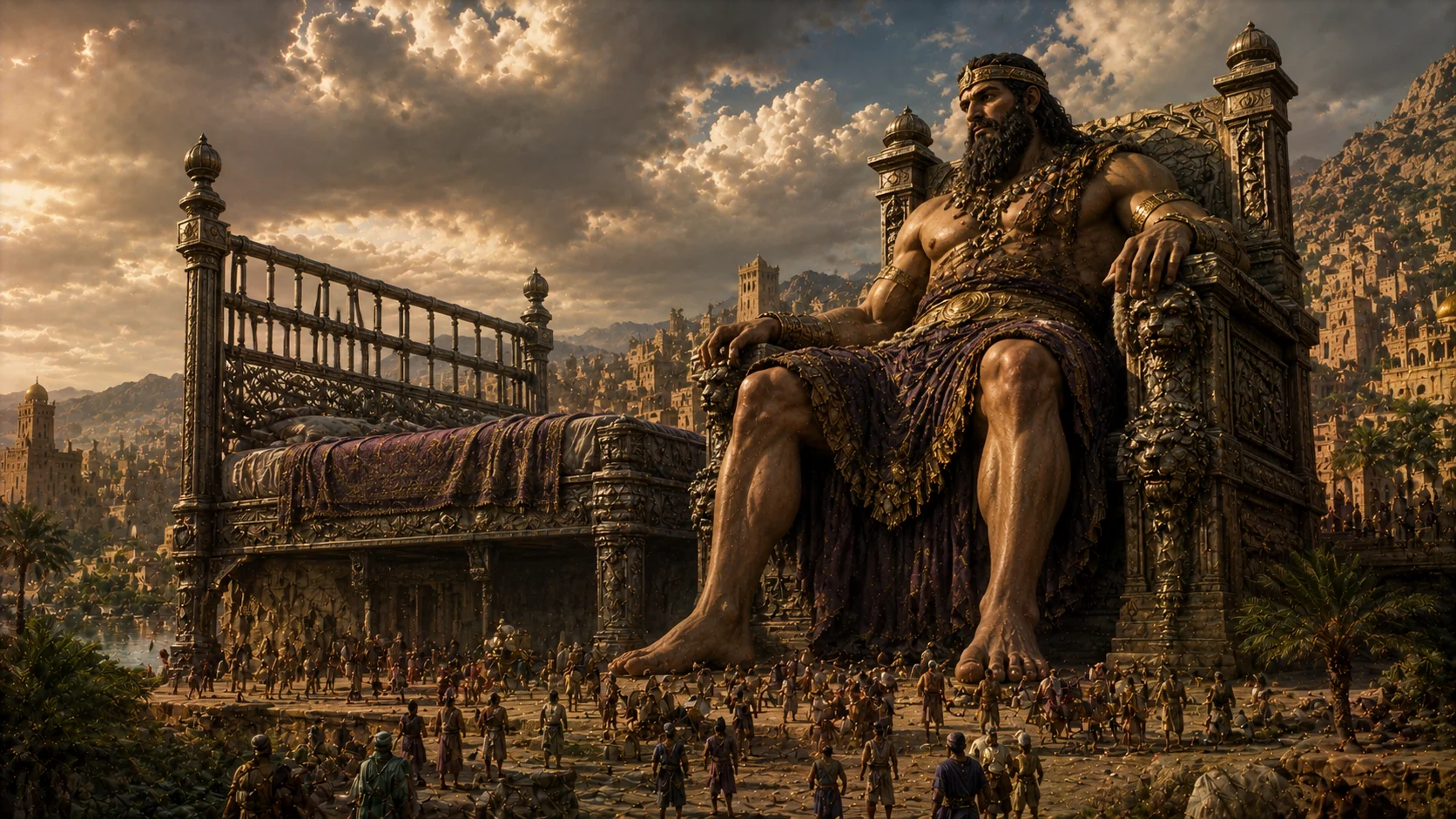
When the Israelite spies came back from scouting Canaan, their report was not about walls or armies but about bodies. “There we saw the Nephilim,” they told Moses, “and we were in our own eyes as grasshoppers.” The spies called these giants the sons of Anak, descended — the text insists — from the Nephilim themselves, and the panic that followed cost that entire generation the land: they were condemned to forty years in the wilderness and to die in it, leaving their children to cross over without them. Deuteronomy then preserves a startlingly physical relic of another giant. Og, king of Bashan, is called the last remnant of the Rephaim, and his iron bed — nine cubits long, something over four metres — was said to be still on view in Rabbah of the Ammonites, offered almost as forensic evidence for a claim the writer expected his readers to doubt.
The thread does not end with the conquest. Joshua records that the Anakim were cleared out of Israelite territory but survived in three Philistine cities: Gaza, Ashdod, and Gath. Gath is the detail worth holding onto, because Gath is where Goliath comes from. The books of Samuel go further and name a small cluster of giant warriors from that city — four of them, all called descendants of Rapha, cut down one by one by David’s soldiers. One is killed by a soldier named Elhanan and called Goliath outright, whom Chronicles later retells as Goliath’s brother Lahmi: a tangle the biblical editors never quite smoothed away. Whether or not those writers meant a literal bloodline running from the antediluvian Nephilim through the Anakim to the Philistine giants of David’s day, the pattern is deliberate. Giants recur at the edges of Israel’s story precisely where the land itself feels most dangerous and most contested.
Chains of Darkness: The Nephilim in Christian Scripture
The angelic origin did not vanish with the closing of the Hebrew canon — it surfaces in the New Testament itself. The Epistle of Jude speaks of angels who did not keep their proper domain but abandoned their own dwelling, and whom God has kept in eternal chains under darkness for the judgment of the great day; Second Peter carries the same tradition, describing angels who sinned, cast down and delivered into chains of gloom to await judgment. Jude is the more revealing of the two, because a few lines later it quotes Enoch by name and as prophecy — a book that never entered the canon, cited as scripture inside one that did.
Several of the early Church Fathers held the older view without embarrassment. Justin Martyr, writing in the second century, taught that angels captivated by love of women fathered the beings men call demons, and that these afterwards subdued the human race through magic, fear, and the sacrifices they extorted. Tertullian, drawing openly on Enoch, blamed the same fallen angels for teaching women metallurgy, dyes, and cosmetics — the arts of adornment as a transmitted corruption. Only with Augustine, in the fifth century, did the mainstream Western Church decisively turn away, and not because the older tradition had been disproven. The Nephilim thus occupy an odd place in Christian memory: their fathers are still there at the edges of the accepted canon, in letters read aloud from pulpits every week, while the book that explained who those fathers were was quietly left outside.
Stone Giants and Ancient Astronauts
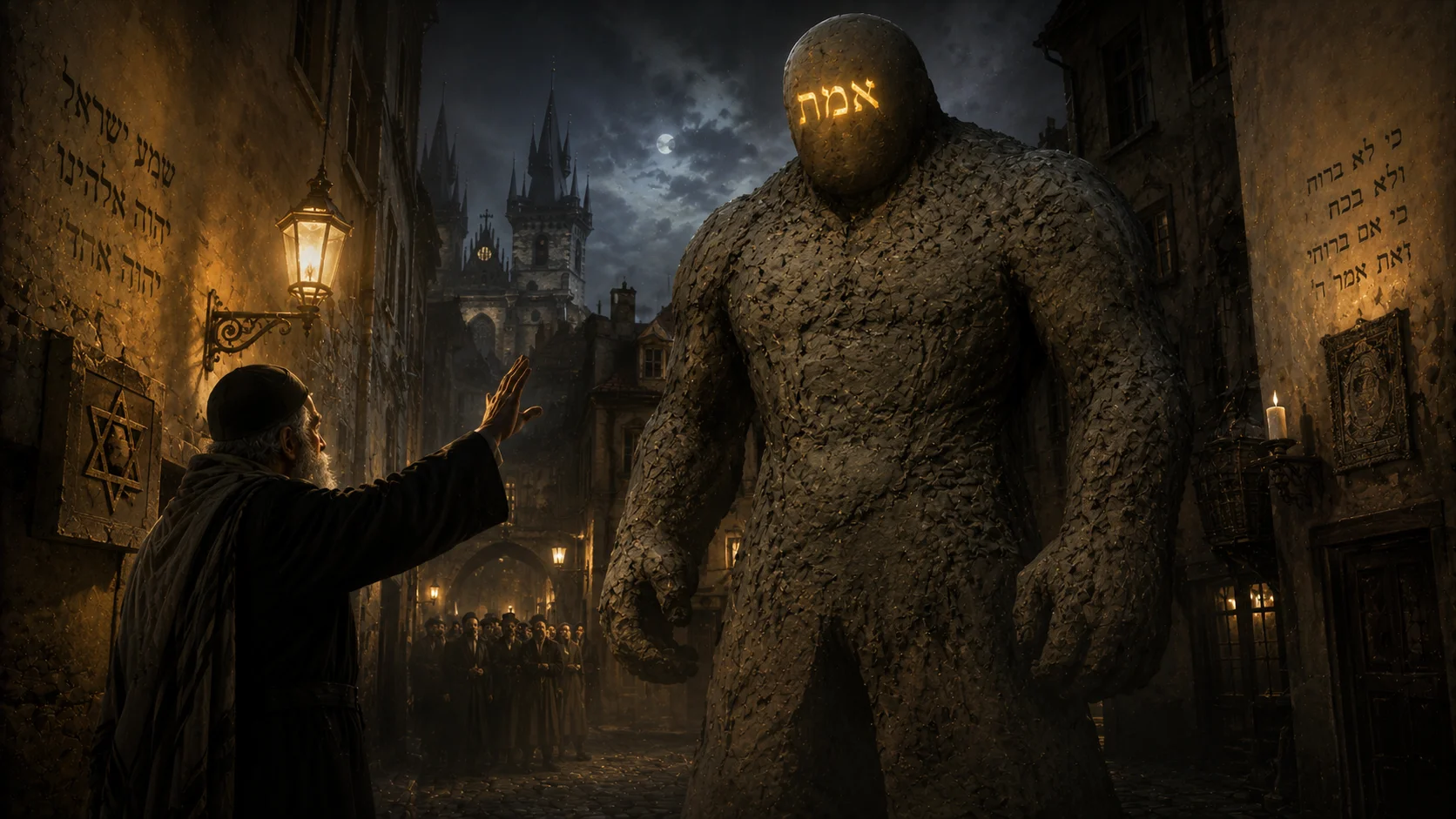
The Nephilim have never left popular imagination, and each age remakes them in its own idiom. Darren Aronofsky’s 2014 film Noah reimagined the fallen Watchers as immense beings of light caked over in stone, their luminous bodies encrusted with rock when they came down to earth — a cinematic invention, though not one without an ancestor: the Book of Enoch has Azazel bound hand and foot and cast into a pit opened in the desert, covered over with rough and jagged rocks and left in darkness. Elsewhere the giants have been pulled into far less careful territory. From the mid-twentieth century onward, a strand of pseudo-archaeological writing has recast the Nephilim as visiting extraterrestrials and their fall from heaven as a descent from the sky in a literal, technological sense. The ancient texts give the idea nothing to stand on — their Watchers are heavenly beings in a theological and cosmological sense, not travellers from another world — but the reading’s popularity says something real about how readily this story bends to whatever anxiety an era brings to it.
Why the Nephilim Still Unsettle
What keeps the story alive is not the giants’ stature but the question it was built to answer: why is the world so violent, if it was made good? The Nephilim supplied an answer that put the fault neither in God nor quite in ordinary humanity. The ruin came in from the border of the created order, carried by beings who should have known better, and the Flood that followed reads less as rage than as amputation — a wound cut out before it could spread. It is a tidy solution, and an unstable one, which is why every age has had to rebuild it: angels, then judges and Sethites, then rock giants, then astronauts. A story that needs retelling that many times is usually answering a discomfort that has not gone anywhere.
Sources & traditions
- EncyclopediaWikipedia — Nephilim
- TraditionHebrew texts, grimoires and later commentary
Myths change from area to area and from time to time. This chronicle follows the most widely told versions; tellings in other villages, regions and eras may differ.