The Rephaim are an ancient race of giants in Hebrew tradition — a mysterious people of great stature who dwelt in the lands east and west of the Jordan before Israel, and whose very name came also to denote the shades of the mighty dead in the underworld. They occupy a strange double place in Hebrew thought: living giants of old, and ghostly inhabitants of the realm below.
The Giant Peoples of Old
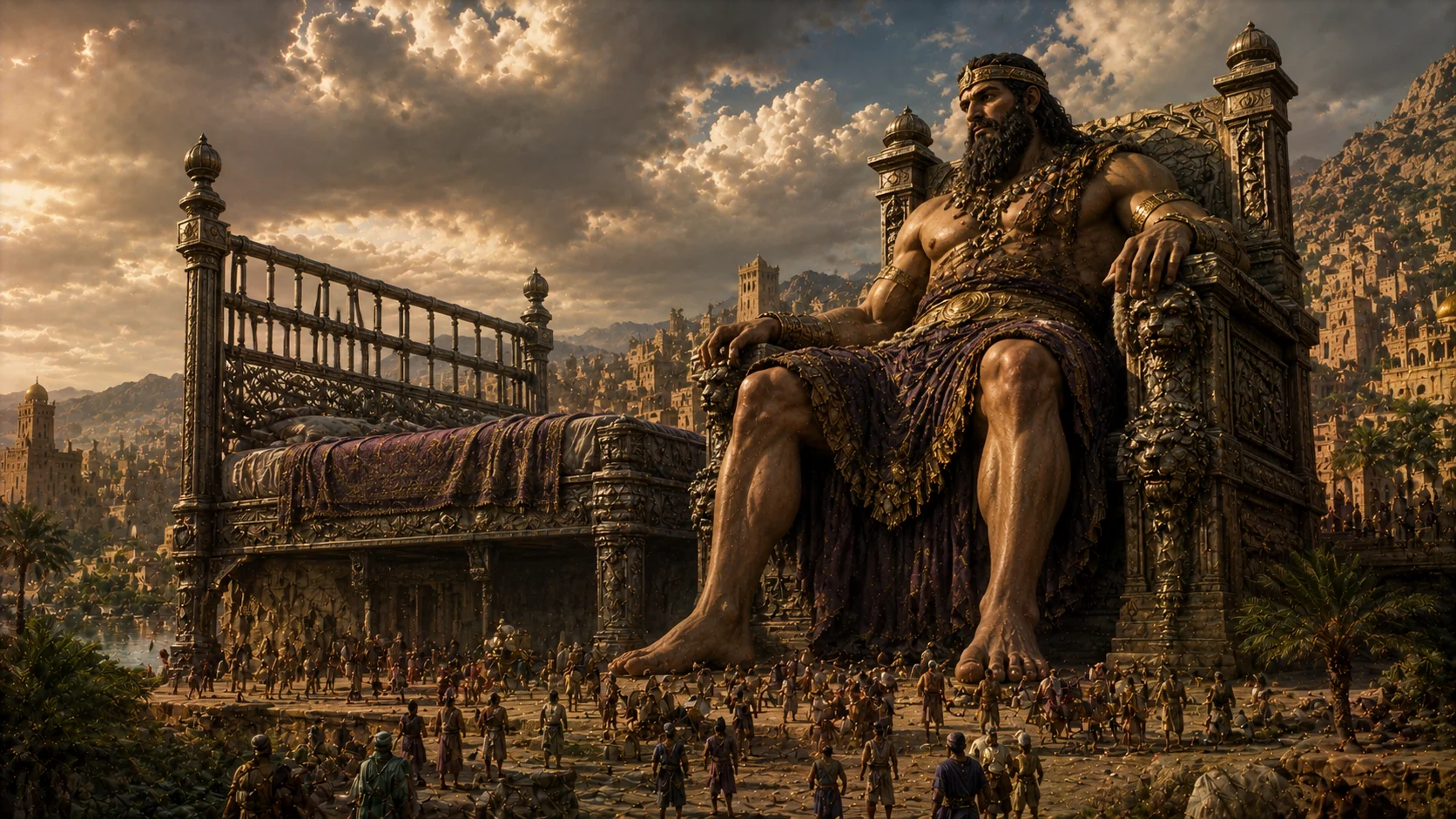
The Rephaim are listed among the gigantic nations that occupied the land in primeval times. “The Rephaim used to dwell there” in the land later called the country of the Ammonites, “a people great and many, and tall as the Anakim.” They are named alongside the Anakim, the Emim, and the Zamzummim as ancient giant-clans, and Og of Bashan is remembered as the last remnant of the Rephaim, his iron bed a measure of their size. They were a real and dreaded presence in the memory of the land — the giants who came before.
The Valley and the Shades
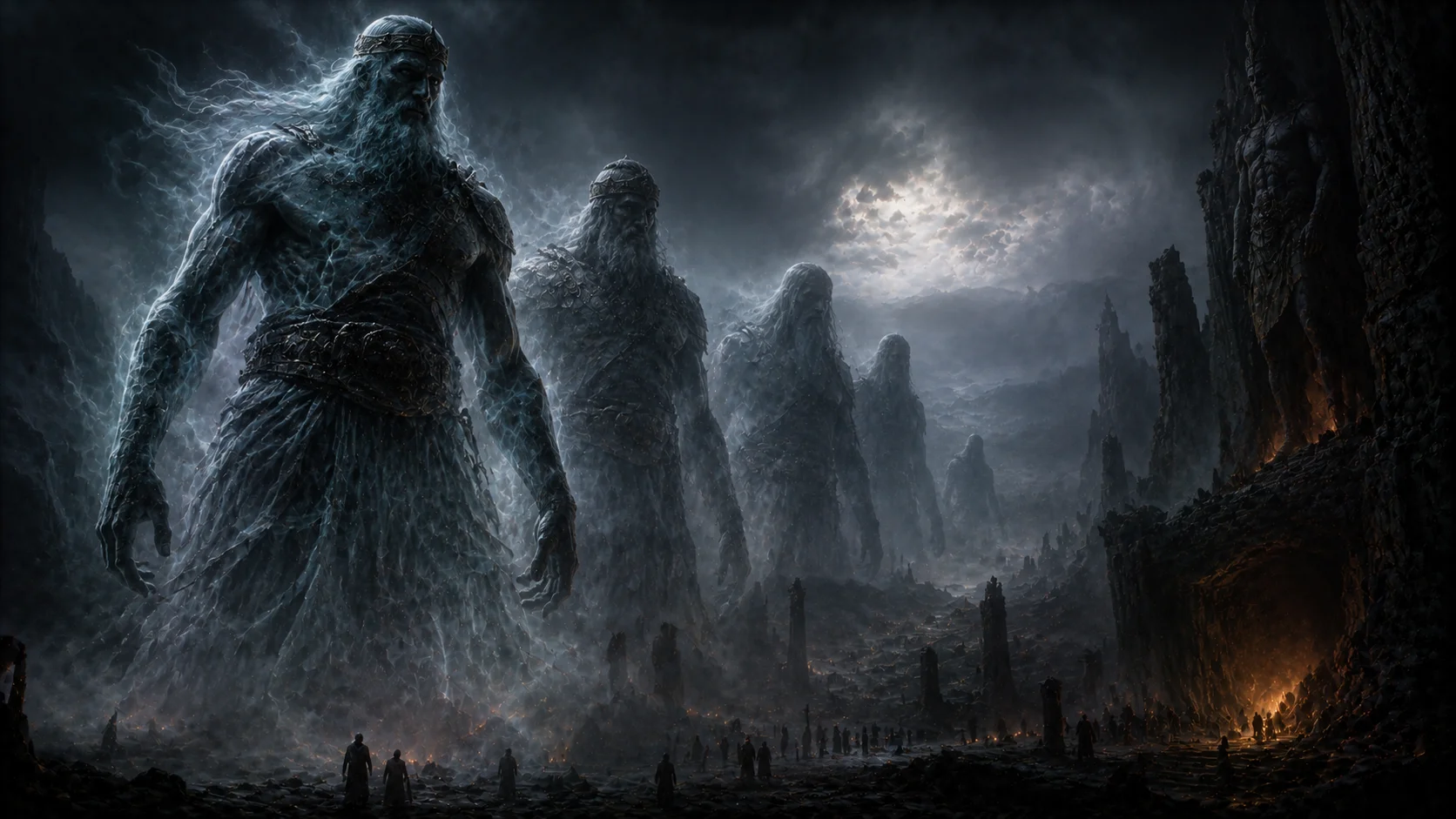
Their name marked the landscape: the Valley of Rephaim near Jerusalem bore their memory long after they were gone. But the word rephaim carried a second, eerie meaning. In the poetic and prophetic books it names the shades — the spirits of the dead who dwell in Sheol, the silent underworld. “The Rephaim tremble beneath the waters,” says Job; and Isaiah taunts the fallen king of Babylon: “Sheol beneath is stirred up to meet you... it rouses the Rephaim, all who were leaders of the earth.” The mighty dead, the departed kings and heroes, became the Rephaim of the grave.
Giants and Ghosts
This doubleness — living giant and underworld shade — weaves the Rephaim into the deepest layers of Hebrew thought about the great and the dead. Some scholars trace the connection through the idea that the heroic dead, the once-mighty fallen ones, descend to a shadowy half-life below, just as the giant Nephilim of old were said to leave restless spirits behind. Whether as the towering peoples whom Israel displaced or as the trembling shades of departed greatness, the Rephaim embody the memory of a vanished might — the giants of the world’s morning, now dwelling in the dust and the deep.
The Feasting Dead of Ugarit
Centuries before a single line of the Hebrew Bible had been copied onto a scroll, scribes on the Syrian coast at Ugarit were already writing about the rpum — and inviting them to dinner. In fragments of ritual poetry recovered from that ruined city the rpum are called by name, their chariots are harnessed, and they travel for days across the land until they arrive at a threshing floor to feast; a funerary liturgy for a dead king summons the ancient rpum alongside the named kings of the royal house. These are not monsters. The prevailing reading takes them for the heroized dead of that royal line — ancestors who still ride, still eat, still matter to the living who remember them — though a minority of scholars argue instead for a living warrior elite. Philologists have argued just as long over what the underlying word once meant: one line of reasoning ties the root to a verb meaning “to heal”, casting the Rephaim as beneficent healers or as the object of a cult of the dead; another ties it to a separate root meaning “to sink down, to grow slack”, casting them instead as the weakened, shade-like remnant of a life once lived at full strength. The Hebrew Bible seems to preserve both senses at once — giants in their vigour, shades in their decline — without ever quite choosing between them.
Rapi’u, King of Eternity, and the Land Named After Them
One Ugaritic text goes further still, naming a figure called Rapi’u, “king of eternity”, and locating his rule at two named places: Ashtaroth and Edrei. Any reader of Deuteronomy will recognise them at once — they are the two seats named for Og, king of Bashan, the last of the Rephaim in the biblical account. The overlap has struck scholars as too exact for accident: it suggests that long before Israel told the story of Og, the region of Bashan already carried a religious memory of a royal, more-than-human dead figure enthroned at precisely those sites. Deuteronomy, for its part, attaches the name to the territory outright: Argob, with the whole of Bashan, it says, “is called the land of Rephaim.” That was no empty label. Og’s Bashan is remembered as a country of sixty fortified towns — walled, gated, and barred — clustered across the basalt tableland east of the Jordan, a countryside so thoroughly identified with giants that the very ground carried their name into the Hebrew record.
A Law Against Speaking to the Silent
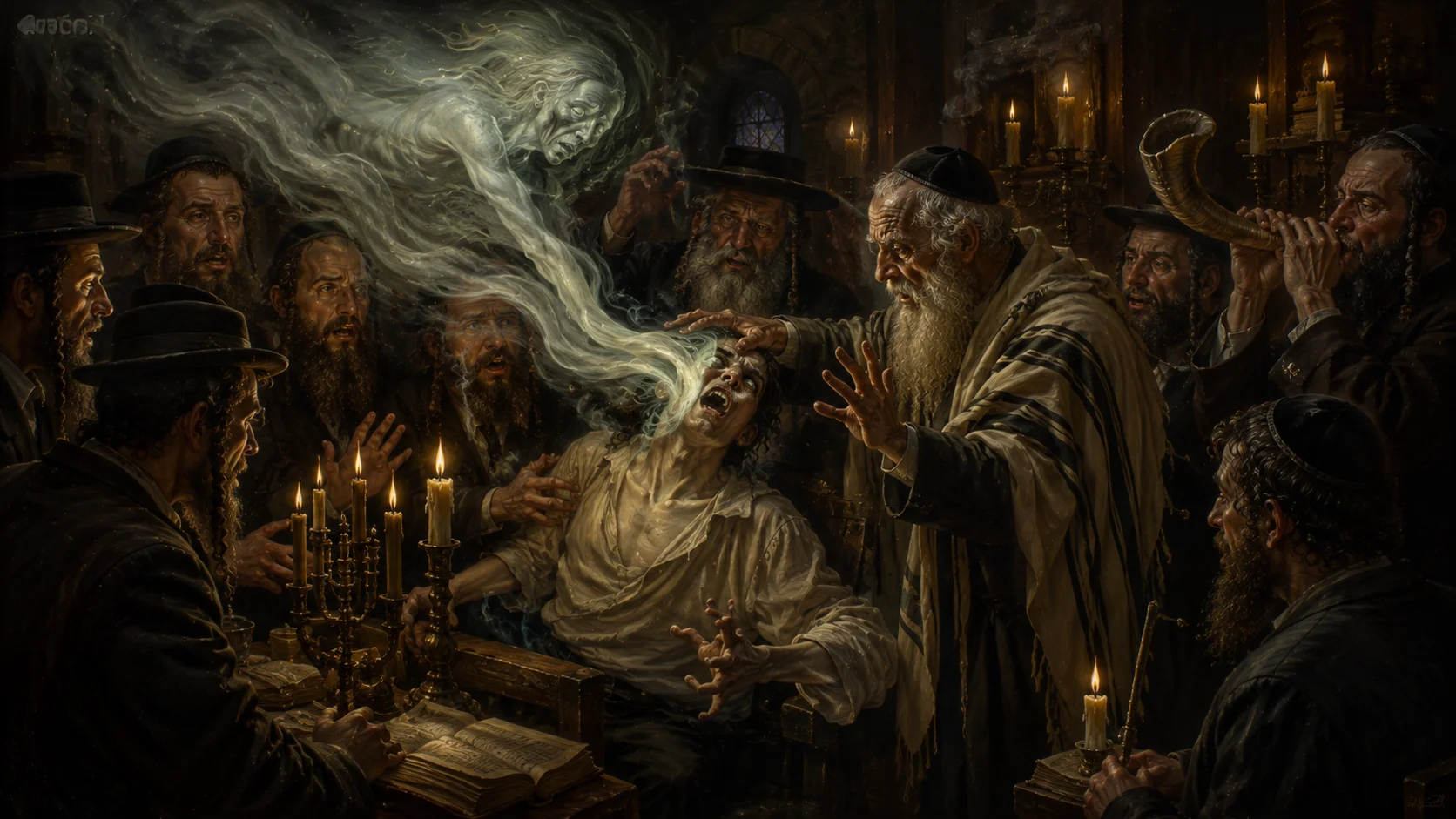
If the rpum of Ugarit were dead ancestors who could still be summoned, fed, and consulted, the law of Israel drew a hard line through exactly that possibility. Deuteronomy forbids “one who inquires of the dead” in the same breath as it forbids sorcery and omen-reading — a prohibition that only makes sense against a living belief that the dead could in fact be reached. Proverbs draws on that same underworld geography for a very different purpose: the seductress’s house, it warns, “sinks down to death”, and more than once her path is said to lead straight to the company of the Rephaim, her guests already “in the depths of Sheol.” And when Saul, bound by the ban he had himself enforced, goes in disguise to the medium at Endor to raise the spirit of Samuel, he is doing precisely what that ban exists to stop — reaching down into the same shadowy register of the dead that gives the Rephaim their second meaning. The law and the folk practice it tried to suppress were arguing about the same underworld.
“The Rephaim Will Not Rise”
Nowhere is that argument sharper than in Isaiah. Having roused the Rephaim in one breath to greet the dead king of Babylon, the prophet turns, a dozen chapters later, to deny them any future at all: “the dead do not live, the Rephaim do not rise” — every memory of them blotted out — set pointedly against a promise made to Israel’s own dead a few verses further on: “your dead shall live, their bodies shall rise.” The Psalter asks the same question more starkly, flung at God from the edge of the grave: “Do you work wonders for the dead? Do the Rephaim rise up to praise you?” The expected answer is no, and that answer is doing real theological work. If the rpum of the neighbouring cultures were dead kings who went on acting in the world — feasted, consulted, credited with a kind of continuing power — then denying the Rephaim any capacity to rise, act, or be praised was a way of stripping the royal dead of exactly the ongoing authority that ancestor cults elsewhere granted them.
Giants After the Flood
The giants did not stay confined to Genesis and Deuteronomy. Jewish writers of the Second Temple period, elaborating on Genesis’s brief note that the sons of God took human wives and fathered a race of might, worked out an entire afterlife for the giants’ offspring: their enormous bodies die, but their spirits do not, and go on afterwards as a distinct, restless order of evil spirits harassing the living. The Enochic writings develop the idea at length, and a lost Book of Giants — surviving only in fragments recovered among the Dead Sea Scrolls — expands it into narrative, with individually named giants dreaming of coming destruction and sending an emissary to Enoch to have the dreams read. A separate, later strand of Jewish legend fastened instead on the one named survivor of the Rephaim line. Og, it was said, had been so vast that he escaped the Flood itself, clinging to the outside of the ark while every other giant drowned — a folk answer to exactly the puzzle the biblical text otherwise leaves open, namely how a pre-Israelite giant-king could still be standing centuries later for Moses to defeat.
Why the Rephaim Persist
The Rephaim are unusual among the Bible’s terrors in that the story never quite finishes them. Their giants are killed off page by page across Genesis, Numbers, Deuteronomy and Joshua, yet the shades keep surfacing in the poetry long after the conquest accounts have closed, beyond the reach of any army because they were never alive in the ordinary sense to begin with. That is what made the word so useful. A people surrounded by the physical evidence of an older, larger, vanished population — walls too heavy to explain, a name still clinging to the land after the people it named were gone — will reach for one vocabulary to carry both the mystery of who built all this and the mystery of where the dead go. The Rephaim let ancient Israel hold both anxieties in a single hand: fear of the powerful people that history had erased, and fear of what, if anything, remains of the powerful once death erases them too.
Sources & traditions
- EncyclopediaWikipedia — Rephaite
- TraditionHebrew texts, grimoires and later commentary
Myths change from area to area and from time to time. This chronicle follows the most widely told versions; tellings in other villages, regions and eras may differ.