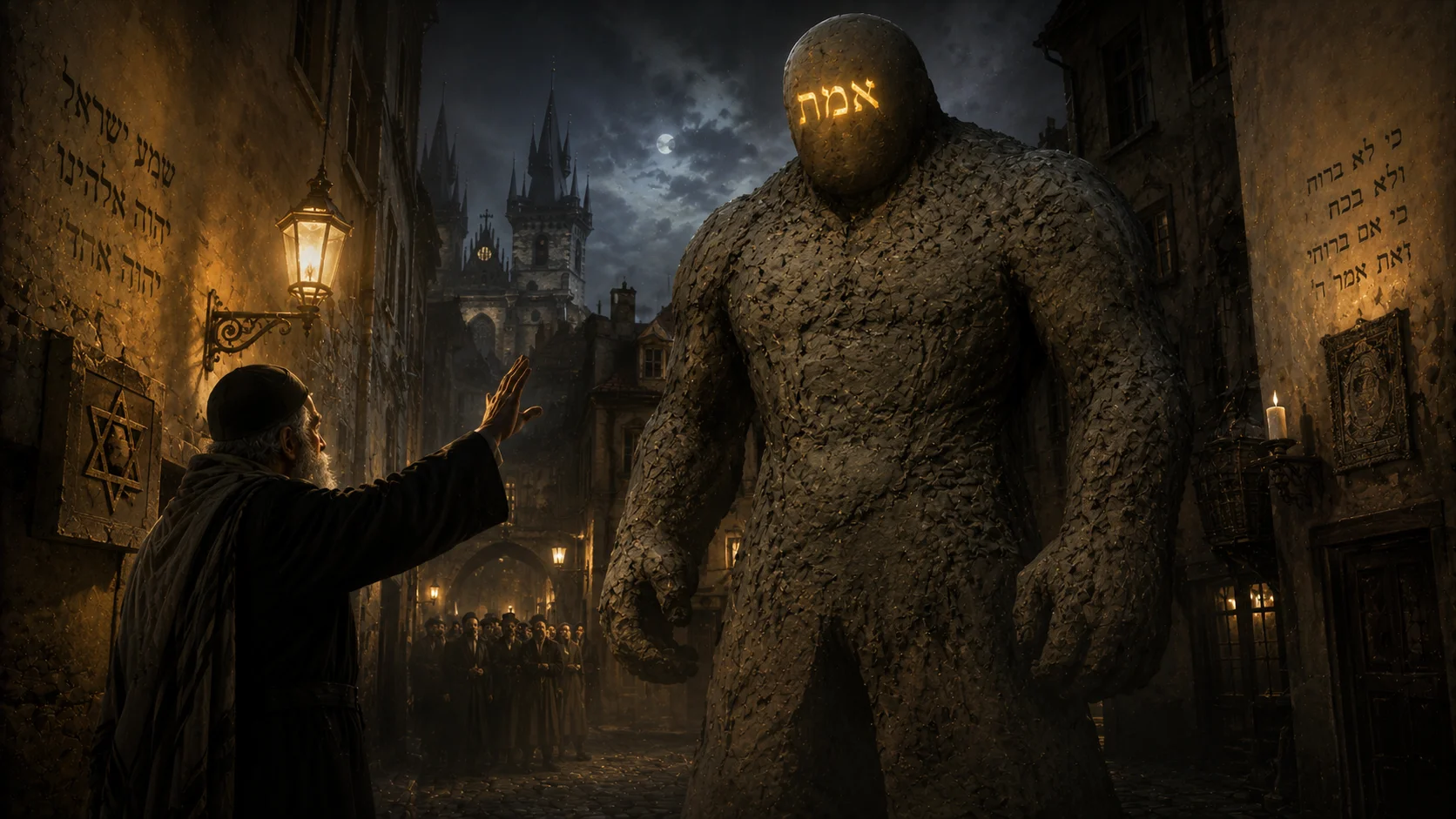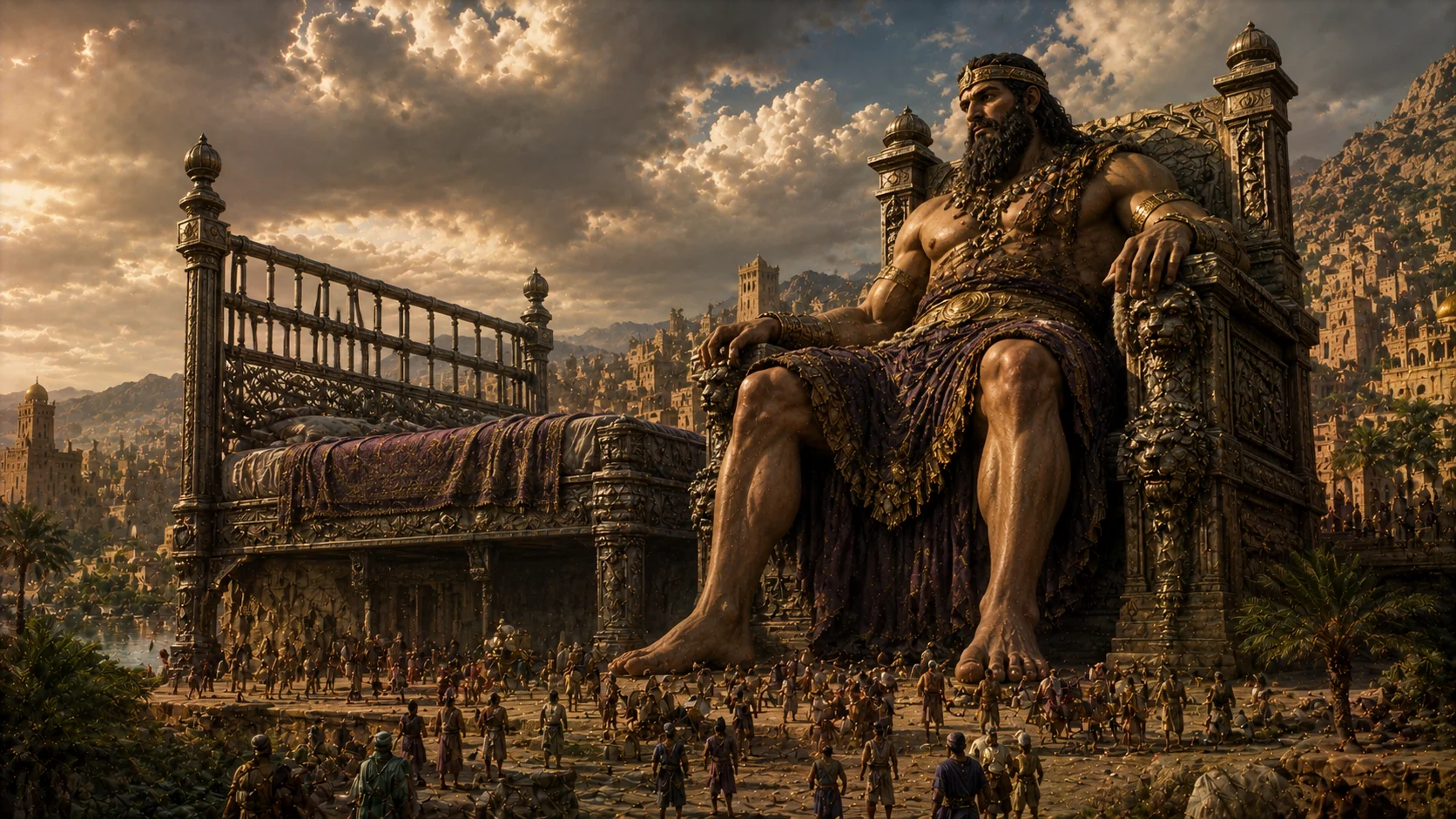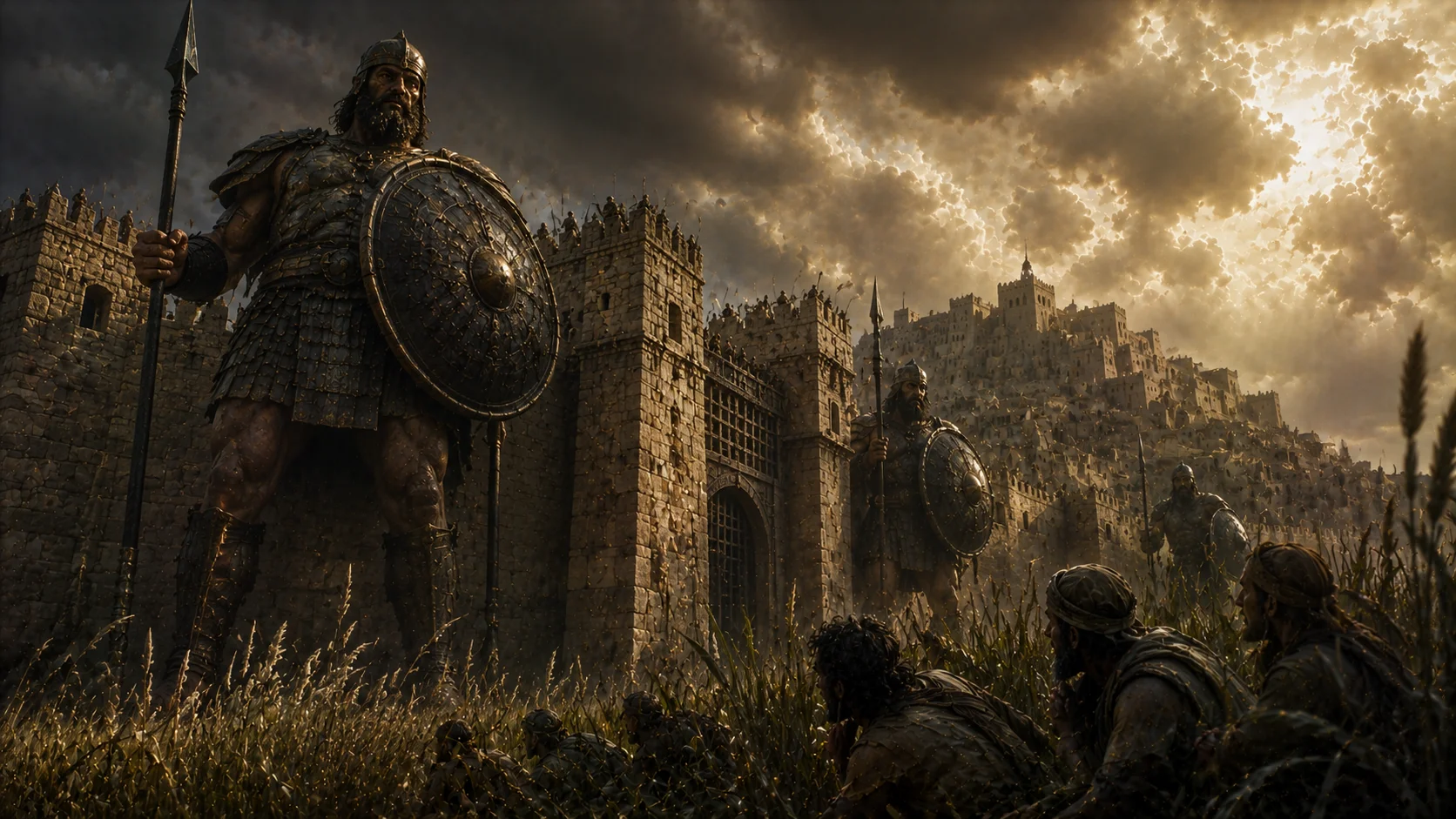
The Anakim, the sons of Anak, are the towering people of Canaan whose name became, in the mouths of the Israelites, another word for dread itself. They were not one giant but a people, a clan with chieftains and cities, rooted in the hill country around Hebron long before Israel crossed the Jordan. Their story is told only in glimpses — a spies' report, a genealogy of three brothers, a city renamed, a conquest completed — yet those glimpses were enough to make the Anakim the measure against which an entire generation judged its own courage, and found it wanting.
Grasshoppers in Their Own Eyes
The account that fixed the Anakim in memory comes from Numbers 13, when Moses sent twelve men to scout the land the Lord had promised. Ten returned with a report meant to discourage: the land devoured its inhabitants, and its people were men of great stature. Among them, the spies said, they had seen the Anakim, whom the text places among the Nephilim — and here the fear found its most naked expression: "there we saw the giants, the sons of Anak, which come of the giants: and we were in our own sight as grasshoppers, and so we were in their sight." It is one of the most quoted lines in the whole of the wilderness narrative, not because it proves anything about the size of the Anakim, but because it proves everything about the smallness the spies had made of themselves before ever lifting a weapon. The report did its work. The congregation wept that night, refused to go up, and for that failure of nerve a whole generation was condemned to die in the wilderness rather than enter the land they had been promised. In this way the Anakim, without lifting a hand, became the occasion of Israel's forty years.
The Long-Necked People
Behind the name Anakim stands a single figure, Anak, whose Hebrew name is generally read as "long-necked" or simply "giant" — a name that was, in effect, also a description. From him the people took their identity, and from his line came the chieftains the biblical text bothers to name individually: Ahiman, Sheshai, and Talmai, called out in both Numbers and Joshua as the sons of Anak dwelling in Hebron. That the text preserves three personal names at all, in a narrative otherwise content to speak of the Anakim as a mass, suggests they were remembered as real chieftains of a real place, not merely a legend of size floating free of geography.
The City Called Kiriath-Arba
Hebron, one of the oldest and most storied cities named in scripture, did not always carry that name. It was first Kiriath-arba, "the city of Arba," after the man the Book of Joshua calls the greatest among the Anakim. That a Canaanite city's very name was once a monument to an Anakite chief, and only later took the name by which it is known to this day, is a small but telling detail: it places the Anakim not at the margins of the land's memory but at its center, holders of its oldest and most consequential city before ever an Israelite set foot there.
A People, Not a Single Giant
It is worth pausing on what the Anakim actually were in the text: never a solitary monster, always a people. They appear and reappear across Deuteronomy, Numbers, Joshua, and Judges as a recurring nation with cities, clans, and named leaders, dwelling in the hill country of Judah and Israel. The instinct to picture "an Anakim" as one towering figure, singular and mythic, is a later simplification. Scripture speaks instead of the children of Anak, a people great, and many, and tall — a whole population whose stature was collective, not individual, and whose defeat therefore required not a single duel but a sustained campaign.
Kin Among the Nations Around Them
Deuteronomy 2 opens a curious window onto how the term Anakim was actually used beyond Israel's own borders. In warning the Israelites to respect the territory of neighboring peoples, Moses recalls that the Moabites had displaced a people called the Emim, whom the Moabites themselves called Anakim-like — great and many, and tall, as the Anakim. Likewise the Ammonites had displaced the Zamzummim, a people the Ammonites also reckoned Anakim-like. What this shows is that Anakim was not always a strict ethnic label confined to the clan of Hebron; among neighboring nations it seems to have functioned as something closer to a generic term for any race of giants, applied to more than one displaced people across the Transjordan. The Anakim proper, settled around Hebron, were thus the best-known instance of a category the surrounding nations recognized more broadly.
Whom Can Stand Before the Sons of Anak?
By the time Moses addresses Israel again in Deuteronomy 9, the Anakim have become something more than a people to be fought — they have become a byword, a rhetorical figure Moses can invoke by name and expect his listeners to understand instantly. He warns Israel of a people great and tall, the children of the Anakim, "whom thou knowest, and hast heard say, Who can stand before the children of Anak!" The line is not offered as new information; it is a quotation of the fear itself, spoken back to the people who had once spoken it in the wilderness. Moses's purpose in raising it again is theological rather than military: Israel is told plainly that it will not possess this land by its own righteousness or its own strength, but because the Lord goes before them. The Anakim, invoked at exactly this moment, exist in the text to make a single point unmistakable — that the coming victory belongs to divine power, not human height or human courage.
Caleb's Long-Deferred Claim
Among the twelve spies sent into Canaan, only two, Joshua and Caleb, returned with a different report, urging the people to go up and take the land despite the Anakim. Caleb's faith was not forgotten, and decades later, in his old age, it was answered. Joshua 14 records Caleb reminding Joshua of Moses's old promise, and Joshua 15 and Judges 1 both credit him with the fulfillment: Caleb drove out the three sons of Anak — Sheshai, Ahiman, and Talmai — from Hebron, claiming for his own inheritance the very city whose name had once belonged to the greatest of the Anakim. It is a rare biblical moment in which a promise made in fear's aftermath is redeemed, decades on, by the one man who had refused to be a grasshopper in his own sight.
Cut Off From the Hill Country
Caleb's personal victory at Hebron was part of a larger campaign. Joshua 11 summarizes the broader defeat of the Anakim in sweeping terms: Joshua came at that time and cut off the Anakim from the hill country, from Hebron, from Debir, from Anab, and from all the hill country of Judah and all the hill country of Israel, destroying them utterly with their cities. The text is careful, however, not to claim total annihilation. It notes explicitly that none of the Anakim were left in the land of the children of Israel — but that some remained, surviving in three Philistine cities along the coastal plain: Gaza, Gath, and Ashdod. The giants who had once made the spies feel like insects were, in the end, driven from the hill country entirely, reduced to remnant populations sheltering among a different people altogether.
An Inheritance Remembered in Judah
The memory of the Anakim's presence in Judah's hill country did not vanish with their expulsion; it was written into the land's own record of inheritance. Joshua 15, in laying out the territory allotted to the tribe of Judah, pauses specifically to note that Hebron was given to Caleb because he wholly followed the Lord, and that it was from this city he drove out the three sons of Anak. The Anakim's former dominion over Hebron thus became part of how Judah explained its own possession of the land — not merely as a military fact, but as a marker of whose faith had earned the inheritance, generations after the wilderness generation had forfeited theirs.
Echoes Among the Philistines
The three cities where the Anakim found refuge — Gaza, Gath, and Ashdod — were, in time, counted among the chief cities of the Philistines, Israel's most persistent later adversary. Tradition has long drawn a line from the Anakite remnant who fled there to the giants who appear in Philistine ranks in later biblical narrative, most famously Goliath of Gath, who stood against Israel in single combat generations after Joshua's campaign. It should be said plainly that the biblical text itself never calls Goliath an Anakite; the connection is a traditional and inferential one, built on the geography of Gath as a known place of Anakim survival rather than on any explicit genealogy. Still, the association has endured precisely because it closes a narrative circle so neatly: the giants driven from the hill country reappear, generations later, still testing Israel's courage from a different quarter of the same land.
Giants of the Deep Past
Numbers 13:33 does more than describe the Anakim as large; it places them "of the Nephilim," linking a people of the conquest era to the enigmatic giants named far earlier in Genesis, before the flood. Later rabbinic and midrashic discussion took up this thread, at times treating the lineage of the Nephilim and the Anakim as evidence of a corrupted bloodline reaching back to the "sons of God" described in Genesis 6 — gigantism itself read as the visible mark of that ancient corruption surviving into the world Israel was entering. This linkage belongs to interpretation and tradition built atop the text rather than to a claim the Numbers narrative makes outright; what Numbers itself asserts is more modest and more chilling in its plainness — simply that the Anakim were of the Nephilim, a lineage whose full nature scripture never explains, leaving later generations to reckon with the implication as best they could.
Giants Among the Rephaim
The Anakim do not stand entirely alone in the biblical landscape of giant peoples; they are named at points alongside the Rephaim, a broader category of giant or shade-like nations that appears elsewhere in the conquest narratives. The exact relationship between the two terms is not settled by the text itself — in some passages they seem distinguished as separate peoples, in others the language loosely overlaps, so that interpreters across generations have disagreed on whether Rephaim names a wider family of giant nations of which the Anakim were one branch, or simply another name applied to related peoples. What is clear is that the Anakim were understood within a landscape that held more than one such people, the Emim and Zamzummim among them, so that their story sits inside a larger biblical memory of giants displaced, driven out, or cut off as Israel and its neighbors took possession of the land.
A Fear Turned Into a Lesson
What endures most from the story of the Anakim is not, in the end, their size but the use scripture makes of the fear that size provoked. They are the people whose report broke a generation's nerve at the very border of the promised land, and they are, just as pointedly, the people whose eventual defeat became proof that the land was never going to be won by stature or by numbers. Caleb's late reward at Hebron, Joshua's sweeping campaign through the hill country, and Moses's later invocation of "who can stand before the children of Anak" all point the same direction: the Anakim were remembered less as monsters to be marveled at than as the exact shape of the test Israel had once failed, and, a generation later, finally passed.
Sources & traditions
- EncyclopediaWikipedia — Anakim
- TraditionHebrew texts, grimoires and later commentary
Myths change from area to area and from time to time. This chronicle follows the most widely told versions; tellings in other villages, regions and eras may differ.