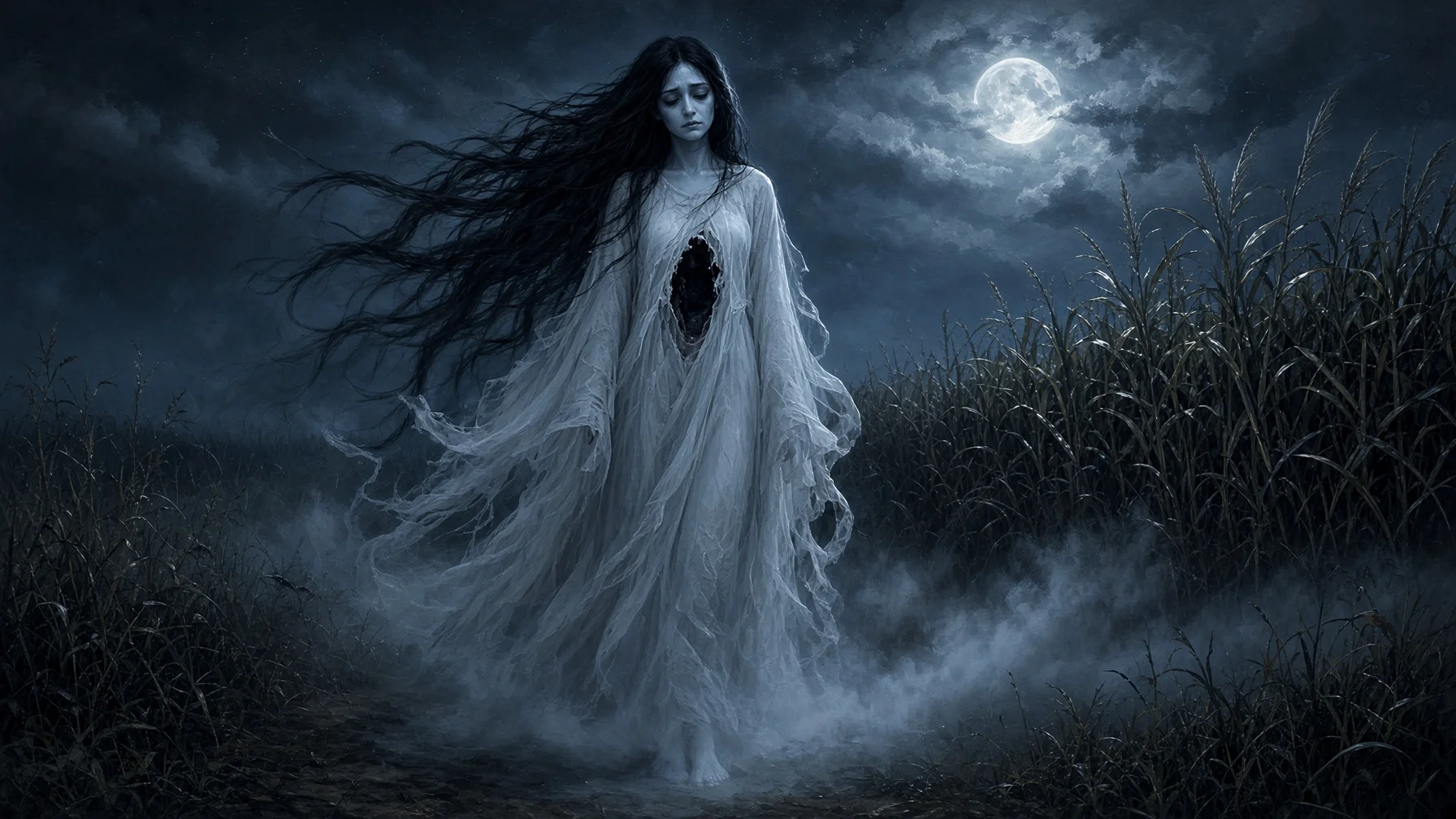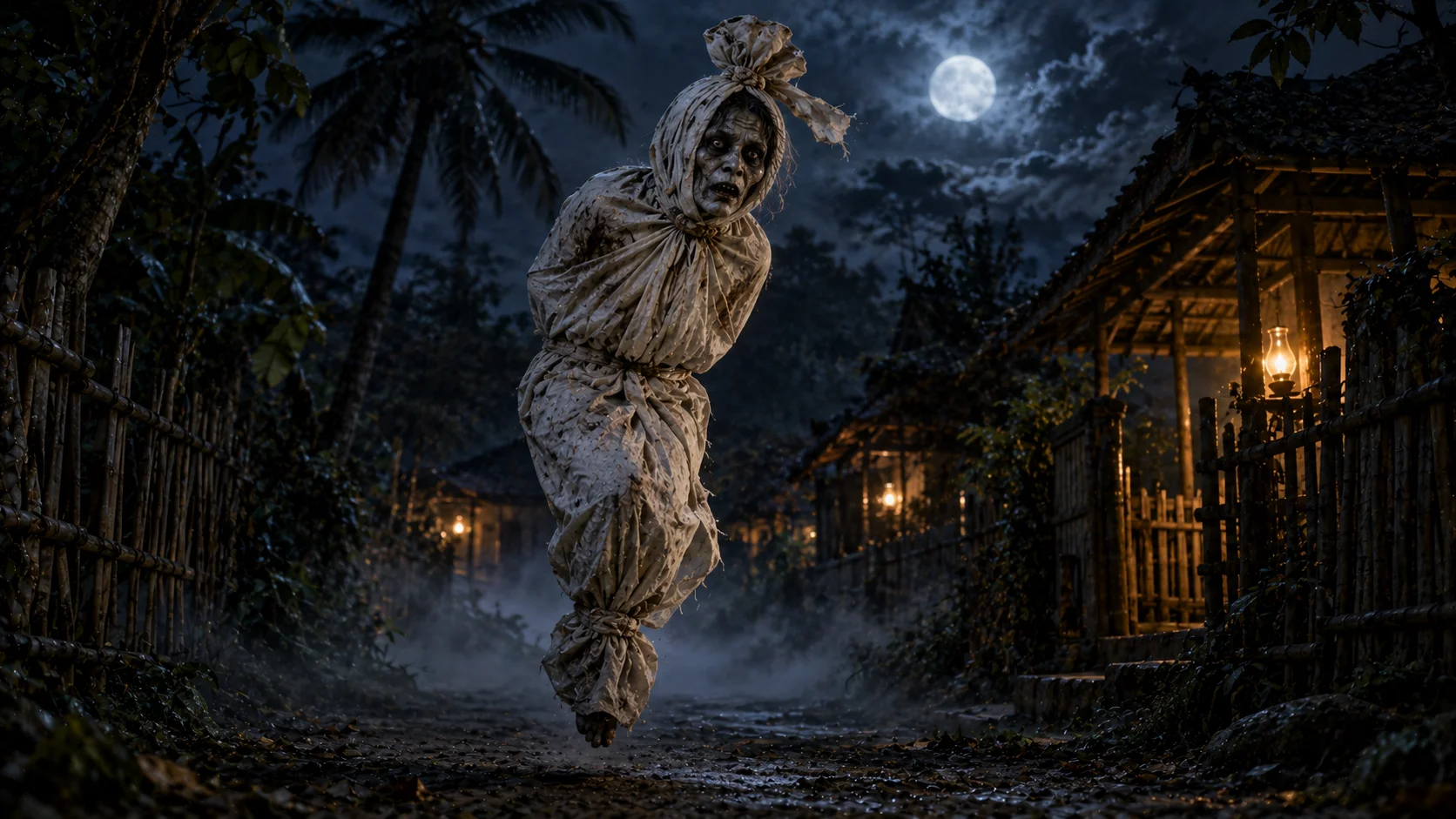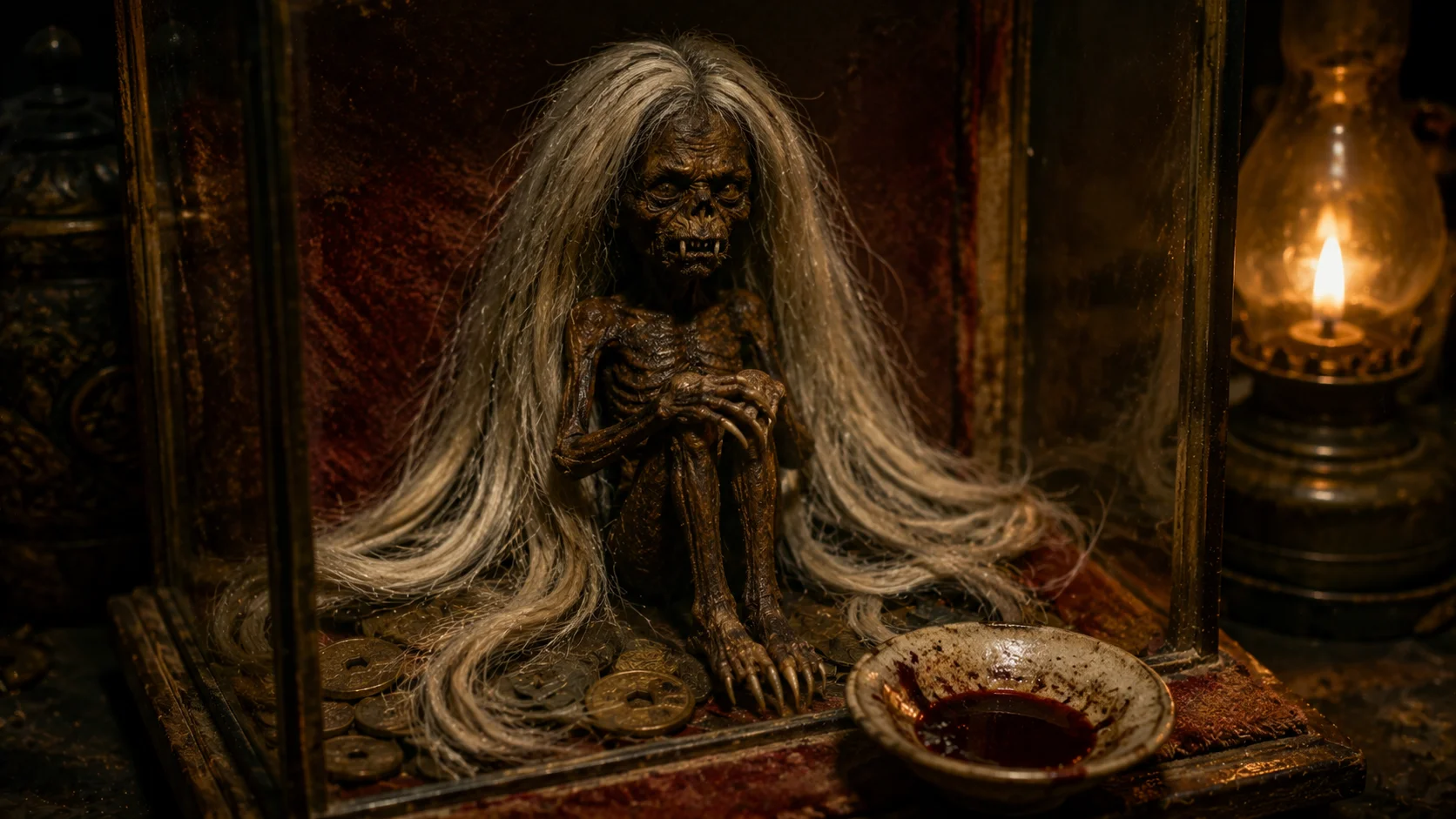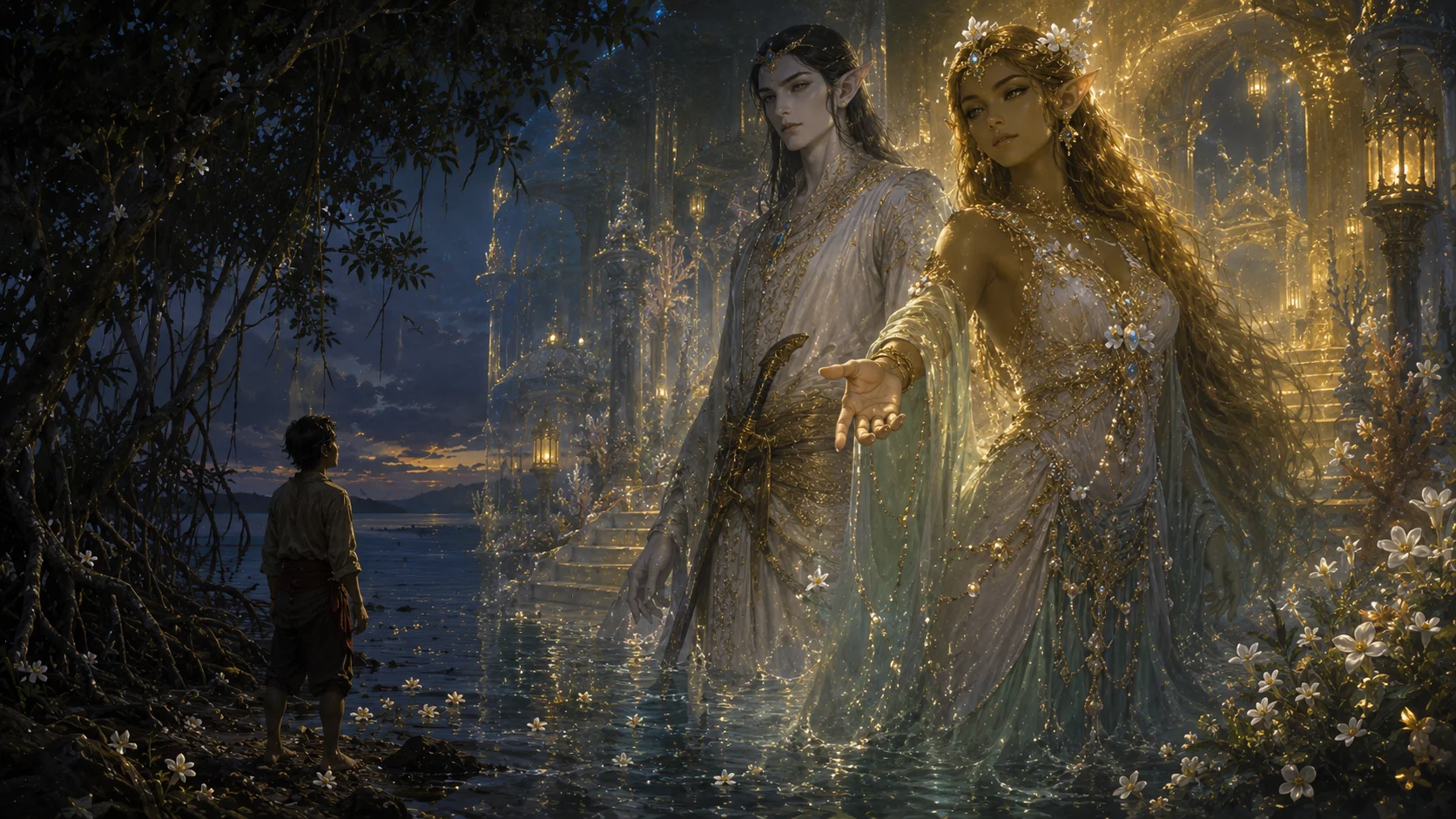
The engkanto—also written enkanto—take their name from the Spanish encanto, meaning "enchanted" or "enchantment," and that borrowed word carries a whole history inside it. Where the older, pre-Hispanic term for nature spirits in the Philippine islands was diwata, engkanto is the more Hispanized layer laid on top, absorbed into lowland Christianized Filipino belief—especially among Tagalog and Visayan communities—during and after the colonial period. The engkanto are not one figure with a name and a genealogy; they are a broad class of nature spirits, and the most telling thing about them is how they are said to look. They are widely described as beautiful, fair-skinned, often blond or light-haired beings who resemble the Spanish friars and colonizers who once walked the same land. Folklorists, including those gathered in the University of the Philippines folklorists' circle and F. Landa Jocano in his studies of Filipino supernatural belief, read this as no accident: engkanto lore took the image of a colonizing "other" race and made it into a race of spirits living invisibly alongside ordinary people, wealthy, fair, and apart.
A Second Country Laid Over the First
Engkanto society is often described as a mirror-world civilization, complete with its own homes, its own wealth, even its own fiestas, existing in an invisible realm that overlaps the visible one without ordinary people ever perceiving it. Most humans walk through engkanto territory their whole lives and see nothing. Only those who are "let in," or who possess second sight—sometimes called being malas, sensitive to the unseen, or having studied the old ways—can perceive the parallel civilization at all. This is not a distant otherworld reached by a journey; it is layered directly over the everyday one, so that a riverbank, a cave, or an old ancestral house may be, from one angle, perfectly ordinary ground, and from another, someone's doorstep.
The Marked Places of the Balete
Engkanto dwellings cluster around specific kinds of ground: the great balete or balite tree above all, but also termite mounds known as punso, riverbanks, caves, and old ancestral houses. These are not treated as empty land. Across many regions of the Philippines, people passing through such places still speak the customary apology tabi tabi po—"excuse me, please step aside"—or its Visayan equivalent, bari bari, before urinating, cutting a tree, or simply walking through unbuilt ground that might belong to someone unseen. This is not a quaint fossil of belief; it is an actively practiced courtesy in many rural and even urban Philippine communities into the present day, which makes engkanto belief one of the more visibly persistent threads of Filipino folk religion.
When a Person Goes Missing Into the Trees
The most widely attested and unsettling motif in engkanto lore is naengkanto, sometimes called nakulam: a person, often a child or a young woman, becomes engkantada or engkantado—bewitched, spirited away—and loses ordinary rational speech. They may vanish for a time and later be found near a balete tree or a riverside, disoriented, changed, sometimes unable to say clearly where they had been, as though they had been living, for that span, inside the engkanto's hidden realm. The disappearance-and-return shape of this motif recurs across regional accounts with remarkable consistency, even as the specific details—how long the person was gone, what they say afterward, what drew them there—vary from place to place.
Illness With an Unseen Author
Sickness attributed to the engkanto carries its own vocabulary. In some regional variants it is called binyagan, and it sits alongside other usog-adjacent afflictions understood as caused by an offended or intrusive unseen presence rather than by ordinary physical illness. When such affliction is suspected, the household does not simply wait it out. Traditional healers—albularyo, or practitioners working in a related tradition sometimes called mangkukulam-adjacent—are called upon to perform pagtawag, the calling back of the spirit, or to offer tapal and small ritual offerings, sometimes described as a pagpapaalam, an asking of leave, laid out as a tabak-tabak of food for the engkanto. The purpose is always the same: to appease whatever was disturbed and to release the person it took hold of. This healing complex is not a single village's custom; it is a persistent, well-documented feature of ethnographic accounts across both Luzon and the Visayas.
Guardians and Grudge-Holders of the Same Ground
People do not speak of the engkanto as uniformly kind or uniformly cruel. Locally, they are often sorted by where they dwell and by temperament: some are described as generally benevolent guardians of nature—spirits of the forest or the sea—who may reward a respectful human with wealth or good luck, while others are mercurial or outright vengeful when their ground is disturbed or their dignity is offended. This benevolent-and-malevolent duality shows up again and again in the record, but the exact system for sorting one kind of engkanto from another differs sharply by region, and no single classification should be mistaken for a fixed, universal order. The engkanto's temperament is local knowledge, learned place by place, not a rulebook that travels.
Kin Among the Unseen
The engkanto do not stand alone in the wider taxonomy of Philippine lower mythology. They sit close to the diwata, the older nature deities or fairy-spirits of the islands, and in some regions the two terms are even used interchangeably, diwata simply being the pre-Hispanic name for much the same kind of being engkanto later described in more Hispanized terms. They are also spoken of as coexisting in the same liminal spirit-world with duwende, the dwarf spirits, and with the tikbalang. Sources are careful to note that these are not neatly separated tiers of one pantheon; the categories blur from region to region, overlapping the way neighboring beliefs do when they have grown up side by side for centuries rather than been designed at once.
A Bride or Groom Taken From the Visible World
Among the most recurring engkanto narratives is the tale of romantic or marital abduction: a human, most often a young woman, is said to be taken as a bride or groom by an engkanto. Sometimes this happens willingly, the human drawn by promised wealth and the splendor of the hidden realm; other times it is unwilling, and the bond must be broken. Folklore prescribes specific remedies for severing such a tie—novenas, or exorcism-like rites performed by a priest or by an albularyo—reflecting how thoroughly Catholic ritual and older folk practice became interwoven in dealing with the engkanto. This "engkanto husband" or "engkanto wife" motif recurs across many published collections of Philippine folklore, notably in Maximo Ramos's studies of the islands' lower mythology, and it has proven to be one of the most durable engkanto stories precisely because it fuses desire, danger, and rescue in a single narrative shape.
A Christianized Origin, Never the Only One
Because engkanto is a broad folk category rather than a single mythic personage with one fixed genealogy, sources caution strongly against treating any single origin story as canonical for the whole class. Regional variation is the rule, not the exception. One attested but by no means universal explanation, shaped by Catholic influence, describes the engkanto as fallen angels or spirits barred from both heaven and hell, caught in between and left to dwell in the unseen corners of the visible world. This is one thread among several, not a settled account, and it illustrates how thoroughly engkanto belief absorbed Christian cosmology without ever fully replacing what came before it.
Recorded, Retold, and Still Believed
Twentieth-century Philippine folklore scholarship documented engkanto belief extensively, most notably in Maximo Ramos's The Creatures of Philippine Lower Mythology and in related archival collections gathered by University of the Philippines folklorists. That documentation did not freeze the belief in the past. The engkantada bewitchment plot remains a recurring trope in Philippine horror cinema, in komiks, and in long-running horror anthology television series, where a person led astray to a balete tree or found changed after an unexplained absence is instantly legible to an audience. Few figures in Philippine popular culture move as easily between scholarly folklore archive and prime-time screen as the engkanto do.
A Boundary Worth Keeping
The engkanto belong specifically to lowland, Christianized Filipino folk tradition—Tagalog, Visayan, and closely related communities—and the caution attached to them in the scholarship is worth repeating plainly: they should not be merged with unrelated spirit concepts from other cultures merely because a translator might reach for the same convenient word, "fairy" or "elf," to describe both. Those are separate traditions, shaped by entirely different histories, and folding them together would blur exactly the specific, colonial-era texture that makes the engkanto what they are: spirits who look like the people who once colonized the islands, living invisibly beside the descendants of those who were colonized, still owed an apology before their ground is disturbed.
Sources & traditions
- EncyclopediaWikipedia — Engkanto
- TraditionFilipino folk and village traditions (Philippines)
Myths change from area to area and from time to time. This chronicle follows the most widely told versions; tellings in other villages, regions and eras may differ.