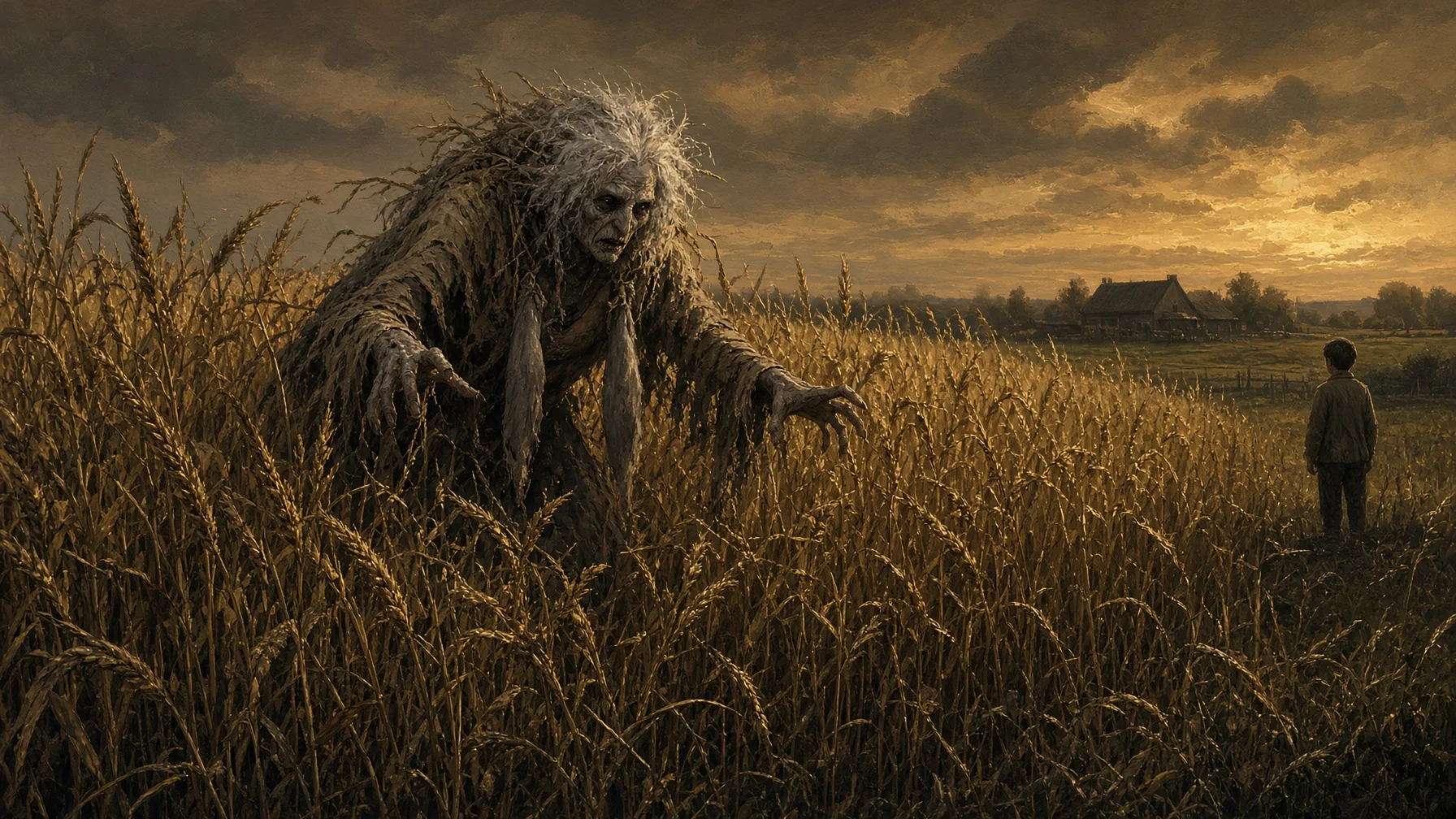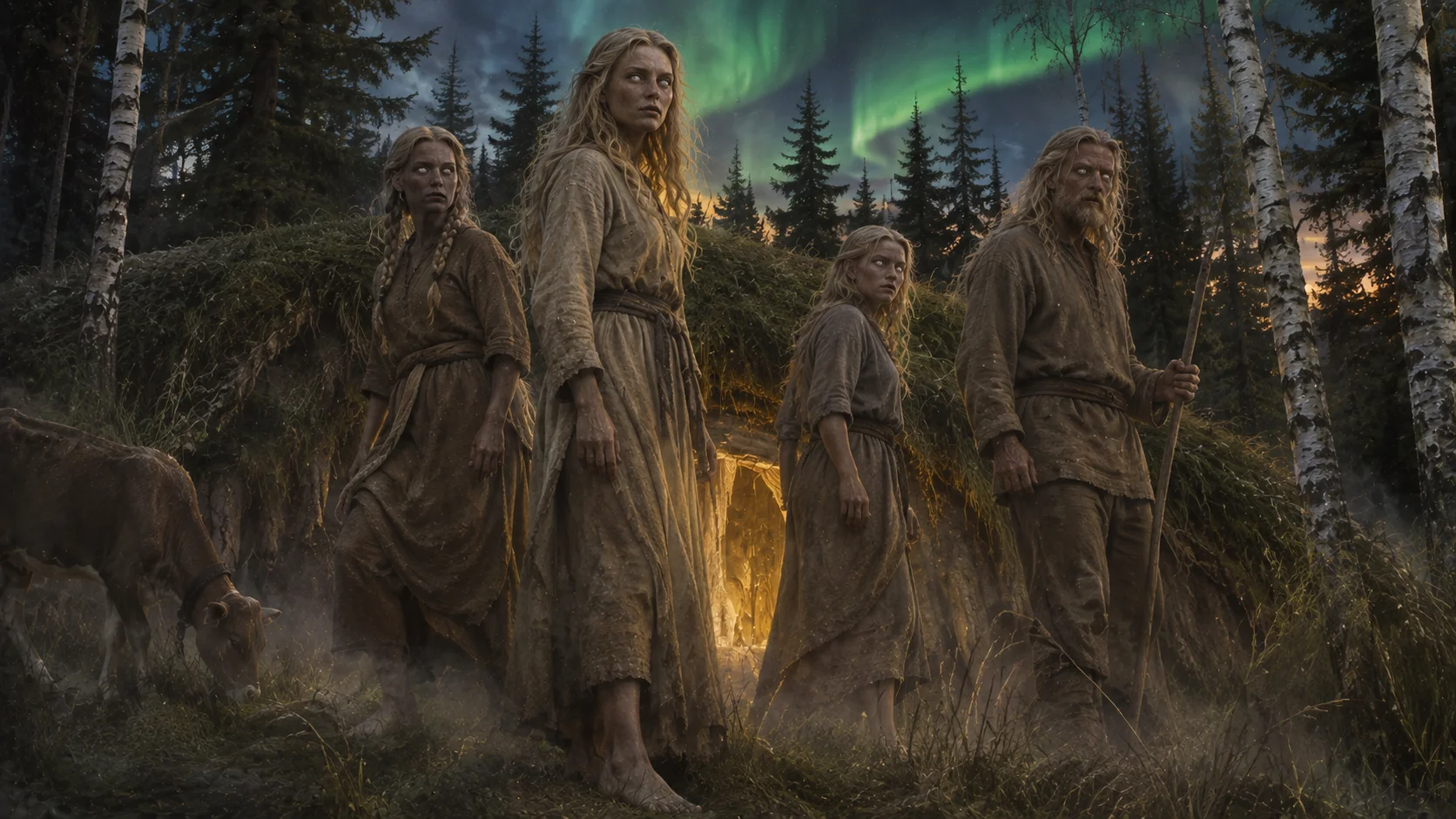
The Vittra, also called vittror in the plural and known in many regions as vätte or vätter, are the hidden underground folk of Swedish tradition, remembered above all in the folklore of Småland and Skåne in the south and centre of the country. Where the solitary tomte tends a single farm and asks nothing but respect, the Vittra live as whole communities beneath the earth, with their own farms, their own cattle, and their own social order, occupying a parallel world that lies directly beneath, or beside, the world of the humans who till the same ground. Older sources sometimes call them simply de underjordiska, "the underground ones," a description rather than a name, as if the people who spoke of them preferred not to name too precisely a neighbour who might be listening.
A Society Mirrored Beneath the Soil
What set the Vittra apart from most of the hidden folk was their sheer ordinariness, transposed underground. They were not imagined as a single uncanny figure haunting one house, as the tomte was, but as families, households, whole communities living out lives that echoed the human farms above them almost exactly. They kept livestock, held gatherings, and maintained paths and dwellings of their own, all of it invisible, all of it real to those who told these stories. A Swedish farm, in this understanding, was never built on empty land. It stood, more often than not, directly over or beside a Vittra homestead that had its own claim to the ground, a claim that predated the plough and the property line and was owed the same deference a human landowner would expect from a neighbour.
Last updated .
The Farm Built Over a Threshold Not Its Own
This belief carried real, practical weight. To build, plough, or simply make noise over ground that belonged to the Vittra was to trespass on an inhabited home, not an empty field. The land itself was read as already spoken for, its ownership only partly visible, and a farmer who ignored that fact did so at his own risk. Mounds, unusual stones, and certain trees were held to mark the edges of Vittra territory, quiet signs that told the careful eye where the ordinary world ended and the hidden one began. A wise household learned to read these signs the way it read weather, as information essential to getting through the year unharmed.
Vittraskott: The Sickness With No Visible Cause
The clearest evidence of the Vittra's presence, for those who believed in them, was the illness that followed their disturbance. When a person or an animal fell sick without apparent cause, when no injury, no bad food, no ordinary explanation could account for it, the affliction might be diagnosed as vittraskott, "vittra-shot," a wound dealt invisibly by offended underground neighbours. The particular offence was often mundane by any daylight reckoning: wastewater thrown carelessly onto a Vittra dwelling, a byre or a well dug across their path, ash or refuse tipped onto ground that was, unknown to the farmer, someone else's threshold. The sickness was the consequence, arriving not as punishment exactly but as the natural result of an insult given to a neighbour with the power to answer it.
Reading the Land Before You Break It
Because the offence so often lay in simple carelessness, the folklore around the Vittra functioned as a kind of customary law for land use, long before formal surveys or written boundaries existed to do the same work. Before a barn was raised or a new byre dug, a cautious farmer considered whether the ground had already been claimed by unseen tenants. Where the sickness had already struck, the diagnosis pointed backward to the moment of disturbance, and forward to what had to be undone: a structure moved, a path reopened, the insult somehow taken back. The belief did not ask a farmer to avoid the land altogether. It asked him to use it with the same care he would show a human neighbour whose goodwill he needed to keep.
Calling the Cunning Folk to Mend What Was Broken
When the affliction did not lift on its own, families turned to the klok gubbe or klok gumma, the cunning man or wise woman whose skill included reading a vittra sickness for what it was and negotiating its cure. These figures, recorded in nineteenth-century ethnographic collections such as Herman Hofberg's Svenska folksägner, occupied a position between healer and intermediary, someone able to identify which offence had been given and what form of appeasement might answer it. Their intervention was practical as much as ritual: a diagnosis that gave a frightened household somewhere to direct its efforts, and a set of actions, however small, that restored the household's sense of having set things right.
Milk Left at the Threshold, Water Never Poured in Anger
Appeasement itself was modest and domestic in character. Food or milk set out quietly was the most common offering, a small and repeated courtesy rather than a single dramatic gesture. Just as important were the things a household learned never to do: hot water, ash, and household refuse were never thrown carelessly onto ground reputed to be a Vittra dwelling, since scalding or fouling an unseen neighbour's home was exactly the kind of insult that invited vittraskott in the first place. Where a structure was found, by ill fortune or by a wise woman's diagnosis, to sit across a Vittra path, the remedy was direct: it was moved, or rebuilt elsewhere, an acknowledgment in timber and stone that the original siting had been a mistake.
Neighbours Who Repay Both Injury and Courtesy
The relationship the stories describe was not purely punitive. The Vittra were understood to be exacting but not without reason, and a household that dealt with them honestly, that respected their paths and left the customary courtesies, could expect to be left in peace. The emphasis throughout falls less on winning the Vittra's favour through grand gesture than on simply not giving offence, on the same steady, unspectacular decency that keeps peace between any two households sharing a boundary. It is a folklore built around maintenance rather than heroics, around the quiet daily choices that either provoke a neighbour or keep the peace with one.
Seldom Seen, Known Instead by Their Effects
Unlike the tomte, whose grey-clad, bearded shape became one of the most familiar images in Swedish folk art, the Vittra were rarely given detailed physical description in the older tellings. Most often they were not seen at all, known only through their consequences: an illness with no ordinary cause, a run of misfortune, a sound where nothing visible could account for it. Where description does appear, it is inconsistent from source to source. Some tellings describe the Vittra as resembling ordinary human beings closely enough to pass unnoticed; others mark them as non-human through some small sign, such as a tail on an otherwise cattle-like form. No single image ever became standard the way the tomte's did, and the folklore seems, if anything, more comfortable leaving them unseen, present chiefly in their effects rather than their appearance.
Untangling Vittra From Vätte, Troll, and Huldra
The line between the Vittra and the closely related vätte or vätter is, by the folklorists' own account, genuinely unsettled: in some regions the terms are treated as interchangeable, in others as a real if inconsistently applied distinction, and no single authoritative taxonomy resolves the question either way. What is more clearly attested is the separation between the Vittra and two other well-known figures of the same broader tradition. Trolls belong to wilderness and mountain, imagined as larger and more menacing than the comparatively neighbourly Vittra. The huldra is a single seductive figure of the forest, marked by her cow's tail, quite distinct from a whole underground community of farming families. The Vittra, by contrast, are specifically domestic and communal: an underground people living beside, not above or apart from, the human farm.
Kin Across the Northern Hidden-Folk Tradition
Set within the wider Scandinavian belief in hidden folk, the Vittra take their place beside the huldrefolk of Norway as one regional expression of a shared conviction that the visible world of farms and fields overlays another, unseen one, inhabited by beings who observe the same essential courtesies humans do, and who expect the same in return. The tomte belongs to this family too, though as a solitary guardian bound to one household rather than a member of a community with its own farms and roads. Together these figures describe a landscape in which no ground is ever truly empty, and no boundary is ever only a human one to decide.
A Belief That Outlived Its Explanations
The Vittra never underwent the transformation that turned the tomte into a recognisable, commercialised figure of modern Swedish Christmas custom. They survive instead in a quieter register: in local place-legends, particularly in Småland, in nineteenth-century folklore collections, and in the ongoing work of academic Swedish folklore scholarship, rather than in any living popular custom. Their afterlife is scholarly and local rather than commercial, a body of place-bound stories still told about particular mounds and particular fields rather than a figure detached from geography and put to new use. In that sense the Vittra remain closer to their origin than the tomte does: a belief about specific land, still legible chiefly on the land it was first told about.
An Old Discipline for Living on Shared Ground
Read plainly, the vittra tradition preserves something more than a catalogue of hauntings. It records a working method, practiced long before formal medicine or property law existed to do the same job, for living cautiously and respectfully on land whose full ownership could never be entirely certain. Illness without explanation, misfortune without cause, both found a frame of meaning in the idea of an offended underground neighbour, and that frame in turn produced a discipline: watch where you build, mind what you pour on the ground, leave something out for the ones you cannot see. Whether or not the Vittra were ever more than a story, the caution they demanded made for careful farmers, and the memory of that caution is what the folklore has left behind.