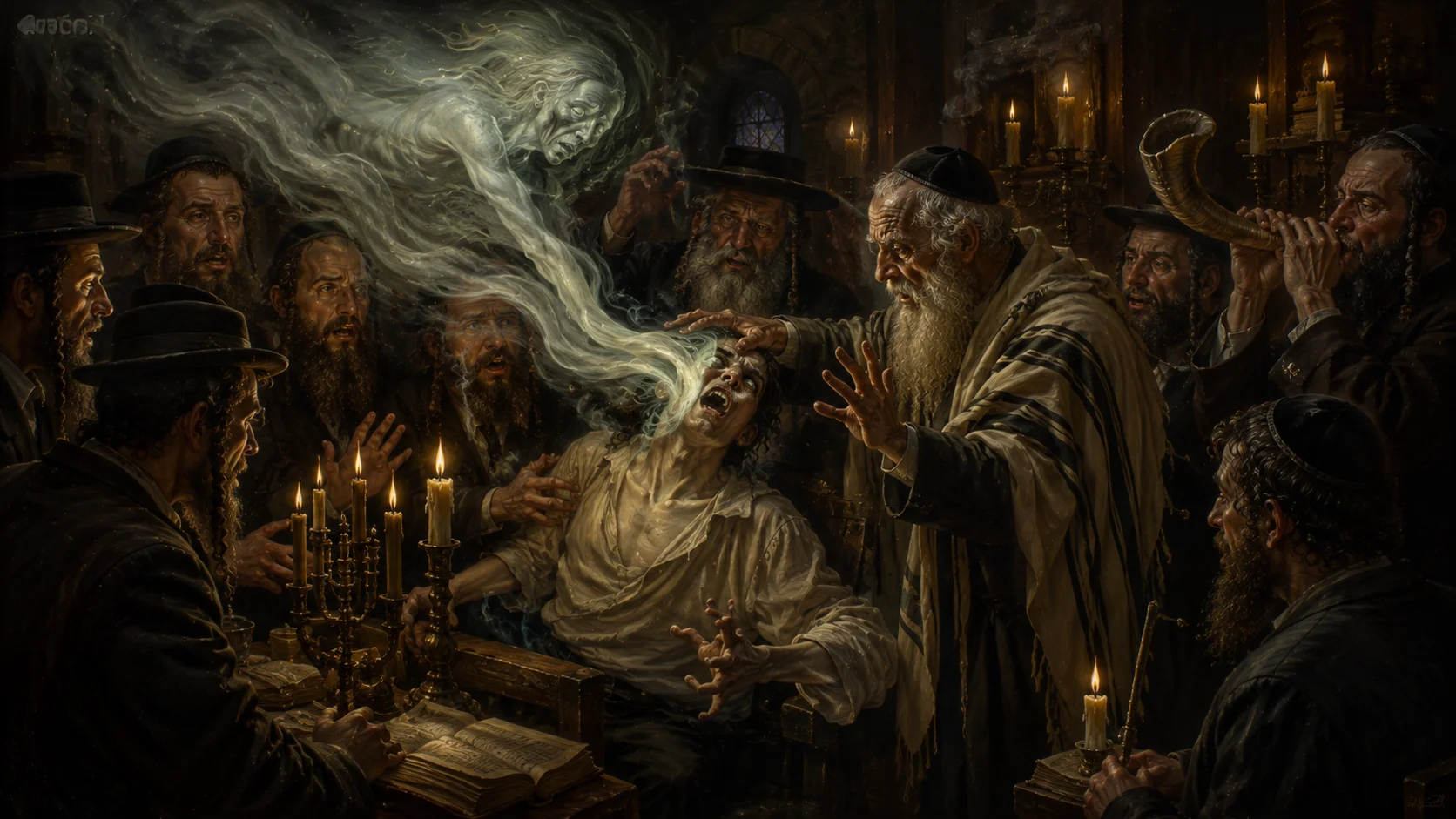
Jophiel — rendered also as Iofiel, Zophiel, Yofiel, and in places Dina — is a prince among the angels of late antique and medieval Jewish mystical literature, whose name is commonly read as Hebrew Yofi-El, "Beauty of God." He does not appear in the Hebrew Bible, and no passage of the Babylonian or Jerusalem Talmud, nor the classical corpus of Midrash Rabbah, names him directly. His attestation belongs to a later and narrower stream of literature — the Hekhalot and Merkavah writings, and the angelological compendia that followed them — and honest treatment of Jophiel begins by saying so plainly, before any of the roles later tradition piled upon his name.
The Beauty of God
The etymology is the one point on which most sources agree, even as everything built upon it diverges: Yofi, beauty, joined to El, God. From this compact phrase, centuries of angelology drew an entire portfolio — wisdom, illumination, artistic inspiration, the guardianship of sacred boundaries — each accretion layered on by a different compendium, a different century, a different community of readers reaching for a name that already sounded like a doctrine. The name itself is secure. Nearly everything hung on it afterward is a later systematization, and the two should not be mistaken for one another.
A Name Without Scripture
It is worth stating clearly what does not exist: no verse of Genesis, Exodus, or the Prophets calls this figure by name, and no sugya of the Talmud discusses him. This sets Jophiel apart in kind from angels such as Michael, Gabriel, and Raphael, whose names appear in Daniel, Tobit, and are elaborated at length across the classical rabbinic corpus. Jophiel's textual base is later — late antique at the earliest, and in many of his most familiar roles, medieval or early modern. That comparative thinness is not a mark against the figure's devotional significance; it is simply the honest shape of the record, and it explains why so many of Jophiel's attributes below are described as legend, variant, or later accretion rather than as settled tradition.
Among the Princes of the Throne-Room
The earliest secure appearance of Jophiel is in 3 Enoch, also called Sefer Hekhalot, a Merkavah text compiled from older traditions roughly in the fifth or sixth century CE. There he is counted among the great princes who minister before the divine Throne — one name within an elaborate roster of angelic officers populating the celestial court. 3 Enoch and its sister literature are preoccupied with exactly this kind of bureaucracy: princes over the sun, princes over the winds, princes who guard gates and scribes who record the deeds of the righteous. Jophiel's place in that roster is real and early, even where the details of his particular office remain unsettled between manuscript traditions.
The Disputed Shadow of Metatron
Some manuscript recensions of 3 Enoch appear to equate or entangle Jophiel with one of the subordinate princes attending Metatron, the exalted scribe-angel of the Hekhalot literature, while other recensions keep the figures distinct. A related and separate strand of later sources goes further still, treating "Jophiel" not as an individual angel at all but as an epithet of Metatron himself, invoked in his aspect as chief scribe and custodian of wisdom. Both identifications are explicitly disputed rather than settled doctrine, and they do not agree with one another — one makes Jophiel a lesser attendant, the other makes him another face of the greatest of the princes. The two should be held apart as competing possibilities, not folded into a single lineage.
Teacher of the Intellect: Wisdom and Understanding
It is in later Kabbalistic and angel-lore compendia — works in the tradition of Johann Weyer's Christian-Hebraic syntheses and the post-medieval Jewish mystical handbooks that followed them — that Jophiel is given his most enduring later role: angel of wisdom and understanding, tutor of the intellect, the one who illuminates the mind so that comprehension might follow perception. This function is bound to the sefirot of Chochmah, Wisdom, and Binah, Understanding, on the Kabbalistic Tree of Life, though which of the two he is assigned to varies from table to table — some compendia give him Chochmah, others Binah, and different schemes give the same sefirah to entirely different angels. None of this "angel of wisdom" material appears in explicit form in the classical rabbinic sources; it belongs to the systematizing energy of later centuries, gathering an angel's bare name and extending it into a coherent teaching office.
A Legend at the Gate of Eden
The most vivid and widely repeated story attached to Jophiel's name is his identification as the cherub who guards the entrance to the Garden of Eden with the flaming sword, set there after the expulsion of Adam and Eve. Genesis 3:24 places cherubim and a whirling, flaming sword at that gate — but the verse itself names no one. The naming of that guardian as Jophiel belongs to a body of later, midrashic-style angel compendia outside the classical Midrash Rabbah corpus: a beloved embellishment, and by the honest reckoning of the sources, a legend rather than a scriptural fact. It endures because it fits so well — the angel of beauty set to guard the beauty of the world's first garden — but the fit is the storyteller's, not the text's.
Prince of the Torah
A further and separate strand of angelological literature places Jophiel among a company of seventy, or in narrower schemes seven, archangels and princes said to govern the created order, and some of these sources name him specifically as a prince of the Torah, an office concerned with the study and transmission of sacred learning. This parallels the broader current of Sar Torah — "Prince of the Torah" — traditions found within the Hekhalot literature itself, where angelic princes are invoked to grant mastery of Torah to those who study it. Jophiel's particular claim to this title, however, is one variant attribution among several competing ones; other angels are named to the same office in other sources, and no single scheme has settled the matter.
Jophiel Upon the Tree of Life
Within Kabbalistic hierarchy tables that map named archangels onto the ten sefirot of the Tree of Life, Jophiel most often appears attached to Chokhmah, sometimes to Binah — the two sefirot most closely bound to intellect, insight, and the receiving of divine wisdom. But these correlation tables are not uniform: different compendia assign different angels to the very same sefirah, and Jophiel's position should be read as one voice within that plurality of schemes rather than as a fixed, universally agreed placement. The disagreement itself is instructive — it shows a tradition still working out, across centuries and communities, how to give angelic form to the qualities of the divine mind.
A Name Multiplied: Iofiel, Zophiel, Yofiel, Dina
Few figures in this literature carry as many spellings as Jophiel does. Iofiel and Yofiel are close transliterations of the same Hebrew root; Dina appears in some Hekhalot-adjacent lists as an alternate name for the same figure. Zophiel presents the most genuine complication: the name is glossed as "spy of God," and a real body of scholarly opinion treats Zophiel as a separate angel altogether rather than simply another spelling of Jophiel. The multiplicity is not carelessness on the part of any single author — it is the visible trace of a name crossing centuries and languages, moving through Hebrew sources into Latin angelology and vernacular grimoire literature, picking up small phonetic drifts and, at least once, a genuinely disputed second identity along the way.
Patron of Art and Creative Inspiration
Eighteenth- and nineteenth-century Christian and Jewish esoteric angelology, drawing in part on the tradition surrounding the Sefer Raziel HaMalakh, extended Jophiel's etymological beauty into a devotional patronage over art, aesthetic perception, and creative inspiration — an angel to whom artists and students might turn for clarity of vision and grace of execution. This is a late devotional accretion rather than classical rabbinic doctrine, built by reasoning outward from the name itself: an angel called Beauty of God, over time, became an angel invoked in service of beauty made by human hands. It is a natural extension, and it is worth naming as an extension.
Weighed Against Michael, Gabriel, Raphael, and Uriel
Set beside the angels most firmly rooted in the tradition, Jophiel's textual footing is markedly narrower. Michael and Gabriel appear by name in the book of Daniel and are discussed at length across rabbinic literature; Raphael figures centrally in Tobit; Uriel, too, carries a far deeper and more continuous textual presence. Jophiel's base is later — Hekhalot literature at the earliest secure point, with most of his familiar attributes arriving still later, in medieval and early modern compendia. This is not a diminishment so much as an honest placement: a figure whose significance lies less in scriptural weight than in what the tradition built around his name once it had one to build with.
Amulets, Segulot, and the Memory of Children
Outside normative halakhic and classical liturgical practice, a folk tradition of segulot — practical remedies and protective customs — and angel-invocation handbooks, generally post-medieval, calls on Jophiel's name in amulets and prayers meant to aid memory and Torah study, particularly for children beginning their education. This practice sits at the margins of mainstream religious life rather than within its normative center, and it should be understood on those terms: a folk devotional custom drawing on the angel's reputation for wisdom and illumination, rather than an obligation or a rite prescribed by classical halakhah.
The Bureaucracy of Heaven
Taken as a whole, Jophiel belongs to a much larger project that the Hekhalot and Merkavah literature undertook: populating the space between the transcendent, unapproachable God and the created world with a hierarchy of named, princely angels, each one a kind of personification of a divine attribute made governable and describable. Beauty and wisdom, in this scheme, are not abstractions alone — they are given a face, a name, and a station in the throne-room, so that the qualities of God might be approached, addressed, and in the later folk tradition, even petitioned. Jophiel's many roles — guardian, teacher, prince of Torah, patron of art — are so many attempts across the centuries to give that single divine attribute, beauty, a fuller and more useful shape.
The Radiance That Remains
What can be said with confidence is modest and still considerable: a name meaning Beauty of God, attested among the throne-room princes of 3 Enoch, later drawn by devotional and mystical tradition into roles of wisdom, guardianship, Torah study, and artistic inspiration — each addition disputed, variant, or plainly legendary by the tradition's own reckoning, and none of them diminished for being so. Jophiel stands as one of the clearer instances of how later Jewish and Kabbalistic thought kept working, century after century, to give a beautiful name a life to match it — reverently, disputatiously, and never quite finished.
Sources & traditions
- EncyclopediaWikipedia — Jophiel
- TraditionJewish/Kabbalistic texts, grimoires and later commentary
Myths change from area to area and from time to time. This chronicle follows the most widely told versions; tellings in other villages, regions and eras may differ.