The dokkaebi is one of the most distinctive figures in Korean folk belief: a goblin-spirit that is mischievous rather than truly evil, capable of both punishing cruelty and rewarding kindness, and bound to a body of household tales that circulated across Korea for centuries before any fixed image of it existed. Unlike demons imported through later religious frameworks, the dokkaebi belongs to an older, animist layer of Korean village life, in which spirit could inhabit ordinary things and ordinary things could, given time and use, become spirit.
A Spirit Born, Not Created
Korean folk belief holds that a dokkaebi does not arrive from another realm the way a heavenly or ancestral spirit might. It is born out of the material world itself — specifically out of household objects that have been used long and hard, or marked by blood. Old brooms worn down to stubs, discarded tools, blood-stained sticks, and other long-handled implements were the classic candidates. Over years of use, an object was believed to accumulate a kind of vital residue, until one day it stirred and became a dokkaebi: mischievous, willful, and suddenly capable of walking off on its own.
This belief sits within a broader Korean folk animism known as tojok/mulgeon animism, in which the boundary between the inanimate and the animate was never treated as absolute. A tool that had served a household for a generation was not simply worn — it had, in a sense, lived. The dokkaebi is the clearest folkloric expression of that idea: proof, in story form, that long use and human contact could awaken something in the humblest object.
No Fixed Face
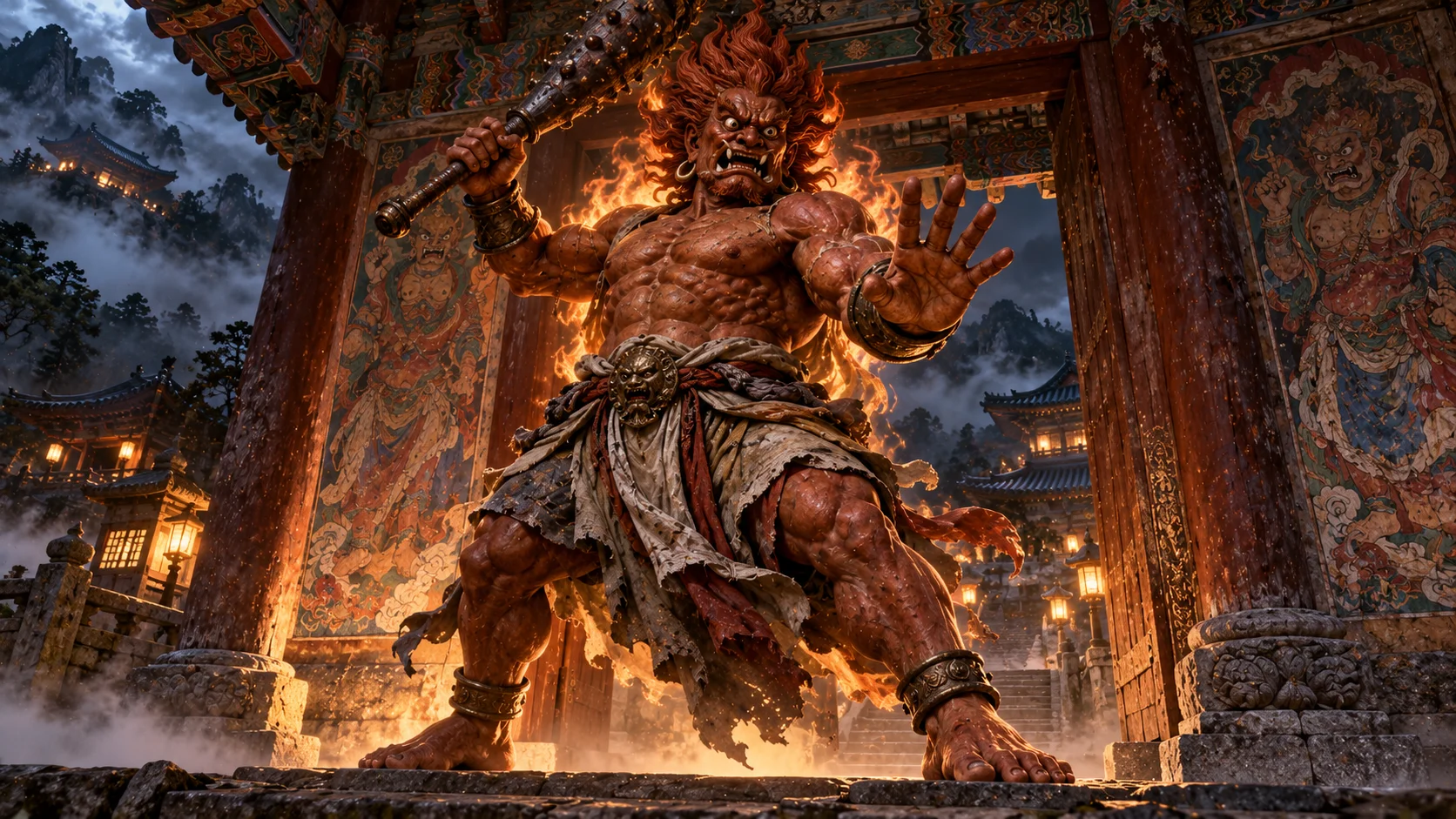
One of the more striking facts about the dokkaebi, easy to miss because of how familiar its modern image has become, is that traditional folklore gave it no single settled appearance. The now-common picture — a horned, ogre-like figure with a club — is a comparatively recent visual convention, reinforced over the twentieth century and especially by modern media. Older oral tradition was far less concerned with what a dokkaebi looked like than with what it did: how it behaved on a lonely road at night, how it could be tricked, what it wanted from the people it met.
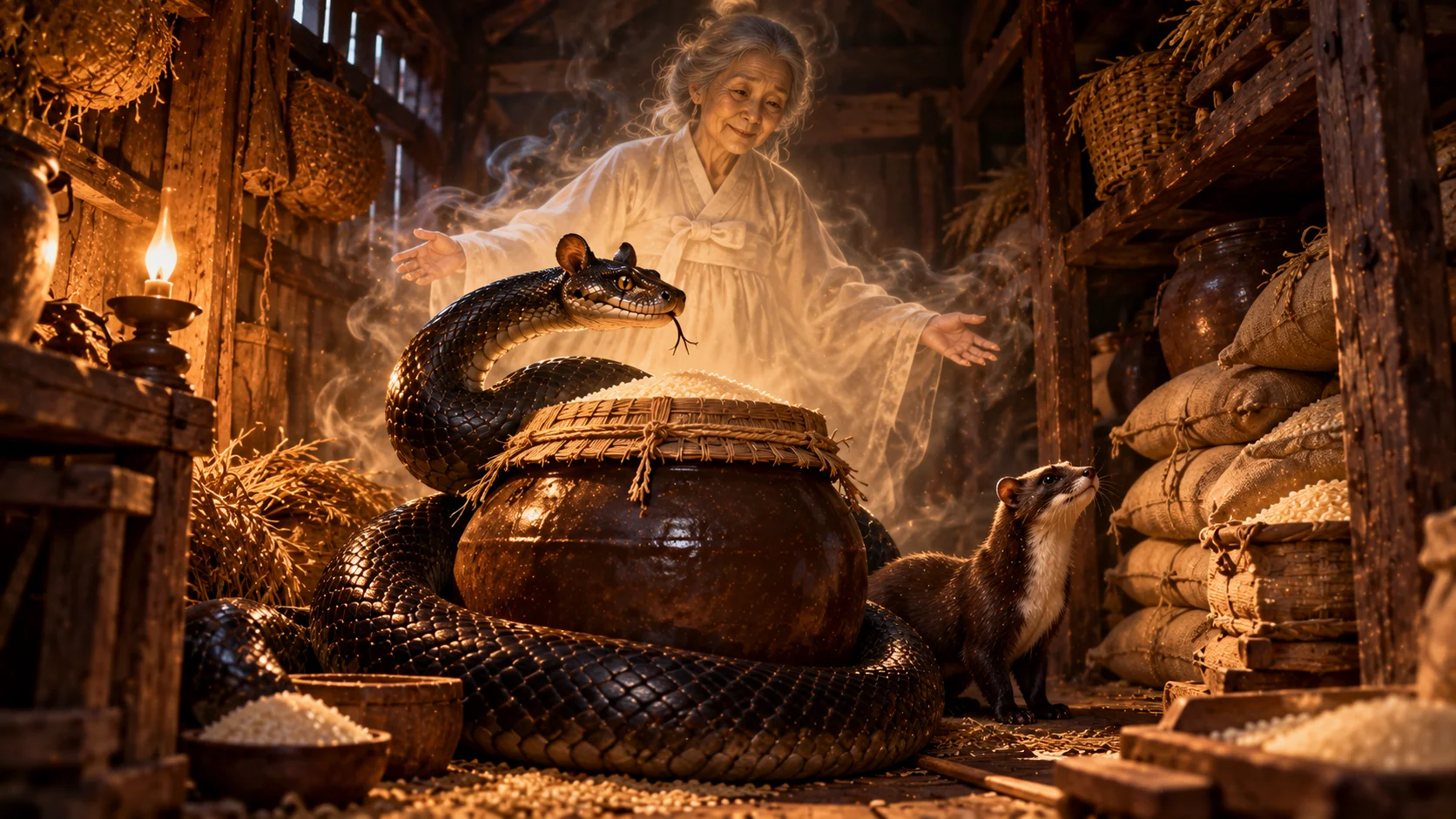
This matters for understanding the difference between the dokkaebi and its more famous cousin across the strait, the Japanese oni. The two are often casually conflated, especially once horned imagery became standard for both, but the dokkaebi is understood as distinct from the Japanese oni. The dokkaebi has always been understood as fundamentally impish — trouble-making, playful, and morally ambiguous, but rarely a figure of pure menace. It could ruin a stingy man's night and just as easily fill a poor man's storeroom with rice before dawn.
Guardian of the Night Roads
The dokkaebi's classic setting is not a shrine or a mountain but the ordinary countryside after dark — a village path, a bridge, an old empty house, a threshing ground at night. Travelers making their way home late were the dokkaebi's favored audience. Stories describe a dokkaebi appearing suddenly out of the darkness to challenge a lone traveler, most famously to a wrestling match, or ssireum, the traditional Korean form of grappling.
The wrestling motif is one of the most consistent threads running through dokkaebi lore across different regions and different tellings. It turns the encounter into a genuine contest rather than a simple ambush, and it gives human cleverness a fighting chance against something otherwise unpredictable and strange.
The Leg Is the Weakness
Folk tradition supplies a very specific piece of tactical wisdom for anyone who finds themselves grappling with a dokkaebi in the dark: its strength, however great, is said to always be concentrated unevenly, so that one leg is reliably its weak point. A traveler who can identify and target that leg — tripping it, pinning it, or simply refusing to let go of it — can throw the dokkaebi and win the match, sometimes forcing it to yield a promise or a reward before it vanishes.
This detail turns the dokkaebi encounter into a kind of folk riddle as much as a physical contest. The lesson embedded in these tales is rarely brute strength; it is persistence and attentiveness. The traveler who keeps their nerve, notices the pattern, and does not let go, wins. The one who panics or lets the dokkaebi slip away learns nothing and gains nothing, and sometimes wakes up the next morning to find they spent the whole night wrestling a broom.
The Magic Cudgel
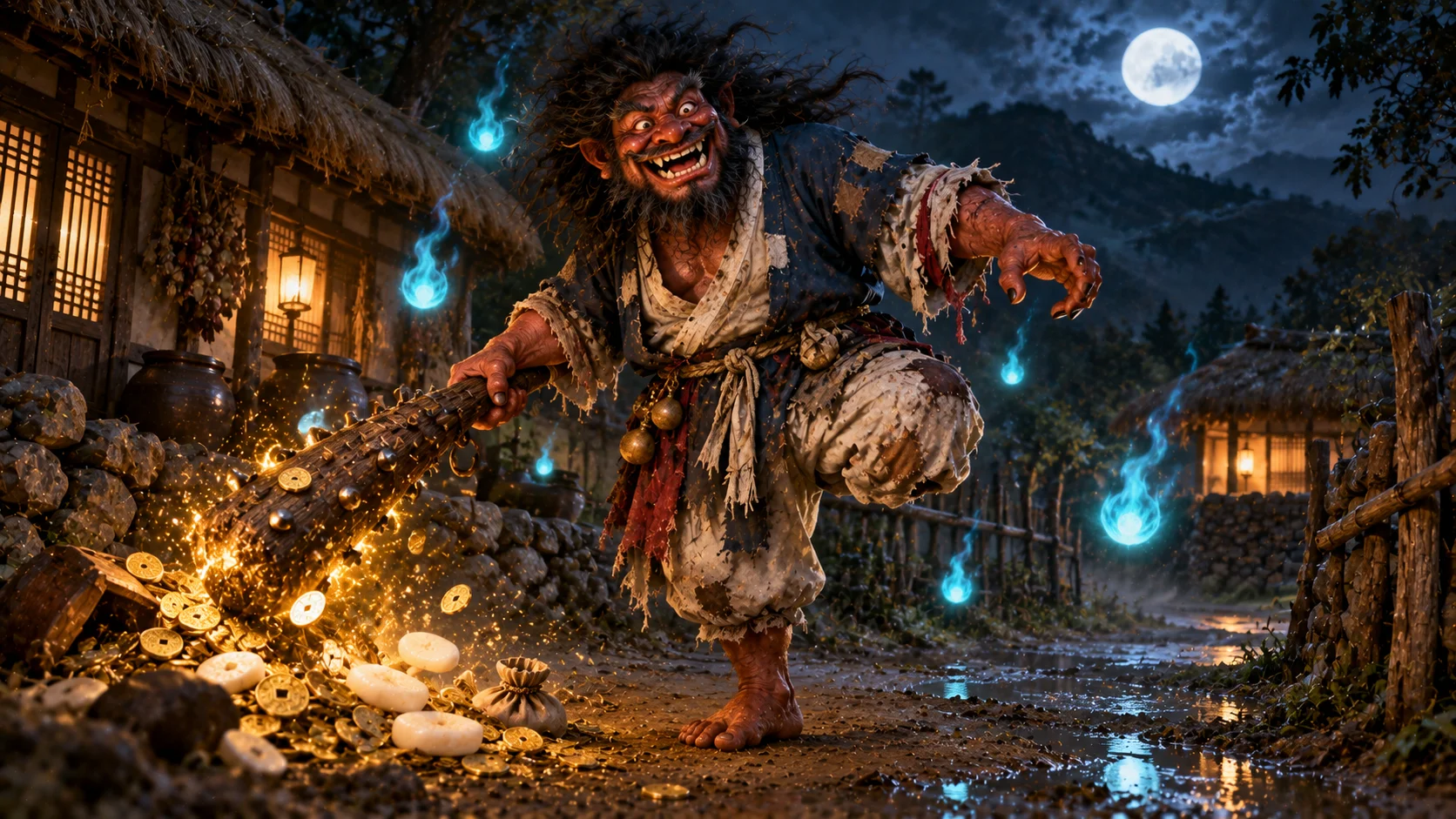
No object in dokkaebi folklore is more iconic than the goblin's own club, the dokkaebi bangmangi. In story after story — most famously in the widely told tale usually rendered in English as "The Dokkaebi's Club" — this cudgel is described as capable of summoning wealth, food, or objects on command, typically with a shout and a strike against the ground. "Gold, come out!" the wielder might cry, and gold appears; rice, silk, or a house full of furnishings could be conjured the same way.
The club's power is not evenly distributed in the moral universe of these tales, however. It rewards those who come by it through wit, kindness, or luck honestly earned, and it punishes those who try to seize its power through greed. Variants of the story are built around a poor, humble character who stumbles into possession of the club and uses it modestly, contrasted with a greedy neighbor who hears of the fortune, tries to replicate it through deceit or excess, and ends up cursed, injured, or ruined by the very same object. The club itself does not change; it simply answers each person according to what they bring to it.
Rewarding the Poor, Punishing the Cruel
Underneath the wrestling matches and the magic clubs runs a consistent moral architecture. The dokkaebi is not a neutral force of chaos so much as an agent of rough village justice. Tales again and again set a poor, hardworking, or kind-hearted figure against a wealthy, stingy, or cruel one, and let the dokkaebi's intervention settle the score in ways ordinary social hierarchy could not. The poor woodcutter gains unexpected riches; the miserly landlord who tries to exploit the same spirit for more is humiliated or loses what he already had.
This function helped dokkaebi tales serve a very practical social purpose in traditional village life. They gave storytellers a vivid, entertaining way to affirm communal values — generosity, humility, hard work, honesty — and to imagine consequences for those who violated them, in a world where formal justice for the poor against the rich was often out of reach. The supernatural, in these stories, does the work that social structure sometimes could not.
Rice Wine and Buckwheat on the Doorstep
Because the dokkaebi was understood to be present in the countryside and capable of both mischief and favor, Korean folk practice included small, practical gestures meant to keep on its good side. Dokkaebi were said to particularly enjoy makgeolli, the cloudy, lightly fermented rice wine that remains a staple of Korean drinking culture, and memil-muk, buckwheat noodles.
Leaving out a bowl of makgeolli or a portion of buckwheat noodles was treated as a modest offering — not a grand ritual, but the kind of small hospitality one might extend to an unpredictable neighbor. It reflects how thoroughly the dokkaebi was woven into the texture of ordinary rural life, treated less like a distant supernatural power to be worshipped and more like an eccentric, occasionally dangerous, occasionally generous presence that shared the same roads, fields, and nights as everyone else.
Neither Wholly Good Nor Wholly Evil
What distinguishes the dokkaebi most sharply from many other folkloric goblins and demons is this persistent moral ambiguity. It is not a devil to be exorcised, nor a benevolent guardian spirit to be venerated at a shrine. It occupies a middle register: capable of real menace to a fool or a cheat, capable of real generosity to someone who treats it, and the world, decently. Its interventions are usually earned rather than random, which is part of why these tales function so well as moral instruction dressed as entertainment.
This ambiguity also explains why the dokkaebi survived so easily into modern storytelling without needing to be softened or villainized to fit new audiences. It was never purely frightening to begin with, so it translates naturally into comedy, romance, and drama alike, retaining a core unpredictability that keeps it interesting across very different kinds of narrative.
An Old Spirit in New Clothes
Contemporary Korean popular culture has returned to the dokkaebi again and again, most visibly in the 2016–2017 television drama internationally released as "Goblin," whose Korean title is simply Dokkaebi. Such adaptations draw directly on the older folklore — the sense of a long-lived, liminal spirit tied to human fate, capable of both burden and blessing — while reshaping the figure for modern dramatic and romantic storytelling.
It is worth remembering, in light of this modern visibility, that the now-familiar horned and club-wielding image many audiences associate with the dokkaebi is a relatively fixed, modern convention layered onto a tradition that historically had no single settled form. The oral tales that carried the dokkaebi through the centuries cared less about a consistent silhouette than about a consistent role: the strange presence on the night road who might wrestle you, might trick you, might ruin you if you were cruel, and might, if you were decent and quick-witted enough, make you rich by morning.
A Figure of the Village, Not the Temple
Taken together, the dokkaebi tradition reveals something distinctive about the texture of Korean folk religion more broadly: alongside grand cosmological narratives of heavenly descent and royal founding, there persisted a rich, intimate layer of belief rooted in the household and the footpath, in worn-out brooms and late-night wrestling matches, in small offerings of rice wine left out for a spirit that might, or might not, be watching. The dokkaebi belongs to this everyday register of the sacred — proof that in Korean tradition, wonder and moral consequence were never confined to temples and thrones, but could just as easily rise up out of an old stick left too long in a corner of the house.
Sources & traditions
- EncyclopediaWikipedia — Dokkaebi
- TraditionKorean texts, oral tradition and village tellings
Myths change from area to area and from time to time. This chronicle follows the most widely told versions; tellings in other villages, regions and eras may differ.