Small Bodies, Impossible Heads
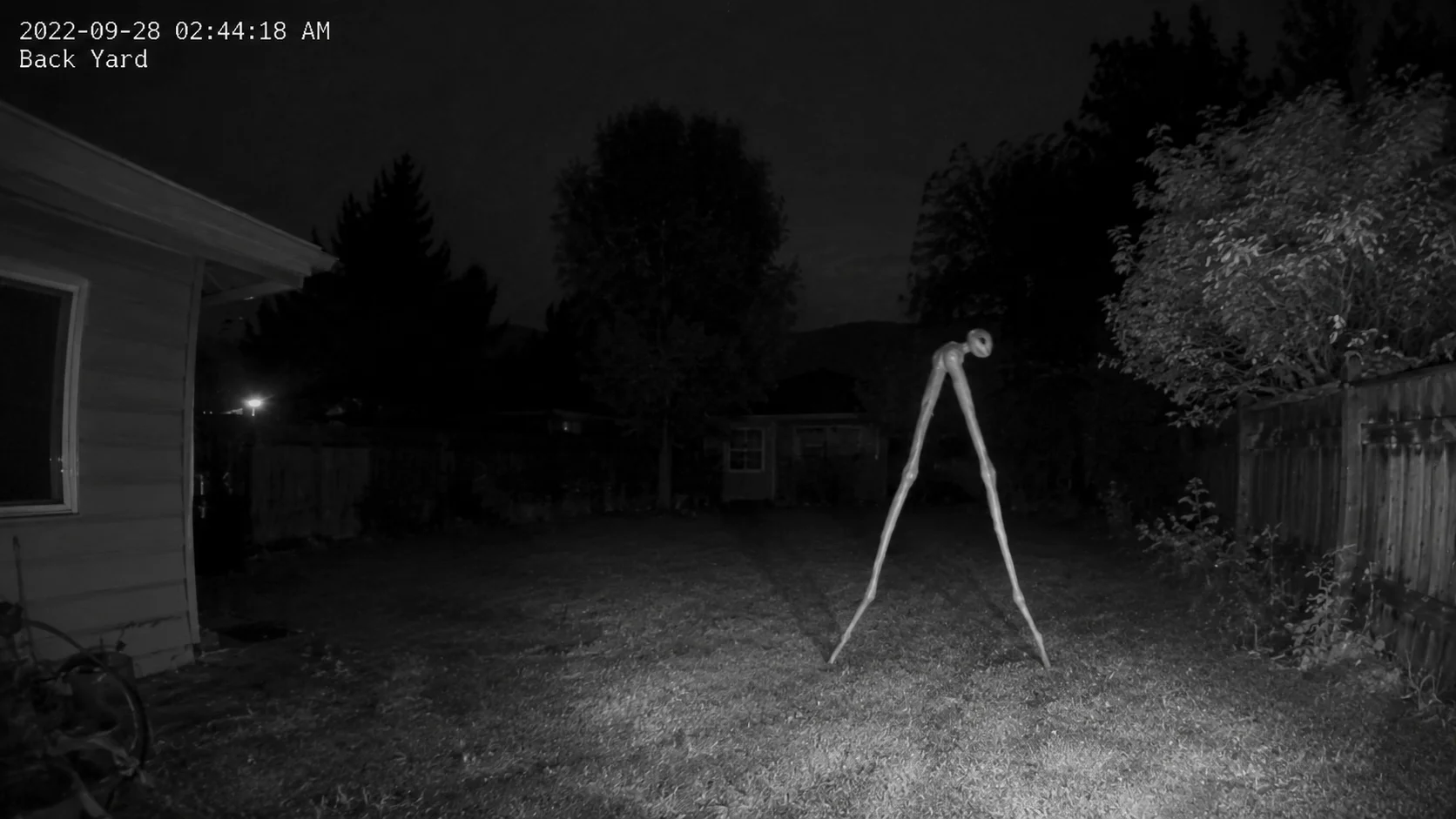
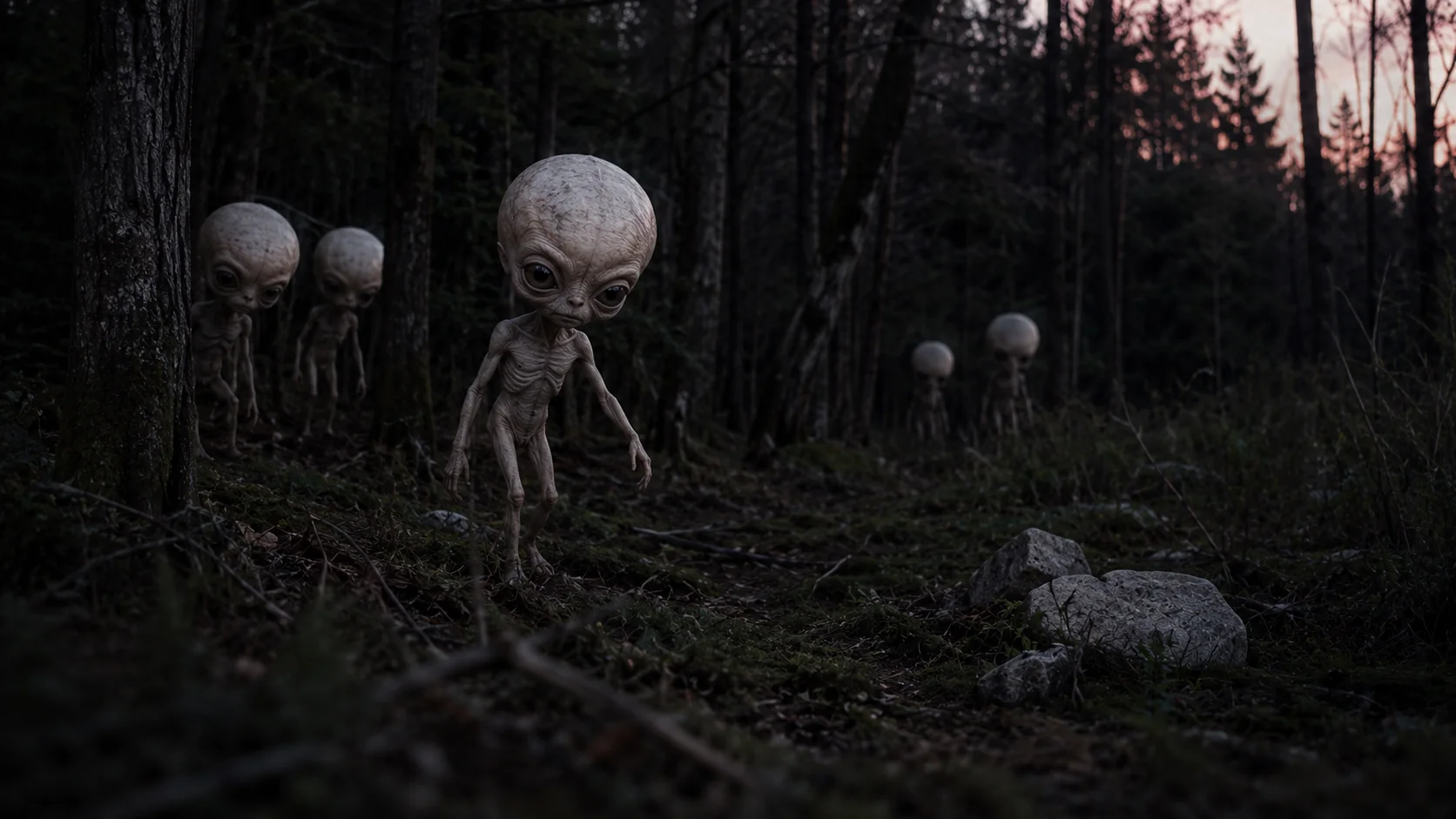
Across three separate corners of the American Midwest and Northeast, a single unsettling silhouette recurs in regional storytelling: a child-sized figure with a skull swollen far past any human proportion, balanced on a slight, often stooped body. Storytellers call them Melon Heads, and the name is descriptive rather than affectionate — the head is not merely large but bulbous, melon-shaped, sometimes said to loll or wobble atop a frame too narrow to properly support it. Accounts describe pale or sickly skin, oversized eyes set into that swollen cranium, and a general impression of something built wrong, something that should not be able to move the way witnesses claim it moves. Unlike the shy, retreating cryptids so common in American folklore, the Melon Heads are consistently described as feral and territorial, prone to chasing off or menacing anyone who lingers too long on the back roads and abandoned grounds they are said to claim.
Three Woods, Three Legends
What makes the Melon Heads unusual among cryptid traditions is that there is no single Melon Heads. The name attaches to at least three distinct, geographically separate legend clusters — one centered in Connecticut, one in Michigan, one in Ohio — each with its own origin story, its own haunted geography, and no documented connective tissue between them. Folklorists who have studied the phenomenon are explicit on this point: these are independently evolved local legends that happen to have converged on the same central image, not chapters of one continuous mythos. Anyone hearing a version in one state is very likely hearing something a Michigan or Ohio storyteller would not recognize as their own.
The Woods Off Velvet Street
Connecticut's telling is anchored in the towns of Fairfield, Trumbull, and Shelton, and above all in a stretch of road locals nickname Dracula Road or Velvet Street. The most commonly repeated origin story there holds that the Melon Heads are the descendants of a family driven into the surrounding woods generations ago, exiled after generations of inbreeding left their children deformed. A second, equally popular version swaps the family for an institution: escaped or abandoned patients from a mental asylum — sometimes given the invented name "Fairfield Hills" or simply "the Institute" — who fled or were cast out into the trees and never returned to town. Both versions are told and retold as settled local history by teenagers who drive the road at night, but neither is documented medical or historical fact; they are, by every account that has examined them, local legend rather than record.
Felt Mansion and the Doctor's Failed Cure
Michigan's version relocates the story to the dune country near Saugatuck, along Lake Michigan, and fixes it to the grounds of the Felt Mansion, sometimes tied to a nearby facility remembered in local speech as the Junior Girls' or Junction sanitarium. Here the origin is medical rather than genealogical: a doctor, the story goes, ran experimental treatments on institutionalized or orphaned children suffering from hydrocephalus, treatments that failed catastrophically and left the children disfigured, feral, and eventually lost to the surrounding woods, their descendants — or their transformed selves — still said to haunt the property. As with the Connecticut version, no historical record corroborates any such experiments ever taking place at or near the mansion; the story survives purely as oral legend passed between generations of local teenagers and campers.
The Family Named for Their Own Legend
Ohio's contribution comes from Kirtland, in Lake County, and takes a third shape again. There the Melon Heads are sometimes said to be a family literally surnamed Melonhead, living apart from the rest of the community; in other retellings they are children born with hydrocephalus who were abandoned in the woods by a doctor, occasionally given the folk name "Dr. Crow" as the story is passed along. As with the other two clusters, this is presented locally with the confidence of history but rests on no documented historical basis — a family or a doctor invoked to give a frightening shape a cause, the way local legend so often reaches for an origin rather than leaving the mystery unexplained.
A Skull That Explains Itself
Commentators looking for a plausible seed beneath all three versions have repeatedly landed on the same real medical condition: hydrocephalus, the abnormal buildup of cerebrospinal fluid that can visibly enlarge the skull, particularly in infants and children before the skull plates fuse. It is not hard to see why the condition recurs across two of the three regional origin stories directly, and shadows the third — a legend built around a swollen head has an obvious real-world referent to reach for. Read this way, the Melon Heads may preserve something more uncomfortable than a monster: a folk memory of how communities once regarded visibly disabled or institutionalized people, transmuted over years of retelling into something to fear in the dark rather than something to reckon with in daylight. This remains an interpretive theory about the legend's roots, not a claim that any specific historical event or institution actually produced the figure.
Dead-End Roads and Claimed Ground
In every regional version, the Melon Heads are not wanderers but guardians of a place — dead-end rural roads, the grounds of a supposedly abandoned asylum, a stretch of woods with a name teenagers repeat to each other. Trespass is the trigger: the stories consistently describe the creatures as dangerous specifically to those who linger where they are not wanted, chasing cars, throwing objects, or simply appearing at the treeline to signal that the visit has gone on long enough. This territorial, defensive framing sets the Melon Heads apart from many of their more reclusive cryptid cousins, and it is also what makes the legend so exportable to a very specific kind of nighttime outing.
The Drive Every Teenager Knows
Velvet Street in Trumbull and the grounds around the Felt Mansion in Michigan both function, in practice, as rite-of-passage destinations — places a local teenager is expected to visit at least once, ideally after dark, ideally with the story told beforehand so the drive carries the right weight of dread. This pattern, sometimes called legend-tripping by folklorists, is one of the best-documented functions of local ghost and cryptid stories generally: the legend does not need to be believed literally to do its social work, which is to give a group of young people a shared scare, a shared story, and a shared claim to have driven the road themselves. The Melon Heads legend, across all three states, is arguably as much about that ritual as it is about the creature itself.
No Photograph, No Print, No Body
For all the traffic on Velvet Street and around Felt Mansion, no photograph, physical trace, or verified sighting of a Melon Head has ever surfaced in any documented source. This distinguishes the tradition sharply from cryptozoological cases that draw field investigators chasing footprints or blurred film — Melon Heads are treated by folklorists as belonging squarely to the urban legend and local legend cycle, a story that exists and spreads in the telling rather than a claim anyone has seriously tried to verify in the field. The absence of evidence is not incidental to the legend; it is close to the whole shape of it, a story built for the drive home rather than for a case file.
Printed Pages and B-Movie Screens
The legend has nonetheless left a paper and celluloid trail of its own. Regional folklore compilations and "haunted America" style guidebooks covering Connecticut, Michigan, and Ohio have collected and printed versions of the story for decades, giving each regional cluster a more fixed, citable form than pure oral retelling would otherwise allow. The image has also reached low-budget horror filmmaking directly: the 2004 film "Melonheads" took the creatures as its subject, and independent Michigan-set horror productions have drawn specifically on the Felt Mansion legend for their premise. None of these treatments add documented fact to the tradition — they are retellings and dramatizations — but they mark how far a set of regional oral legends traveled once put into print and onto film.
One Name, Many Origins
Because Connecticut, Michigan, and Ohio each produced a Melon Heads story with its own unrelated cause — inbreeding and asylum exile in one, a doctor's failed hydrocephalus treatments in another, an eponymous family or an abandoning physician in the third — folklorists treat "Melon Heads" less as a single figure with one canonical backstory and more as a recurring legend type or motif, a shape that separate communities arrived at independently. That the same swollen-headed image and the same territorial, woods-dwelling behavior surfaced three times without a shared point of origin is itself treated as a notable and documented feature of the tradition, not an oversight to be resolved by picking a "true" version.
Where the Stories Blur
Some tellers, especially in retellings passed well outside their home region, blend the Melon Heads with other unrelated local ghost stories — most often other "abandoned asylum" legends that circulate near the same haunted properties. Researchers who track these traditions note that this kind of cross-contamination between neighboring local legends is common in oral storytelling generally, but they are careful to treat it as a separate, disputed accretion layered onto the Melon Heads tradition rather than as part of its core lore. Stripped of that borrowed material, what remains in each region is the same basic figure — the swollen head, the claimed woods, the trespasser's fright on a dead-end road — arrived at three times, three ways, by three sets of storytellers who never needed to agree.
Sources & traditions
- EncyclopediaWikipedia — Melon heads
- TraditionLocal sightings, press reports and regional folklore (North America)
Myths change from area to area and from time to time. This chronicle follows the most widely told versions; tellings in other villages, regions and eras may differ.