Hannahanna was a goddess of the Hittites whose name means “grandmother.” Modern writers usually call her a mother goddess, and in the surviving myths of Bronze Age Anatolia she appears as a resourceful elder who is consulted when a god has vanished and the world is failing: it is she who sends out the bee that finds the missing Telipinu. Beyond that role, the evidence is thinner than the confident descriptions in popular books suggest. She has no complete myth of her own, no surviving hymn that names her portfolio, and several of the attributes commonly assigned to her are inferences. This article sets out what the tablets say, what has been inferred, and where there is simply a gap, because the Hittite religion that honoured her is long dead and its records are broken.
Name and writing
The name is built from Hittite hanna-, “grandmother” (the derivation is credited to H. Otten’s entry in the Reallexikon der Assyriologie). Her name repeats the word, Hannahanna, and is often rendered “Grandmother” or, more literally, with the doubling kept, “Grandmother-Grandmother.” Which is the better rendering is not something the texts decide; the doubling may be an intensive, a compound, or simply the way the Hittite name formed.
The goddess is often written with Sumerian logograms instead of being spelled out. The sign-group DINGIR.MAH, “the august deity,” is read as Hannahanna in some Hittite ritual texts, such as the Ritual of Tunnawi. The same logogram stands for the Mesopotamian goddess known as Ninhursag or Ninmah, and so modern reference works list Hannahanna as the Hittite counterpart of that goddess. This is a sensible inference from the writing, but it is an inference from the writing: the signs show how a Hittite scribe chose to write a Hittite name, and they do not by themselves demonstrate that the Hittites thought Hannahanna and the Mesopotamian goddess were the same person. A further caution is that DINGIR.MAH also stands for groups of birth goddesses, as when Hittite translations of Hurrian songs use it where the original names other goddesses, so the sign is a category as much as a name.
No secure Hattian or Hurrian form of her name is known to this article. Some popular accounts assume one, and assert that she was identified with the Hurrian queen of heaven Hebat; the places that say so are informal web writings, and no scholarly text checked confirms it. It is better to say that her name is Hittite in form, and to leave the question of older Hattian or Hurrian counterparts open.
The sources
Hannahanna is known from the cuneiform tablets recovered at Hattusa, the Hittite capital near modern Boğazköy, where the royal archives preserved myths, rituals, oracle reports, treaties and festival programmes. The fullest English-language collection of the myths is Harry Hoffner’s Hittite Myths (second edition, 1998), the source on which most modern summaries of her depend; Piotr Taracha’s Religions of Second Millennium Anatolia (2009) gives her the label “mother goddess.” The myths she appears in are mostly fragmentary, they were copied by scribes for ritual use rather than as literature, and their beginnings and endings are often lost. The texts are rarely dated more closely than to the long period when Hittite scribes were copying older compositions.
The Hittites themselves spoke of “the thousand gods of Hatti,” and the state pantheon was a deliberate gathering of the deities of the peoples the kings ruled: Hattian, Luwian, Hurrian, Mesopotamian and others. A deity such as Hannahanna may therefore have been formed by one stream or by several. Which of them she belongs to cannot be settled from the material at hand.
What she does in the myths
The most reliable statement that can be made about Hannahanna is a functional one: she is the figure to whom other gods turn in a crisis, and she tends to help solve the problems of other deities. Most of the myths in which she appears concern the disappearance of a god, a theme that is very common in Hittite narrative.
The first Telipinu myth
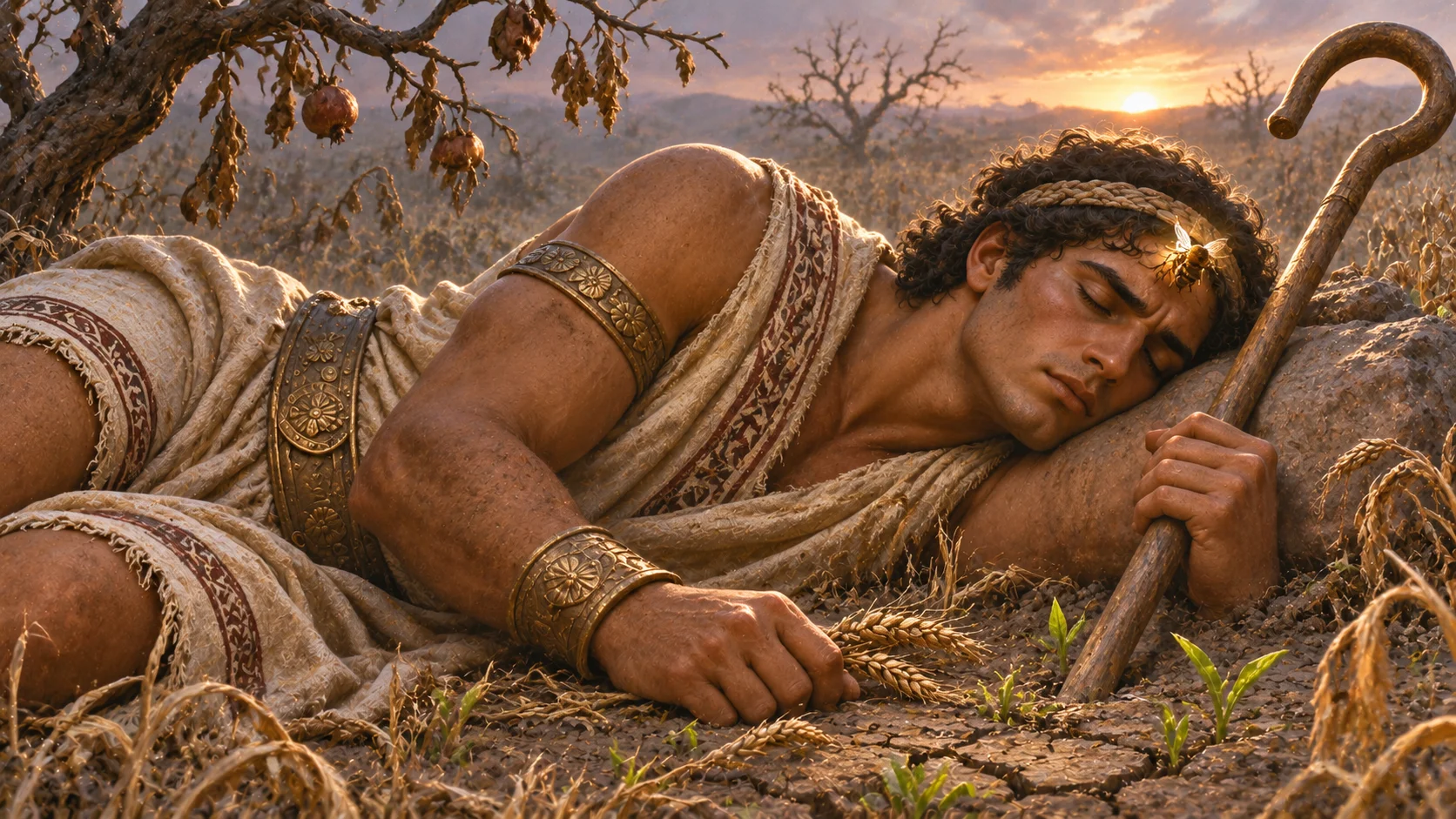
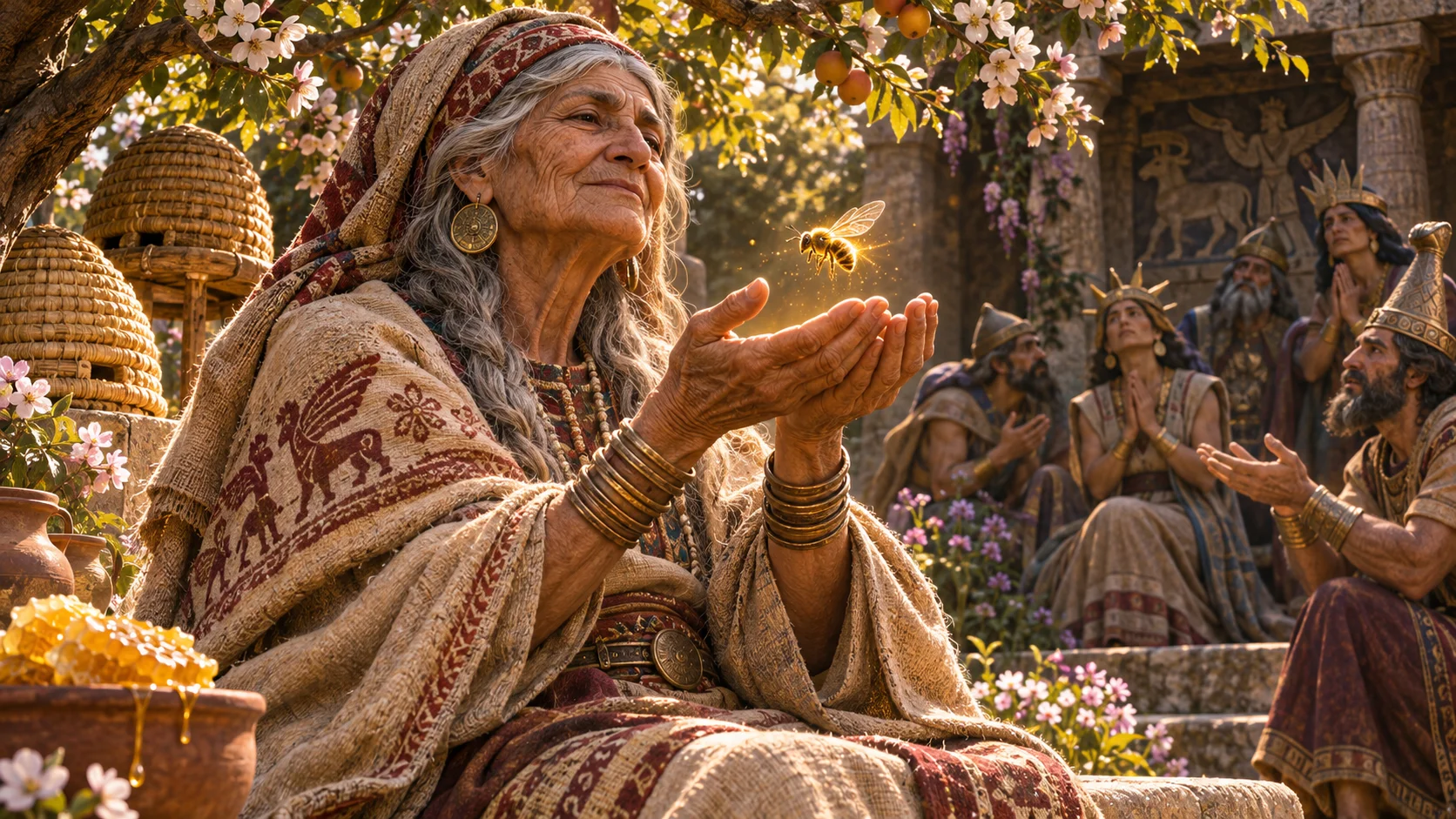
Telipinu, a god of agricultural prosperity, is angered and departs, and with him the vital forces of the land leave. Fertility fails among people, animals and gods alike; livestock reject their young; the springs dry. The gods search and do not find him, and an eagle sent to look fails too. In the account as summarised by Hoffner and others, the Storm-god Tarhunna, Telipinu’s father, complains to Hannahanna. She sends the Storm-god himself to search; when he gives up, she dispatches a bee. The bee finds Telipinu, and it stings his hands and feet and wipes his eyes and feet with wax, to purify and strengthen him. In other readings of the same myth, the sting does not placate him but angers him further, and it is the goddess Kamrušepa, mistress of magic, who calms him; she sends his anger down to the Underworld, to the Doorkeeper, or in another recension a mortal priest consigns it to bronze vessels beneath the earth.
It is worth noting what the myth does and does not ascribe to Hannahanna. The idea of using a small, insignificant creature where the great gods have failed is hers, and it makes her the wise elder of the episode. But she does not appear in the final act: the reconciliation belongs to Kamrušepa and to the ritual that the myth accompanies. Popular accounts that make her the one who “restores” the world have run the stages together.
The second Telipinu myth and the Sea-god
In a second, separate story about the same god, Hannahanna advises the Storm-god to pay the bride-price for the daughter of the Sea-god, Aruna, so that she may marry Telipinu. Here she is a counsellor on a question of marriage and family arrangement, a role that suits her title but is documented only in this passage.
Inara
In a myth about the goddess Inara, a Hattian figure often associated with the wild steppe, Inara goes missing. The Storm-god’s bee informs Hannahanna, who then apparently begins a search with her female attendant; the text is damaged at this point, and the translation is cautious. The poor state of the text prevents more.
Her own disappearance
The most revealing fragment is one in which Hannahanna herself goes missing. In a damaged myth she vanishes in anger. While she is gone, cattle and sheep suffocate, and mothers, both human and animal, neglect their young. Her anger is banished to the Dark Earth, she returns, and the mothers resume caring for their offspring. Hoffner notes that burning brushwood and letting the vapour enter her body is also named as a way of driving the anger out. Of all the surviving passages this is the one that most clearly suggests what the Hittites understood her to preside over: the instinctive, nurturing bond of mothers to their young, which fails when she is withdrawn.
Attributes, and what has been added to them
Reference works often credit her with birth, midwifery, fate and wisdom, and ascribe the bee as her special companion. These need careful handling. The link with birth and fate rests largely on the equation of her logograms with Ninhursag/Ninmah, who is a goddess of birth in Mesopotamian tradition, together with the passage in which mothers fail when she vanishes. It is a reasonable reconstruction, but it is a reconstruction. As for the bee, the Inara myth calls it the Storm-god’s bee, and the Telipinu story has her send it; the creature is a messenger in her service in that episode, not a standing emblem of her cult.
A claim sometimes met with online is that the spring festival called Puruli was dedicated to her and involved her ritual marriage to a new king. No scholarly source checked for this article supports it; the Puruli is attested in connection with the Storm-god and the serpent myth (see the article on Illuyanka). It should be treated as unproven.
Equations and comparisons
No source checked for this article supports a syncretism of Hannahanna with the Mesopotamian goddess Damkina, the consort of Enki/Ea and mother of Marduk. Equally, none equates Hannahanna with Inanna/Ishtar, or the goddess Inara with Ishtar, though such comparisons are sometimes made informally.
What can be said safely is that Hannahanna belongs to a type: the elder mother deity whose withdrawal or anger endangers fertility. Hittite myths of vanishing deities are of one pattern. Telipinu, the Storm-god, Inara, and Hannahanna herself leave, nature falters, and ritual and magic win them back.
Cult
If Hannahanna had a distinct cult, the sources reviewed here do not describe it. She is not known to have had a well-attested great temple, a festival of her own, or a place in the royal prayers on the scale of the Sun-goddess of Arinna or the Storm-god of Hatti. Where she appears in ritual it is mostly in lists, invocations in the dative or vocative, and in the writing DINGIR.MAH, which is a generic title (“the august deity”) that may stand for more than one named goddess. It is therefore not possible to say how widely she was worshipped, or whether the figure in the myths is the same as the divine title invoked in the rituals.
Reception and a closing reflection
In the modern literature she has been called Hittite mother goddess, earth goddess, goddess of birth, and wise counsellor, often within a single sentence. What the tablets support is smaller and in some ways more interesting. She is a grandmother: the name is a kin-term, and everything she does in the stories is what a family elder does. She is asked, she gives counsel, she sends a small messenger where the great have failed, and in her own absence the mothers of the world forget their young. The Hittites, who built their religion from the gods of many peoples, appear to have found in the figure of the grandmother a way of imagining the authority that lies below power: the knowledge that something small can succeed where something large cannot, and that the continuity of life depends on care that rarely receives a festival. Whether she was a great deity or a minor one the evidence does not allow us to say. It is enough to record that she was asked for help, and that, in the stories, help came.
Sources & traditions
- EncyclopediaWikipedia — Ḫannaḫanna
- TraditionHittite texts, inscriptions and later retellings (Anatolia)
Myths change from area to area and from time to time. This chronicle follows the most widely told versions; tellings in other villages, regions and eras may differ.