Ogopogo is a famous Canadian cryptid — a large, serpentine lake monster said to inhabit Okanagan Lake in British Columbia, Canada, often described as a long, serpentine, multi-humped aquatic creature, and rooted in the older indigenous traditions of a lake-spirit or water-monster of the lake. The lake monster of Okanagan Lake, the serpentine creature of the Canadian waters, Ogopogo is one of the most famous lake monsters in the world, the Canadian counterpart of Nessie, the serpentine monster of the deep lake.
The Monster of Okanagan Lake
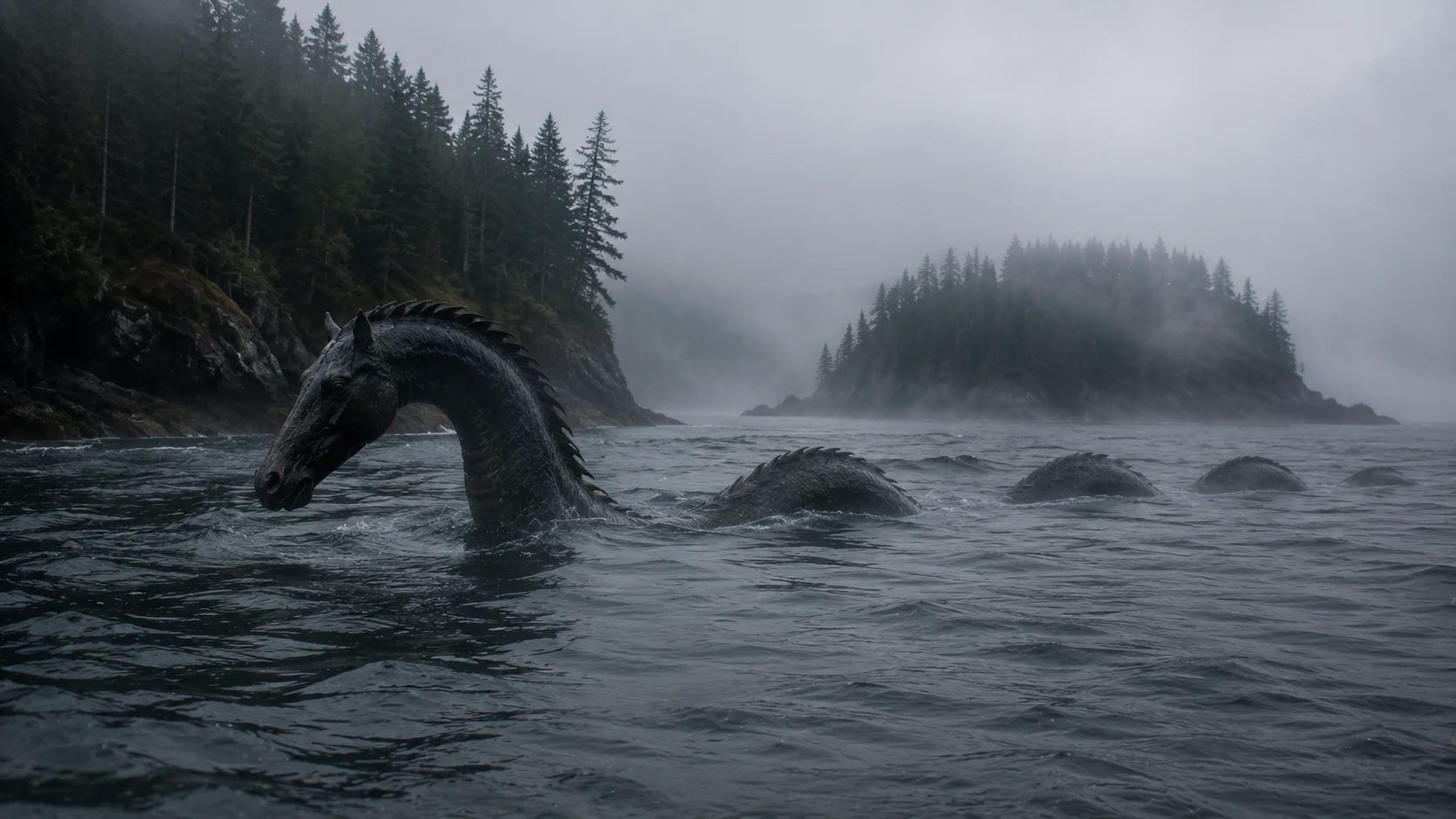
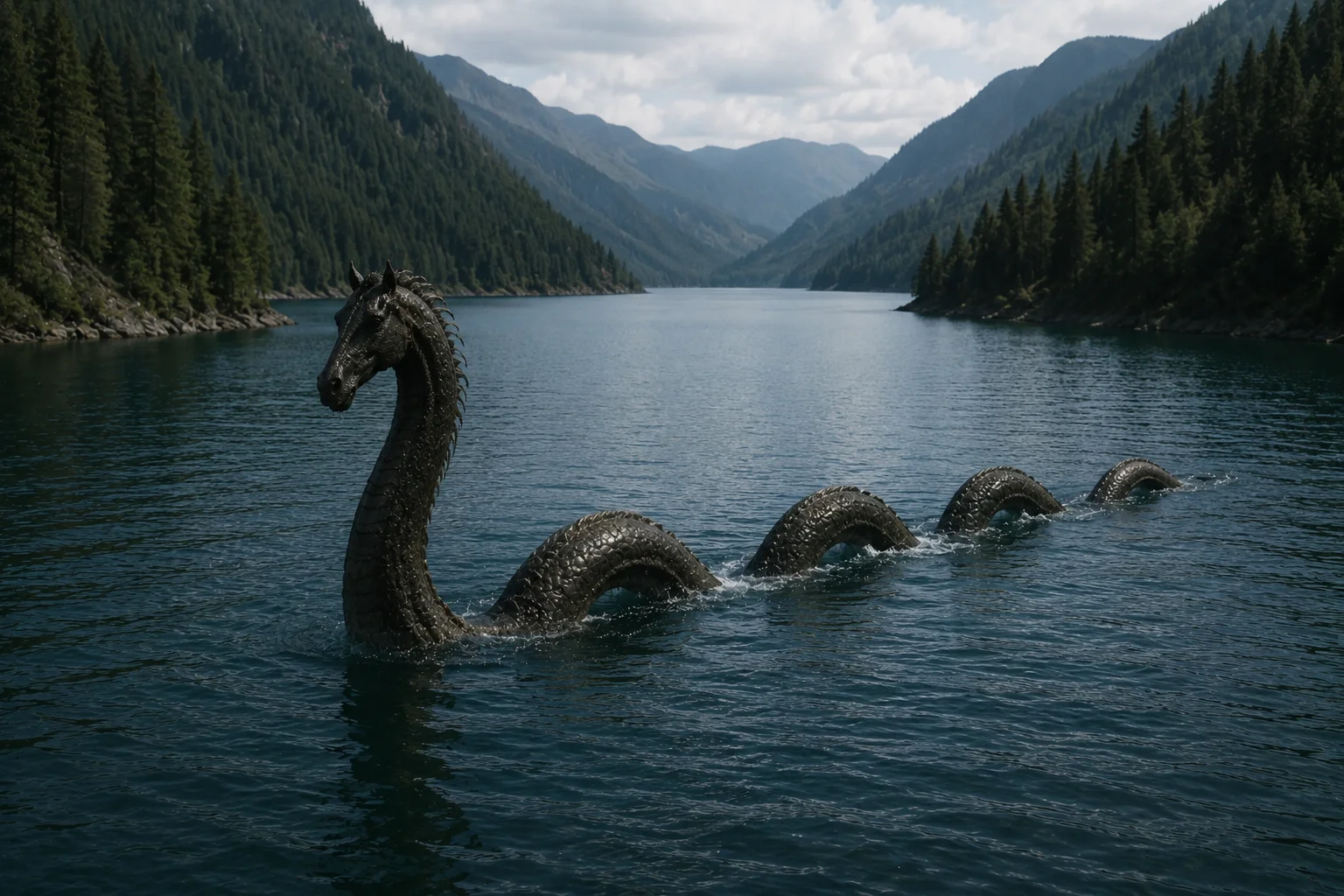
Ogopogo is described as a large, serpentine lake monster — a long, snake-like or eel-like aquatic creature, often given as having a long, serpentine body, multiple humps or coils breaking the surface of the water, a head sometimes likened to that of a horse, sheep, or serpent, and a length of many feet (some reports giving forty to fifty feet or more) — said to inhabit Okanagan Lake, a large, deep, long freshwater lake in the Okanagan Valley of British Columbia, Canada. Ogopogo is most often described as serpentine and multi-humped — the long serpentine body undulating through or beneath the water, the humps or coils breaking the surface, the long neck or head sometimes rising above the water — the serpentine, multi-humped monster of the deep Canadian lake. As the monster of Okanagan Lake, the large serpentine, multi-humped aquatic creature of the deep Canadian waters, Ogopogo is the famous lake monster of the Okanagan, the serpentine creature of the deep lake.
N’ha-a-itk and the Indigenous Tradition
The creature now famous as Ogopogo has deep roots in the traditions of the indigenous peoples of the Okanagan region, who long told of a water-spirit or lake-monster of Okanagan Lake. In the traditions of the Syilx (Okanagan) people, the lake was the home of N’ha-a-itk (or Naitaka), a powerful and dangerous water-spirit or lake-monster — a sacred and feared being of the lake, a water-demon or lake-serpent to whom respect and offerings were due, and who was dangerous to those who crossed the lake without proper respect or offering (the people, in tradition, making offerings to the lake-spirit when crossing the lake, to ensure safe passage and avoid the monster’s wrath). This indigenous tradition of N’ha-a-itk, the sacred and dangerous water-spirit of Okanagan Lake, is the deep root of the modern Ogopogo — the lake-monster of the indigenous tradition becoming the famous modern cryptid. (The modern name “Ogopogo” is a much later, twentieth-century name — derived, oddly, from a British music-hall song — applied to the lake-monster, replacing the indigenous N’ha-a-itk in popular usage.) As N’ha-a-itk, the sacred water-spirit of the indigenous tradition, Ogopogo has deep roots in the folklore of the Okanagan peoples, the lake-monster known long before the modern era.
The Sightings of the Okanagan
Ogopogo has been the subject of numerous sightings in and around Okanagan Lake, where it is a famous local cryptid and a beloved figure of local identity and tourism. Sightings of Ogopogo — the long serpentine creature, the humps or coils breaking the surface, the wake, the head or neck rising from the water — have been reported by many witnesses over the years, along with photographs and films purporting to show the creature; and Ogopogo is a famous and beloved figure of the Okanagan region, with its own lore, enthusiasts, and a place in local identity and tourism (a statue of Ogopogo standing on the lakeshore). Like the other lake monsters, the sightings are explained by skeptics as misidentifications (of waves, logs, otters, beavers, fish, boat-wakes, and other natural phenomena), hoaxes, and the power of legend; but the sightings continue and the legend endures. As the subject of the sightings of the Okanagan, the famous and beloved lake monster of the Canadian lake, Ogopogo is the reported serpentine creature of Okanagan Lake, the local cryptid of the Okanagan waters.
The Canadian Lake Monster
Ogopogo is one of the most famous of the world’s many lake monsters — the Canadian counterpart of the Loch Ness Monster, and one of the most famous lake cryptids in the world, belonging to the global family of the monsters of the deep lakes (Nessie of Loch Ness, Champ of Lake Champlain, Ogopogo of Okanagan Lake, and the many others). It is distinguished, among the lake monsters, by its serpentine, multi-humped form (as opposed to the long-necked, plesiosaur-like form of Nessie), and by its deep roots in the indigenous tradition of N’ha-a-itk, the sacred water-spirit of the lake. As one of the most famous lake monsters in the world, the Canadian counterpart of Nessie, Ogopogo stands among the great lake cryptids, the serpentine monster of the deep Canadian lake, rooted in the indigenous tradition and famous in the modern age. As the Canadian lake monster — Ogopogo, the serpentine, multi-humped creature of Okanagan Lake, the famous Canadian counterpart of Nessie, rooted in the indigenous tradition of N’ha-a-itk — Ogopogo is one of the most famous and beloved of the world’s lake monsters.
Legacy
Ogopogo endures as one of the most famous lake monsters in the world and one of the most famous Canadian cryptids, the large, serpentine, multi-humped creature of Okanagan Lake in British Columbia, rooted in the indigenous tradition of N’ha-a-itk, the sacred water-spirit of the lake, the subject of numerous sightings and a beloved figure of local identity, the Canadian counterpart of Nessie. As the lake monster of Okanagan Lake — Ogopogo, the serpentine, multi-humped creature of the deep Canadian lake, the famous lake monster rooted in the indigenous tradition of the sacred water-spirit N’ha-a-itk — Ogopogo stands as one of the most famous and beloved lake cryptids in the world, the serpentine monster of Okanagan Lake, the Canadian counterpart of Nessie, the famous water-monster of the deep Canadian waters.
Squally Point and the Lake-Spirit’s Lair
A jagged spur of rock reaches into Okanagan Lake south of Peachland, where the water is deep, cold, and — as the English name records — liable to turn rough without warning. This is Squally Point, and in Syilx tradition it is the reputed den of N’ha-a-itk, the place from which the lake-spirit was said to rise. The small island just offshore, called Rattlesnake Island by settlers, lies in the same stretch of water and carries the same reputation. The offering owed to the lake was at its most literal here: those making the crossing are remembered to have carried a small animal in the canoe, to be given to the water if the passage turned against them. The most-repeated cautionary tale attached to the point concerns a man who set out without paying that toll, his horses swimming on a line behind him; the animals were dragged under near the point, and he saved himself only by cutting them loose. Whether the story is caution dressed as narrative, or narrative earned by real drownings, it did the same work either way — it kept people wary of water that could kill them, long before anyone thought to go looking for a monster.
Susan Allison and the Settler Record
The lake-spirit entered the written record of the newcomers early. Susan Allison, among the first non-Indigenous women to settle permanently in the region, spent a long life there setting down the oral traditions of her Syilx neighbours alongside her own recollections of frontier life, and among the material she preserved were accounts of the being said to live in the lake. Her writing sits at an uncomfortable hinge in the story: a genuine act of preservation, and also an early step in the process by which a sacred figure became settler curiosity, and settler curiosity became tourist attraction. The distance between a spirit owed respect and a monster worth hunting was covered, in large part, by exactly this kind of retelling.
The Creature on Film
By the mid-twentieth century the lake-spirit had been renamed and turned loose on the popular imagination, and the reported sighting began giving way to the produced exhibit. The most-cited piece of purported proof is a home movie shot in 1968 by Art Folden, which shows a large dark object moving across otherwise still water and trailing a distinct wake. It is far too distant to resolve into anything — and that is the shape of the entire Ogopogo film archive. The camera always starts a moment too late, or the object stays a few hundred metres too far out, so what survives is motion without an animal. This is not peculiar to the Okanagan; every lake-monster tradition eventually produces its own reel of the almost-conclusive. What makes the Folden footage worth naming rather than filing with the rest is that it became the benchmark — the clip against which later Ogopogo film is measured, and which none of it has yet surpassed.
Cousins Across the Country: Manipogo and Igopogo
Success breeds imitation, even among lake monsters. Once “Ogopogo” had entered Canadian popular culture as a name, other lakes acquired versions of their own almost by rhyme: Manipogo, said to live in Lake Manitoba, and Igopogo, associated with Lake Simcoe in Ontario — both christened decades after the Okanagan original, and plainly after it. Neither carries anything like the depth of Indigenous tradition standing behind N’ha-a-itk; they are, more honestly, regional lake-monster reports that reached for an established name instead of coining one. The pattern says something true about how the legend now spreads: not primarily through belief, but through branding. A community with a deep lake and an eye on visitors discovers that a monster is good for business, and the nearest successful example supplies the template.
What the Lake Is Actually Holding
Okanagan Lake earns its reputation without needing an animal in it. It is a glacially gouged trench running roughly a hundred and thirty-five kilometres end to end and dropping past two hundred metres at its deepest — enough water, and enough movement in it, that the surface almost never freezes over completely, so the lake stays dark and open through months when every smaller body of water nearby has gone solid and still. Logs were once boomed and towed along it to the valley’s mills, and a log that has taken on just enough water to hang suspended a few feet under the surface — a deadhead, in the logging term — drifts with the current and can roll or lift in a way that, seen from shore at distance, looks disconcertingly deliberate. Otters swimming nose to tail break the surface as a row of separate humps; wakes crossing at odd angles on flat water do much the same. The lake offers, on most afternoons, some entirely ordinary way to see what a person already half expects to see. None of this touches N’ha-a-itk, and none of it needs to — the sacred being and the tourist sighting are not one phenomenon wearing a single name, even though a single name now covers both.
Why the Legend Won’t Sink
Every deep lake invites the same question: what is down there? Most people never see the bottom of the water nearest their own home, and the honest answer is that nobody has looked at all of it — which leaves room enough for a story to live in the dark. Ogopogo persists not because the evidence ever improved but because the terms of the story never required that it should. It began as a warning about genuine danger, survived as entertainment, and now endures as something closer to civic affection than belief. The towns along the lake have leaned into the creature rather than away from it, less because anyone expects to net an animal in Okanagan Lake than because a town with its own monster has something a town without one does not — a reason for strangers to look twice at the water.
Sources & traditions
- EncyclopediaWikipedia — Ogopogo
- TraditionLocal sightings, press reports and regional folklore (Canada)
Myths change from area to area and from time to time. This chronicle follows the most widely told versions; tellings in other villages, regions and eras may differ.