Rind — Old Norse Rindr — is a jötunn woman named in the Eddic corpus for a single reason: she is fated to bear Odin a son, Váli, who will grow to avenge the death of Baldr. The Poetic Edda's Baldrs draumar and Snorri's Gylfaginning both confirm this outcome, but neither lingers on her. She has no independent myth cycle, no catalogue entry among the goddesses, and no kenning of her own beyond the role fate assigns her. The fuller, far darker account of how Odin actually came to father that son on her belongs to a separate, later tradition — the Latin history of Saxo Grammaticus — and the two sources should not be blurred into one continuous story.
A Name That Appears Only Once the Prophecy Is Spoken
Rindr enters the record at the exact moment the gods need her, and not a line before. In Baldrs draumar, Odin rides to the gate of Hel and rouses a dead völva from her grave to force a prophecy from her. Baldr has already begun to dream troubled dreams that foretell his death, and the völva confirms what those dreams promised: a son will be born to Odin by Rindr, and that son will avenge Baldr's death by slaying his killer. The prophecy names her only as the vessel through which vengeance will enter the world. It gives no account of who she is beyond that function, no homeland, no parentage, no place among kin. She exists in the text purely as the future mother of an avenger.
Confirmed in the Prose Edda, Explained by Neither
Snorri Sturluson's Gylfaginning corroborates the prophecy's fulfillment in the barest possible terms: Váli is Odin's son by Rindr, and he grows to full strength in a single day to kill Höðr and avenge his brother. Snorri offers no narrative of the conception itself, no scene, no dialogue — the union is simply stated as settled fact, the way a genealogy states a marriage without describing a courtship. This is worth sitting with: the two primary Eddic sources that establish Rindr's existence agree completely on the outcome and say nothing at all about the means. Whatever happened between Odin and Rindr to produce Váli is, in the surviving Old Norse poetic and mythographic record, simply absent.
Missing from the Roll of Goddesses
When Snorri catalogues the Ásynjur — the formally recognized goddesses of the Norse pantheon — Rindr's name is not among them. This is consistent with her identification as a jötunn, a giantess, rather than a member of the Æsir by birth. It places her alongside other non-Æsir women who bear children to gods without themselves being counted as goddesses in the formal sense, a status that shaped how later tradition felt free to treat her — as a figure defined entirely by what she produces rather than by any standing of her own.
The Story the Eddas Would Not Tell
The gap left by the Eddic sources was filled centuries later, and by a different kind of writer working in a different tradition entirely. Saxo Grammaticus, the Danish historian, composed his Latin Gesta Danorum around the turn of the thirteenth century, and Book III contains his own account of how Othinus — his euhemerized, human-ized version of Odin, a great king rather than a god — pursued a woman named Rinda. This is not the Eddic Rindr retold; it is a distinct literary tradition, shaped by Saxo's own historicizing project, and it should be read as such rather than as the missing middle chapter of the Poetic Edda's story.
Refusal After Refusal
In Saxo's telling, Othinus does not simply appear and claim what prophecy has promised him. He is rebuffed, repeatedly, and by his own design: he approaches Rinda in a sequence of disguises, presenting himself first as one kind of man and then another, testing whether persuasion alone might win her. Each attempt fails. Rinda refuses him outright, and in some of these encounters she does more than refuse — she strikes back at him, humiliating the disguised king in ways Saxo lingers over. The pattern that emerges across these episodes is deliberate: a woman who will not be won by ordinary courtship, meeting a suitor who will not accept an ordinary no.
Bark, Spells, and a Final Deception
Saxo's account resolves with Othinus abandoning persuasion for compulsion. He is said to have struck Rinda with a piece of bark inscribed with magical spells — a device that overcomes her resistance where disguise and argument had failed — and through this combination of trickery and enchantment he finally succeeds in fathering the promised child upon her. This is the single most vivid and most uncomfortable passage attached to Rindr's name in the wider tradition, and it belongs squarely to Saxo's euhemerized history rather than to the Eddic poems. The two sources should be kept distinct: the Edda establishes that this union was fated and names its result; Saxo, writing in a different genre for a different purpose centuries later, is the source of the manner in which it was achieved.
A Princess of the Ruthenians
Where the Eddas are silent on Rindr's origins, Saxo supplies an answer — but again, one that belongs to his own frame rather than to native Norse cosmology. In the Gesta Danorum, Rinda is a princess of the Ruthenians, a people Saxo associates with the lands of the Rus. This placement fits his broader method in the Gesta Danorum, which recasts Norse gods and their circles as kings, princes, and princesses of historical or quasi-historical nations. It is a detail worth recording as part of the reception of her figure, but it is Saxo's geography, not an attested feature of the jötunn Rindr who appears in the Poetic and Prose Eddas.
The Son Who Came in a Single Day
What both traditions agree on, whatever their differences over the means, is the result: Rindr bears Váli. The Eddic sources are explicit that this son grows to his full strength within a single day of his birth, forgoing the ordinary span of childhood entirely, and that his sole recorded act is to kill Höðr in vengeance for Baldr. Rindr's part in this outcome is total and singular — she is the mother through whom the specific son required by prophecy comes into being — and it is also, in the surviving texts, the entirety of her recorded role. No further deed, word, or fate is attributed to her once Váli is born.
A Reading in Frozen Ground
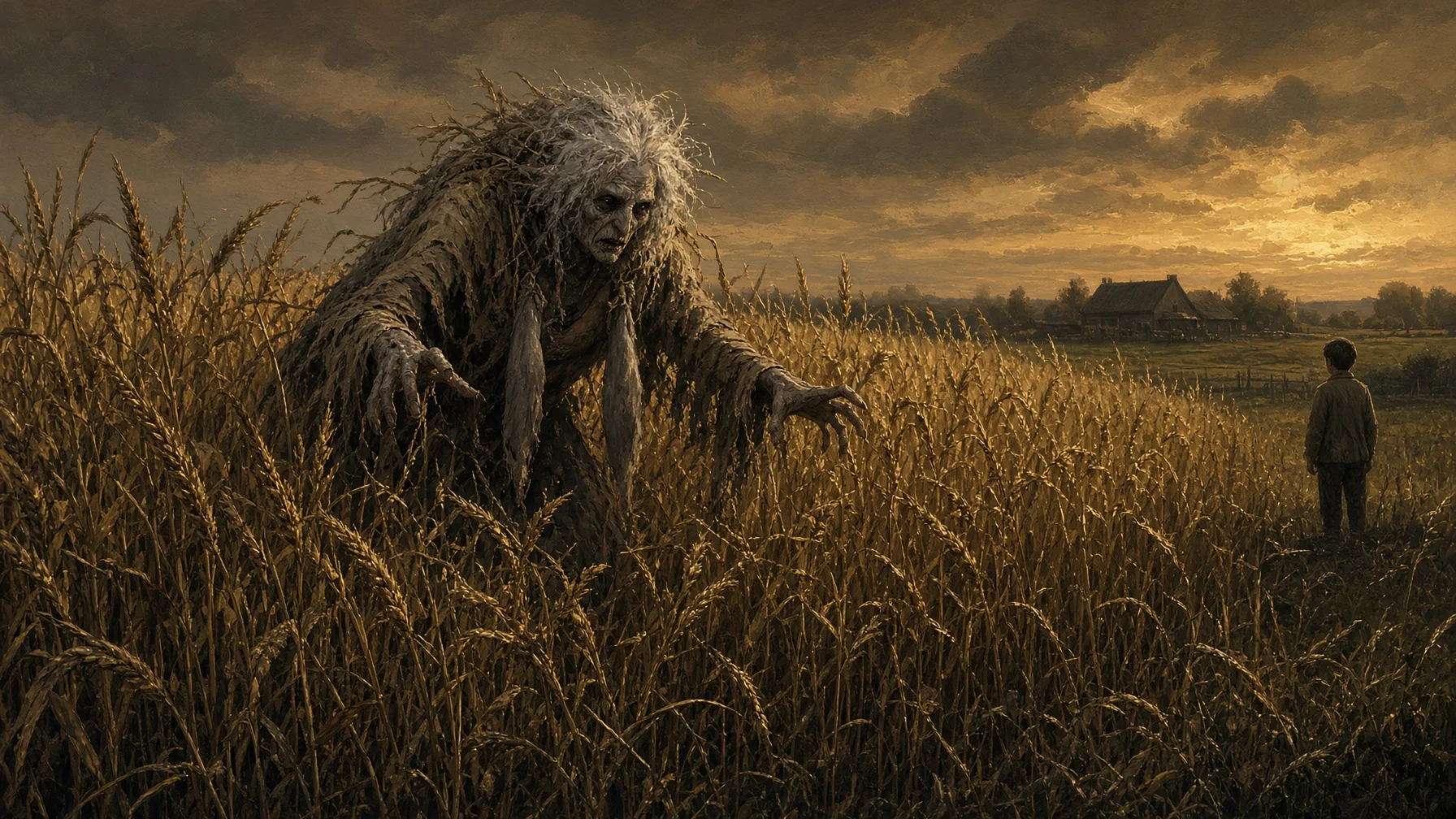
Beyond the narrative sources, some scholars — drawing partly on Saxo's material and on comparative folklore — have proposed that Rindr can be read as a personification connected to earth, and specifically to hard or frozen soil, with Váli's birth understood as a kind of seasonal or vegetative renewal: the difficult, resistant ground finally yielding new growth. This is an interpretive theory rather than a claim stated anywhere in the primary sources, and it should be held at that distance — a lens some scholars have applied to the material, not a fact the material itself asserts about who or what Rindr was understood to be.
Distinct From Odin's Other Consorts
Rindr is one of several jötunn women associated with Odin across the wider corpus, and the sources are careful — or at least consistent — in keeping their roles separate. Figures such as Jörð, Gríðr, and Skaði each have their own distinct, separately attested narrative role elsewhere in the tradition, quite apart from Rindr's. None of these figures share Rindr's specific narrative function; only Rindr is tied to the conception of Váli, and the sources give no indication that her story overlaps with theirs beyond the general pattern of Odin's giantess consorts.
A Figure Almost Never Retold
Rindr's afterlife in later retellings is thin compared to the major figures of the Norse pantheon. Where she does appear in modern fiction or popular retellings of Norse myth, it is almost always in versions that reach past the sparse Eddic prophecy to draw on Saxo's fuller — and considerably darker — account of the pursuit and its resolution. Without that borrowed material, there is simply not enough narrative in the native Eddic sources to build a retelling around; her entire attested presence there is the single fact of Váli's parentage.
The Eddas name her only as the mother fate required. It is a later, separate history that tells, in far starker terms, what it cost her to become that.
Sources & traditions
- EncyclopediaWikipedia — Rindr
- TraditionNorse texts, inscriptions and later retellings (Scandinavia)
Myths change from area to area and from time to time. This chronicle follows the most widely told versions; tellings in other villages, regions and eras may differ.