The Pixie (piskie, pisky) is the mischievous fairy of Cornwall and the West Country of Britain — a small, merry, capricious sprite of the moors, fields, and ancient places, famous for leading travelers astray, playing pranks, and dancing in the wild country by night. Among the best-documented of the West Country fairy-folk, thanks to nineteenth-century collectors who took the trouble to write the tradition down while it was still living speech, the Pixie stands as the very spirit of moorland mischief and the old magic of the far southwest.
The Little People of the West Country
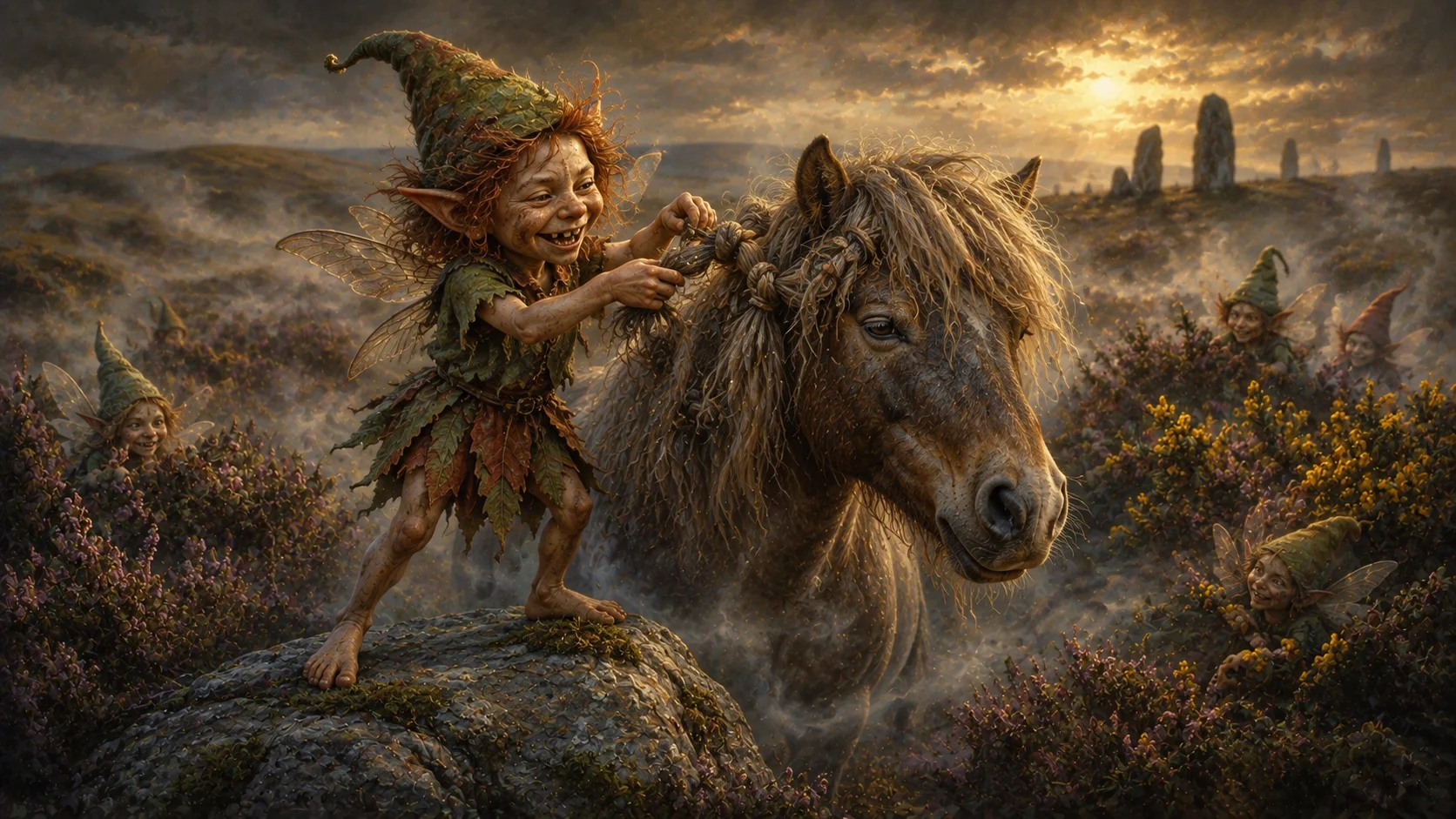
The Pixie, called piskie or pisky in Cornish dialect, is a small fairy-being of Devon and Cornwall — typically pictured as a little person, often with pointed ears, an upturned nose, and a pointed cap, dressed in green or in rags, merry and mischievous by nature. They dwell in the wild and ancient places — the moors, the stone circles and standing stones, the old barrows, the granite tors, the hills and fields — and are creatures of the night and the lonely country, going about their secret fairy business under the moon.
Last updated .
Robert Hunt and the Collectors of the Old Tales
What is known of the piskies today rests substantially on the work of a small number of careful nineteenth-century recorders. Robert Hunt's Popular Romances of the West of England (1865) remains the single most important gathering of Cornish pixie lore, drawing on stories told by working people across the county. Alongside Hunt stands William Bottrell, whose Cornish collections preserve further named tales and local variants, and Anna Eliza Bray, whose letters and writings on Devon folklore — published as A Description of the Part of Devonshire Bordering on the Tamar and the Tavy in the 1830s — record the Dartmoor side of the tradition a generation earlier still. Between them, these sources give the piskie a documentary depth that few other British fairy-beings can claim.
The Moors of Dartmoor and Bodmin
The Pixie is bound to a particular landscape. Its home ground is the high, open moorland of Cornwall and Devon — above all Dartmoor and Bodmin Moor — with their granite outcrops, ancient stone circles, and rough grazing land running out into farmland at the moor's edge. This is a country of sudden mist, hidden mire, and few landmarks after dark, and it is exactly this terrain, walked at night or in fog, that the piskie tales are set upon. The association is not incidental scenery; the moor is the piskie's proper domain in the way that a particular wood or hill belongs to other fairy traditions elsewhere.
Pixie-Led on the Moor
The single most distinctive and widely attested piece of piskie lore is the phenomenon known as being "pixy-led," sometimes rendered "pixy-laden." A traveler crossing the moor at night, or caught in fog, would find themselves inexplicably lost — turned about, disoriented, unable to find a path they knew well, sometimes walking in circles for hours within sight of home. The condition was treated in the old tellings not as ordinary confusion but as the deliberate work of the piskies, amusing themselves at a wanderer's expense. The remedy recorded across multiple sources was specific and practical: turning one's coat, or one's pocket, inside out, which was said to break the pixie spell and restore the true path. The precision of this belief — a named phenomenon with a named cure — is part of what makes piskie lore so well anchored compared to vaguer fairy traditions elsewhere.
A Warning Wrapped in Wonder
Pixy-led tales did real work in the communities that told them. Dartmoor and Bodmin Moor are genuinely treacherous ground — bogs and mires that can swallow a misstep, thick fog that erases landmarks within minutes, long stretches with no shelter and no clear track. A supernatural explanation for getting lost was, in effect, a practical warning dressed as a story: don't wander the moor carelessly, especially at night or in poor weather, because something out there will lead you astray. The piskie, in this light, is not merely a figure of whimsy but a guardian of common sense, teaching caution about a real environmental danger through a tale far more memorable than a plain instruction would have been.
The Pixies' Parlour on the Teign
Devon tradition names an actual place as a pixie dwelling: the Pixies' Parlour, also called Pixies' Cave, a granite outcrop on the River Teign near Chagford. Local tradition held this rocky hollow to be a home of the piskies and a site where they had been seen, and it became one of the fixed points on the map of Devon's fairy geography — a place where the wider, diffuse belief in pixies took on a specific local address. Such named sites are common in living folk traditions; they give abstract belief a location a person could actually walk to, and the Pixies' Parlour is the clearest surviving example from the Devon piskie tradition recorded by Mrs Bray.
Elf-Locks and the Knotting of Manes
Among the most widespread and specific pieces of piskie mischief recorded by Hunt and others concerns horses. A farmer might wake to find a horse's mane or tail tangled overnight into small, tight knots — "pixie knots" or "elf-locks" — worked into the hair with a neatness no ordinary tangling could explain. Folk tradition held that the piskies did this deliberately, and some tellings went further, saying the tiny knots served the piskies as stirrups, allowing them to ride the horses through the night. The motif appears repeatedly enough across the sources to count as one of the defining, recognizable signatures of piskie activity, alongside pixy-leading itself.
Cream Left on the Sill
Some Cornish and Devon accounts also describe piskies performing household or farm labor by night — threshing corn, tidying a kitchen — in return for cream or food left out for them, much as one would leave an offering for the Brownie of English tradition. This helper role should be understood as a secondary and overlapping motif for the piskie rather than its central character. It belongs more properly to the separate Brownie tradition, and where it appears attached to piskies it reflects the general closeness and blending between different types of household and countryside fairy-folk in West Country belief, rather than a defining trait of the piskie as such.
Joan the Wad, Queen of the Piskies
Cornish tradition, as collected by Hunt, names an individual pixie of particular standing: Joan the Wad, described as queen or leader of the piskies. Her name and role are attested in the folklore Hunt gathered, and she later passed from oral tradition into a more public afterlife as a Cornish good-luck charm and mascot figure, popularized commercially in the twentieth century. Joan the Wad represents something distinctive within piskie lore — the tradition's willingness to name individual figures with rank and identity, rather than treating the piskies only as an anonymous, interchangeable throng of little folk.
Piskies, Spriggans, and Pucks: A Cornish Taxonomy
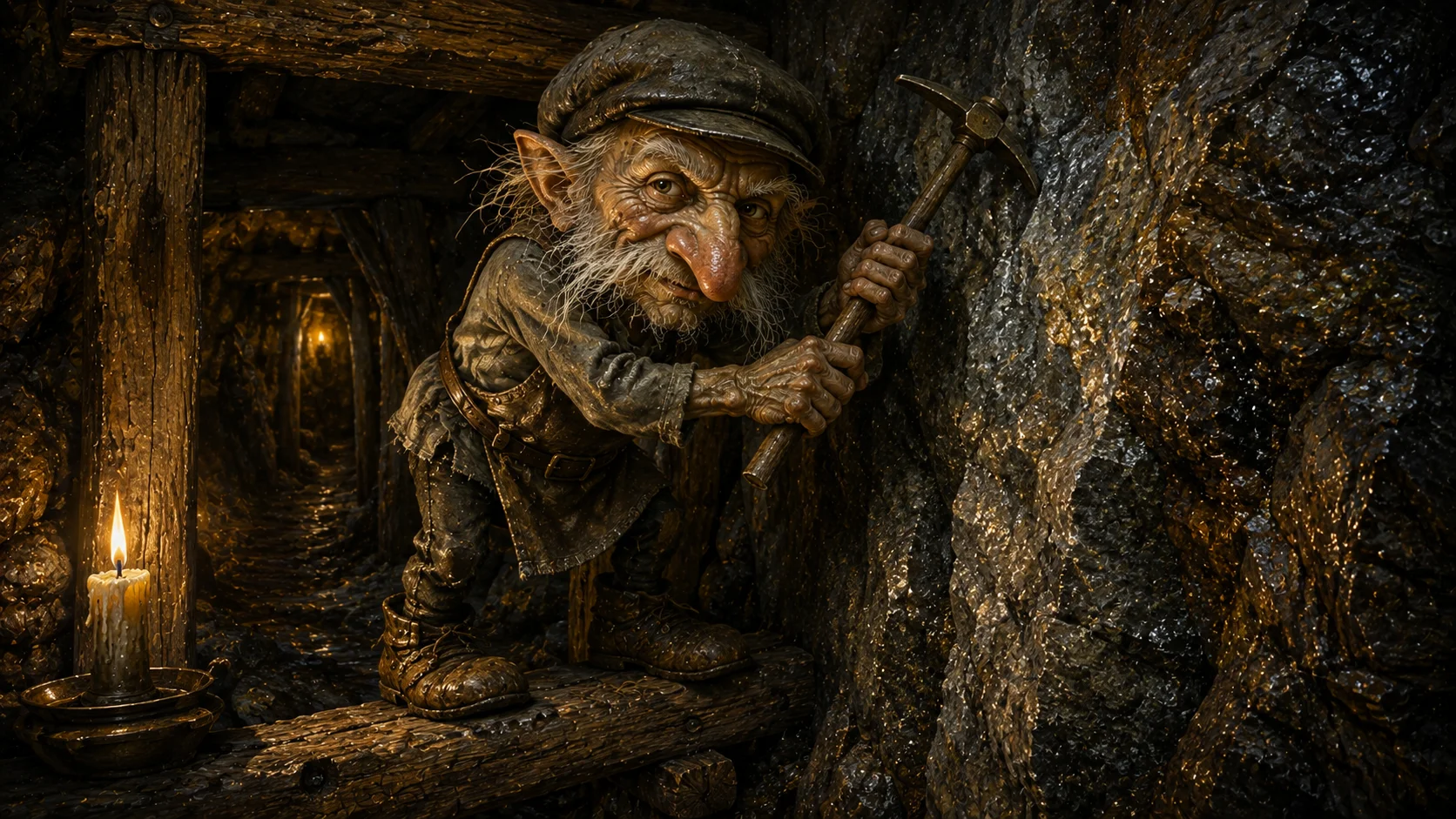
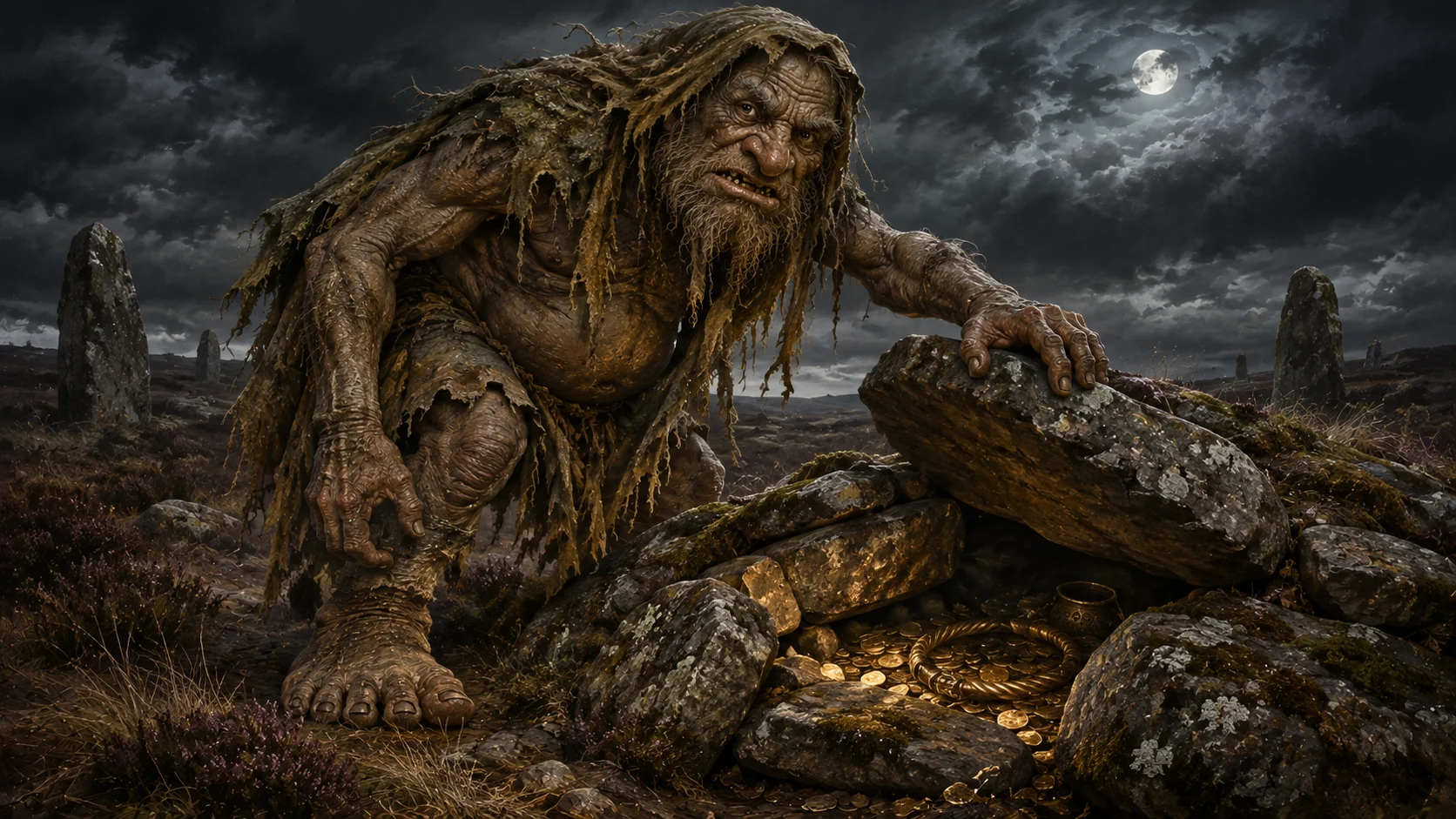
Hunt and Bottrell's Cornish material is careful to distinguish the piskie from other fairy-beings sharing the same country. Spriggans, in this taxonomy, are a harsher and more dangerous kind — associated with guarding treasure, said to be descended from giants, and generally more malevolent in temperament. The piskie stands apart from them: mischievous, certainly, and capable of real trouble for a traveler on the moor, but not malicious in the deeper sense that spriggans could be. In character, the recorded tradition places piskies closer to the English puck — a trickster spirit whose pranks are the point, rather than a being with any darker intent toward humankind.
Two Counties, One Word, Two Emphases
Devon and Cornwall share the piskie tradition but the surviving sources show it with a different emphasis in each county. Mrs Bray's Devon material, centered on Dartmoor, leans heavily on the pixy-led motif and the moor's tors as the piskies' proper stage. Hunt and Bottrell's Cornish material gives comparatively more space to named individual figures, such as Joan the Wad, and to household-helper stories of the kind described above. Both regions plainly draw on the same underlying belief, but folklorists studying the two bodies of material note these distinct local weightings rather than a single uniform tradition told identically on both sides of the Tamar.
Piskie or Pixie: An Unsettled Question
Whether "piskie," the older Cornish dialect form, is simply a regional spelling of the same word as "pixie," or whether it reflects a genuinely separate strand of belief that later became blurred with the more general English term, remains debated among folklorists. The sources do not settle the question, and it is best held open rather than resolved one way or the other. What can be said is that the earlier, regionally rooted material — Hunt, Bottrell, Bray — treats the piskie as a locally specific West Country figure, whatever its exact relationship to the wider word "pixie" turns out to be.
Dancing Rings on the Moorland Grass
Like other fairy-folk of the West Country, piskies are associated in the sources with dancing in circles on the open moorland grass by night, their revels said to leave behind the darker rings of grass known as fairy rings as physical evidence the following morning. This motif ties the piskie into a much broader British and Celtic pattern of fairy dancing and fairy rings, while still being told, in the Cornish and Devon material, as something that happens specifically on the home ground of the piskies — the moors and old places where they are felt to linger still.
Later Embellishment and the Literary Fairy
It is worth noting, and flagging honestly, that some Victorian and later popular writing blurred the piskie into the generalized literary "fairy" of the period, or drew on the imagery of Shakespeare's Puck when describing pixie mischief. The earlier, regionally specific primary sources — Hunt, Bottrell, Bray — do not support this conflation; in their telling the piskie remains a locally distinct West Country type, anchored to particular moors, particular named places like the Pixies' Parlour, and particular named figures like Joan the Wad, rather than a generic fairy borrowed wholesale from elsewhere in literature. Later popular conflation should be understood as an embellishment layered on top of the older tradition, not as part of it.
Spirits of the Old Land
The Pixies belong to the deep tradition of British and Celtic fairy-folk — the diminutive, magical, capricious beings who share the land with humankind and must be treated with a measure of care and respect. In Cornwall and Devon they remain bound up with the ancient landscape: the moors of Dartmoor and Bodmin, the standing stones and circles, granite outcrops like the Pixies' Parlour on the Teign, and the old places where, in the memory the storytellers left behind, the fairy-folk are still felt to linger.