The Mummy is not a single mythological being but a funerary practice and its resulting artifact: the deliberately desiccated and wrapped body of the ancient Egyptian dead. Mummification arose from a specific religious conviction — that the physical body, the khat, remained necessary in death, because the ka and the ba, the vital and spiritual aspects of a person, needed a preserved vessel to recognize, inhabit, and sustain in the afterlife. What survives from this belief, in tomb after tomb across three thousand years, is the wrapped and desiccated form itself: patient, deliberate, and built to outlast the flesh it once was.
The Body the Soul Could Not Do Without
At the center of mummification lies a belief distinct from many other funerary traditions: the Egyptians did not regard the body as a discarded shell once the spirit departed. The ka and the ba required the khat to remain intact and identifiable, so that the deceased could continue to exist beyond death rather than dissolve into it. A destroyed or decayed body threatened the very continuity of the person, which is why so much labor, expense, and ritual precision went into arresting decomposition rather than merely disposing of remains. The mummy, in this light, is not a monument to death but an instrument built against it — a technology of preservation in service of a specific theological claim about what a person needs to persist.
Anubis and the First Embalming
Mythologically, mummification was modeled on a single founding act. After Isis and Nephthys reassembled the dismembered body of Osiris, it was Anubis, the jackal-headed god of embalming, who is credited in myth with performing the first mummification upon it. Every subsequent embalming, for every deceased Egyptian regardless of status, ritually re-enacted this original act. The dead were not merely preserved by technique; they were, in the logic of the rite, made to follow the same path Osiris had followed, treated with the same care that had first restored a god's body against the finality of death. This is why priests performing embalming rituals wore masks representing Anubis: the embalmer stood, for the duration of the rite, in the god's own role.
Herodotus and the Uncertain Record
Much of what is popularly known about the standard mummification process comes from a source outside Egyptian tradition itself: the Greek historian Herodotus, writing in the 5th century BCE. His account describes the sequence of procedures in some detail, but it was written centuries after the practice's technical peak, by an outsider describing rites he had not performed and likely observed only partially. Egyptologists treat his description as a valuable but only partly corroborated source, useful as a framework but not as a precise technical manual. Much of what is confidently known about the actual mechanics of mummification instead comes from direct examination of the mummies themselves.
Forty Days in Natron
The process Herodotus describes, and that archaeological evidence broadly supports for elaborate mummifications, began with the removal of the internal organs, with one deliberate exception: the heart was left in place. The body was then desiccated using natron, a naturally occurring salt, over a period of roughly forty days — the step that did the essential work of arresting decay by drawing moisture from the tissue. Only after this desiccation was complete did the process move to wrapping, when the dried body was bound in many layers of linen bandages. The forty-day natron period was not incidental; it was the technical core of the entire undertaking, the stage on which the rest of the process depended.
The Heart Kept, the Mind Discarded
The decision to leave the heart in place while discarding the brain reflects a belief about where a person's essential self resided. The heart was preserved because it was to be weighed in the afterlife: judgment depended on setting it against the feather of Maat, goddess of truth and cosmic order, to determine whether the deceased had lived rightly. The brain, by contrast, was typically removed and discarded outright, considered unimportant to this reckoning. To modern sensibility, which locates identity and thought in the brain, this division can seem inverted; within the framework the embalmers worked in, it was consistent and deliberate — the organ tied to moral judgment was safeguarded, and the organ we now associate with cognition was not.
Four Jars, Four Sons, Four Guardians
The organs removed from the body during evisceration — the lungs, liver, stomach, and intestines — were not discarded but preserved separately, each placed in its own canopic jar. Each jar and its contents fell under the protection of one of the Four Sons of Horus: Imsety, Hapy, Duamutef, and Qebehsenuef. Each of these four in turn was linked to a protective goddess — Isis, Nephthys, Neith, and Selket respectively — layering divine guardianship over the parts of the body kept apart from the wrapped khat itself. The canopic set, arranged around the coffin or within the tomb, meant that no part of the deceased that had been deliberately removed was left unprotected; the same theological care extended to the whole body extended outward to its separated organs as well.
Amulets Bound Within the Linen
As the body was wrapped, protection was built into the bandaging itself. Amulets — among them scarabs and small figures of protective deities — were placed at specific points on the body during wrapping, following instructions recorded in the Book of the Dead. This was not decorative addition but a further layer of ritual technology: each amulet, positioned precisely, was understood to extend magical protection to the part of the body it rested against, guarding the deceased on the journey the wrapped body was being prepared to undertake.
Restoring the Senses: The Opening of the Mouth
Once wrapping was complete, the mummy underwent the Opening of the Mouth ceremony. This rite was performed to restore the deceased's senses — the capacity to see, breathe, eat, and speak — so that the person could function in the afterlife despite the stillness of the preserved body before them. It marked the ritual completion of the embalming process: the body had been preserved, wrapped, and protected, and now, through this final ceremony, made capable of the existence the entire process had been undertaken to secure.
A Rite Shaped by Wealth
Mummification was never uniform. Its quality and elaborateness varied strongly according to social class and era. A full, costly mummification — complete organ removal, careful natron desiccation, fine linen, inscribed amulets — was available chiefly to pharaohs and the wealthy, who could bear its expense. Poorer burials made use of simpler desiccation, often without full evisceration, achieving preservation through far less elaborate means. The mummy, then, was never a single fixed practice but a spectrum, stretching from the meticulous royal treatment down to modest preparations that nonetheless answered the same underlying belief about what the dead required.
Three Thousand Years of Practice
Mummification was practiced for roughly three millennia, beginning with natural desiccation in the Predynastic period, long before deliberate techniques were developed, and extending through increasingly sophisticated Middle and New Kingdom methods into the Greco-Roman period. Egyptologists generally regard the 21st Dynasty as the technical high point of the craft, after which quality gradually declined even as the practice itself continued. Across this enormous span, the underlying purpose never changed even as methods, materials, and precision did — a single religious conviction pursued, refined, and eventually simplified again, over a longer stretch of time than separates the present day from many of the mummies now studied.
Beyond the Human Dead: Animal Mummies
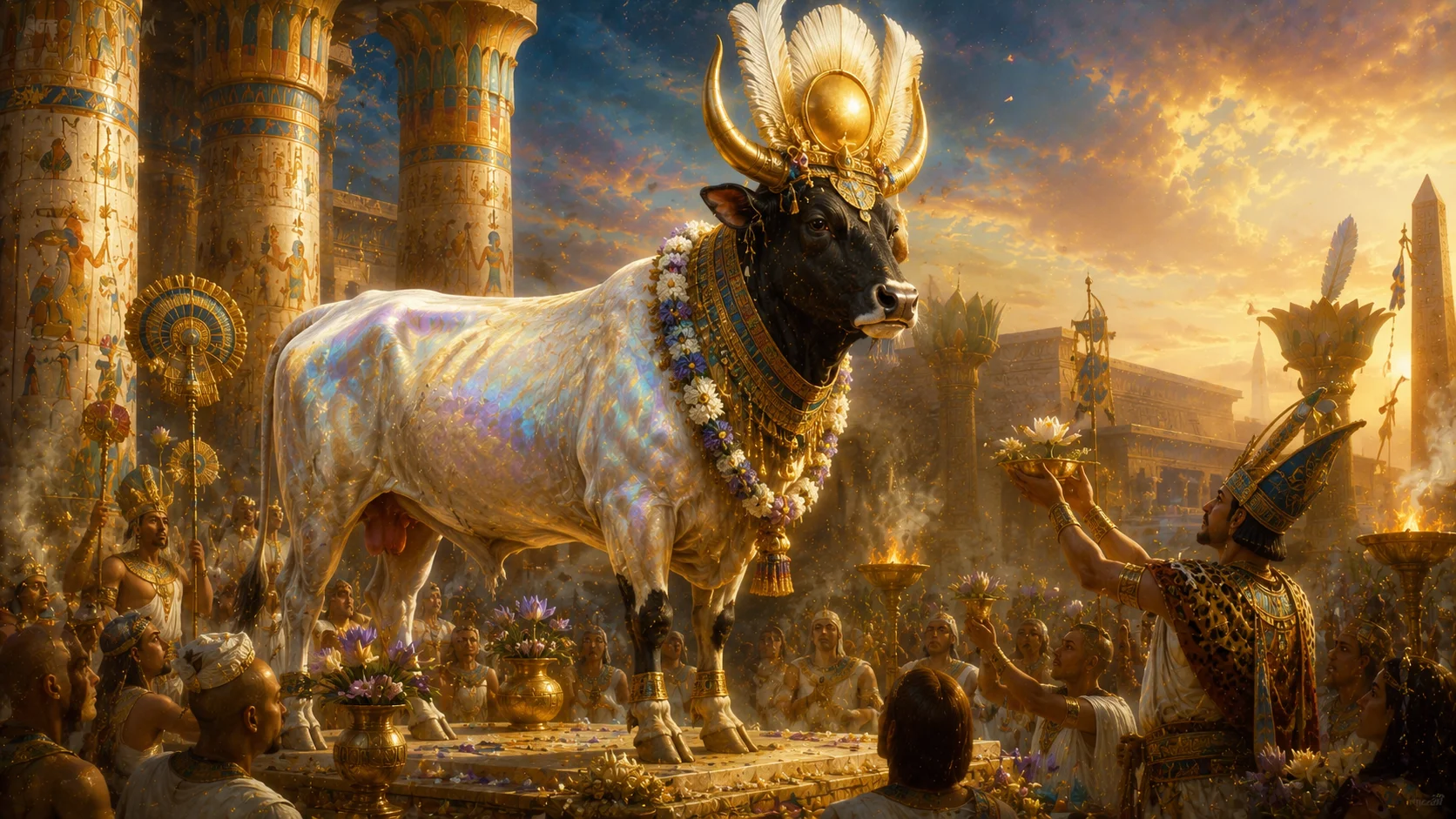
Mummification in Egypt was not reserved for people. Animals — cats, ibises, crocodiles, and bulls associated with the Apis cult among them — were also widely mummified, offered as votive gifts to specific gods with whom each species was associated. This animal mummification was a distinct practice from human funerary mummification, serving devotional rather than personal afterlife purposes, but it drew on the same underlying techniques of desiccation and wrapping, and it produced its own vast archaeological record, with animal mummies recovered in extraordinary numbers from dedicated catacombs.
Tutankhamun and the Royal Caches
The best-preserved and most thoroughly studied royal mummies include that of Tutankhamun, discovered in 1922, alongside the mummies recovered from the Deir el-Bahari and Amenhotep II royal caches. These caches, where the mummies of numerous New Kingdom pharaohs had been gathered and reburied by ancient priests to protect them from tomb robbers, allowed modern researchers to identify many of these rulers directly, giving faces to names previously known only from inscriptions. These discoveries remain the primary physical evidence behind much of what is known about the techniques described above.
Where the Wandering Monster Comes From
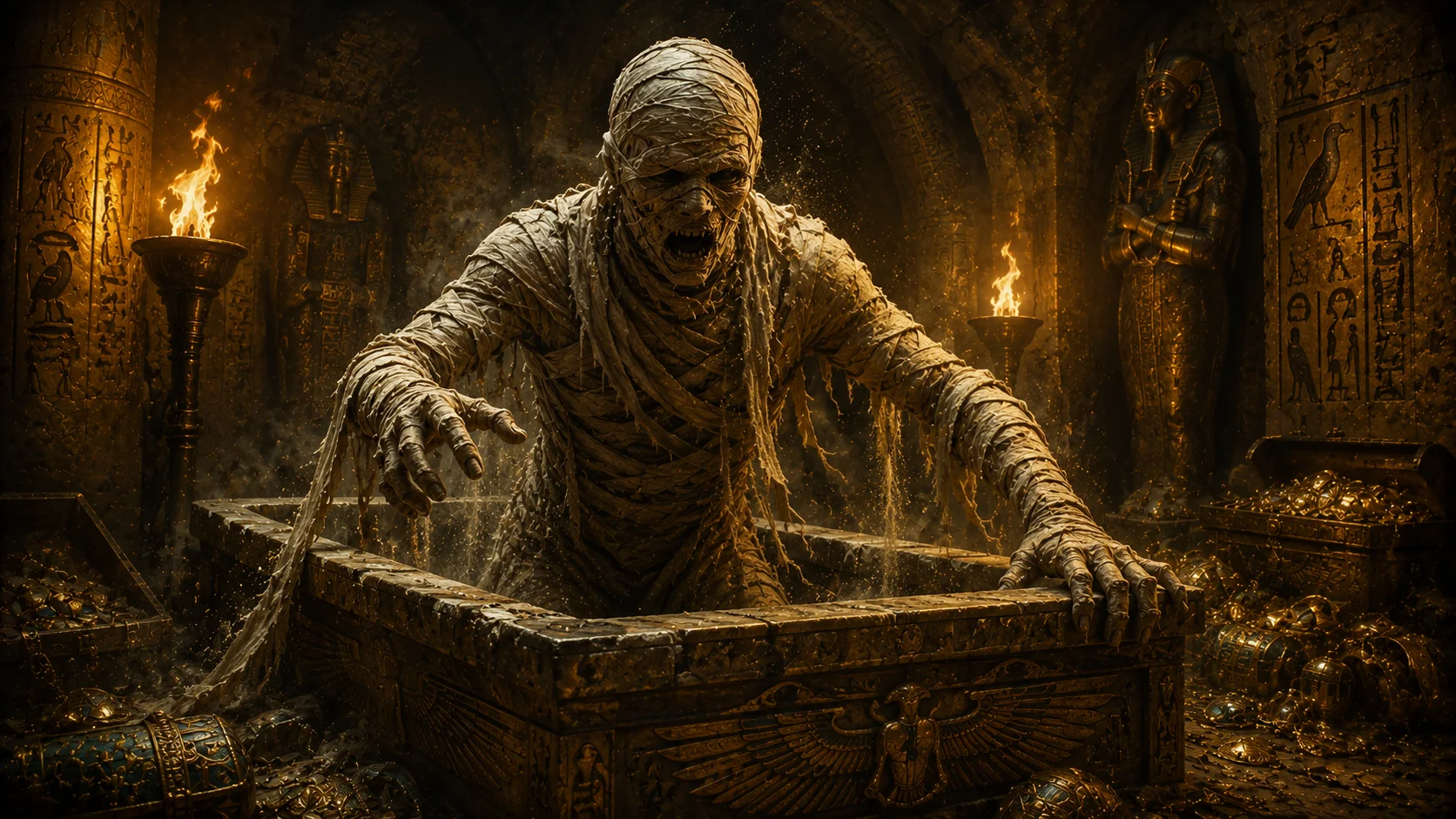
The image of the mummy as a reanimated, malevolent creature — wrapped in bandages, rising from its tomb to menace the living — belongs to no ancient Egyptian religious text or belief. It is a Western fictional invention of the 19th and 20th centuries, popularized above all by early cinema. In actual ancient Egyptian religion, the mummy was understood as a passive vessel: a preserved home for the ka and the ba, prepared with enormous care precisely so that the deceased could rest secure and continue an afterlife existence, not so that the body itself might rise and act in the world of the living. The animate, vengeful mummy is a later era's invention laid entirely over a practice whose original purpose was the opposite: stillness, protection, and continuity, not motion or menace.
Sources & traditions
- EncyclopediaWikipedia — Mummy
- TraditionEgyptian texts, inscriptions and later retellings
Myths change from area to area and from time to time. This chronicle follows the most widely told versions; tellings in other villages, regions and eras may differ.