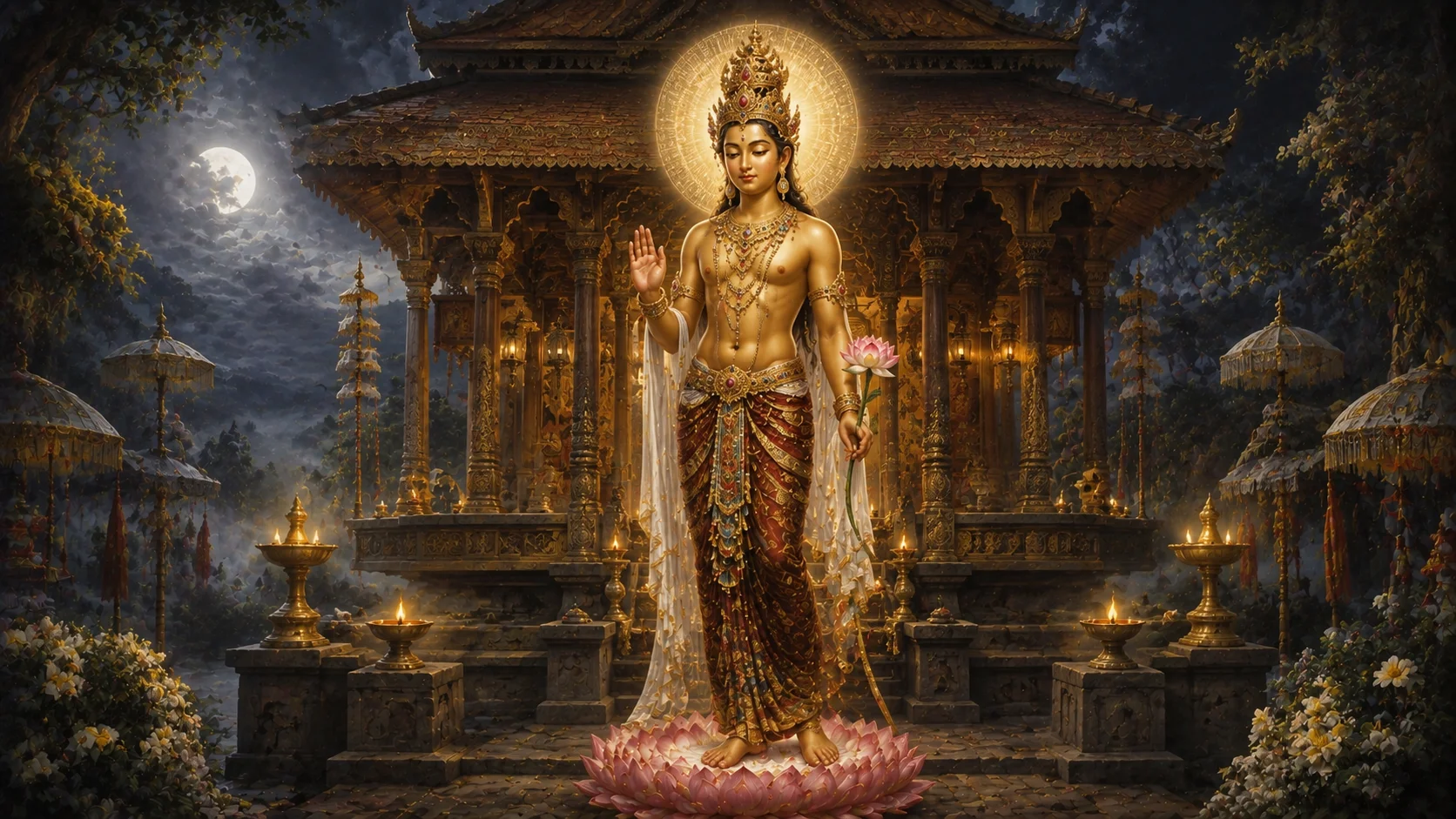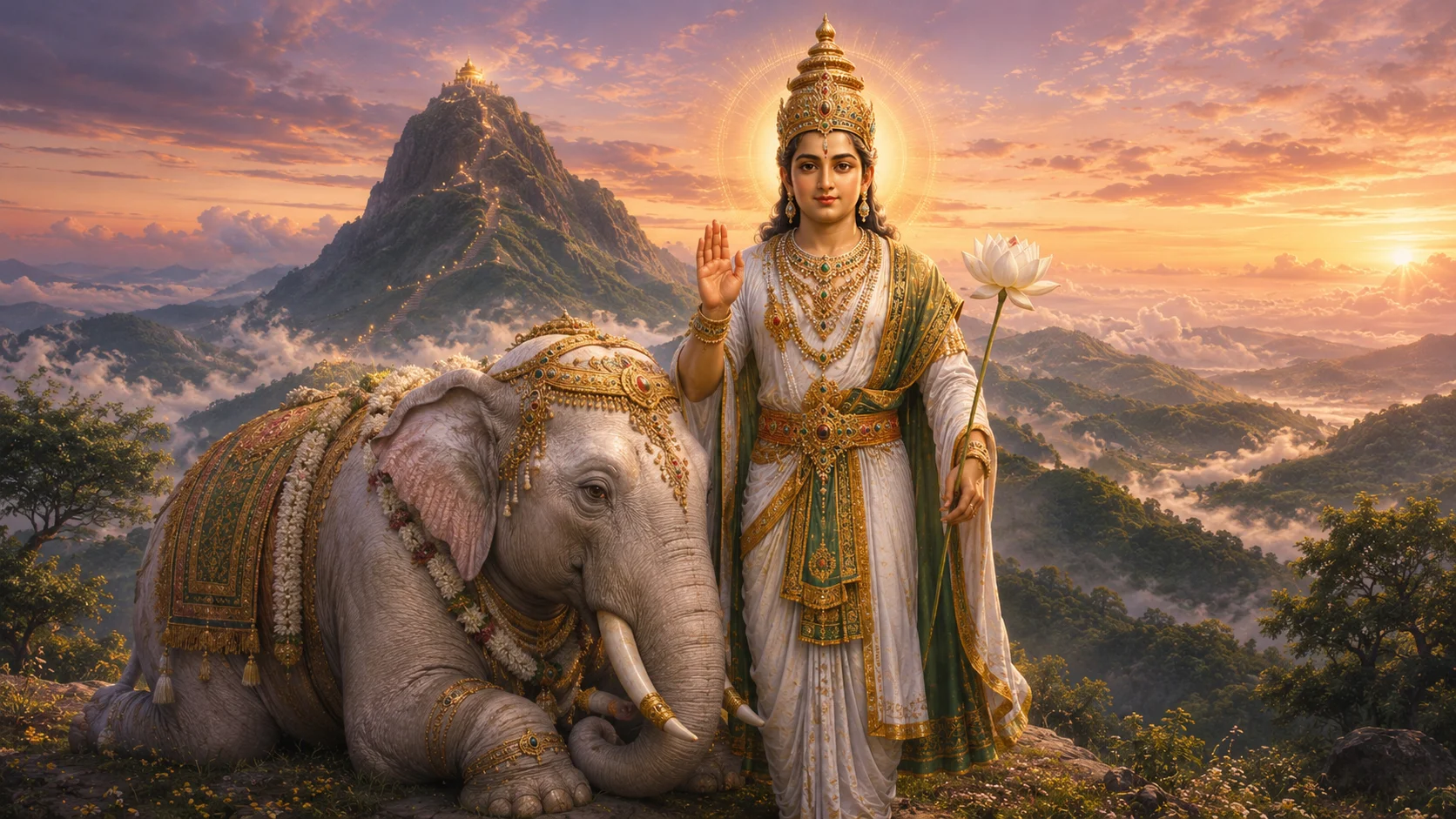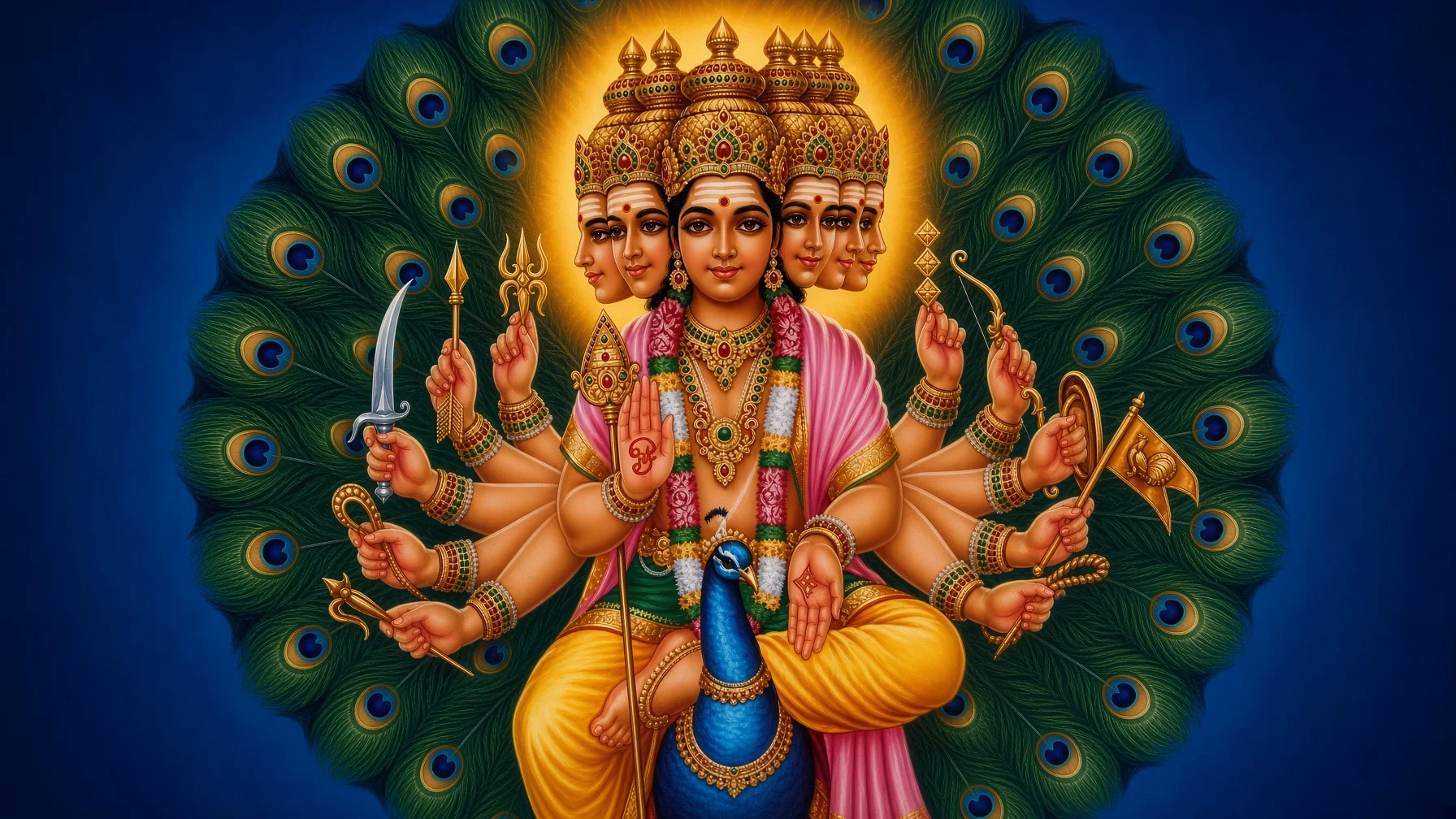
Kataragama Deviyo — venerated as the God of Kataragama — is among the most powerful and widely worshipped of the guardian deities of Sri Lanka, invoked at one of the island's oldest continuously used sacred sites. Enshrined at Kataragama in the deep south, Kataragama Deviyo is honoured within Sinhalese Buddhist tradition as one of the principal guardian deities entrusted with the protection of Sri Lanka and of the Sasana of the Lord Buddha, and is approached by devotees across religious communities as a swift and immediate granter of worldly boons.
A Shrine Older Than Memory
The shrine of Kataragama Deviyo at Kataragama, in the island's southeast, is one of the oldest continuously used sacred sites in Sri Lanka. Its cult is attested from pre-Buddhist and early historical times, and later chronicle traditions associated with the Mahavamsa-era religious landscape reference the sanctity of the place. Over the long centuries that followed, the cult of Kataragama Deviyo was absorbed into the wider Sinhalese Buddhist system of guardian deities — a gradual incorporation whose precise historical process and dating remain, as scholars of Sri Lankan devale worship note, a matter of ongoing discussion rather than settled chronology. What is not in doubt is the antiquity and continuity of devotion at the site itself, which has drawn worshippers, in one form or another, for a very long span of the island's history.
Names That Carry a Shared History
Kataragama Deviyo is known by a cluster of attested names and epithets — Kataragama Deviyo, Skanda Kumara, Kanda Kumara, and, in Tamil Hindu usage at the shared shrine, Murugan. This multiplicity of names is not incidental; it reflects the site's syncretic, multi-community character rather than pointing to a single canonical Buddhist identity. Each name carries the memory of a distinct devotional stream converging on the same sacred ground, and together they testify to a shrine that has never belonged to one tradition alone.
A Fusion Woven Over Centuries
In Sinhalese Buddhist devotion, Kataragama Deviyo is widely identified with the Hindu deity Skanda, also known as Murugan, son of Shiva. Scholarship treats this identification as a historical syncretism rather than an original identity — a fusion generally understood to have developed over centuries as Tamil Hindu and Sinhalese Buddhist devotional streams converged at the same shrine. This is a distinct and separate lineage from other Sinhalese guardian deities venerated elsewhere on the island, and the identification with Skanda belongs to Kataragama Deviyo alone, arising from the particular history of this one shrine and no other.
A Vow to Guard the Teaching
As with the other guardian deities of the Sinhalese Buddhist cosmological order, the protective authority of Kataragama Deviyo is devotionally framed as subordinate to, and derived from, a vow or commission to safeguard the Sasana of the Lord Buddha — the Buddhist teaching and its institutions. Kataragama Deviyo is not himself a Buddhist figure in doctrinal terms; he is incorporated as a devatava, a Sasana-protecting deity, within a hierarchy that places the Lord Buddha's liberating teaching above all worldly power, guardian gods included. This layered arrangement is central to understanding his place in Sinhalese religious life: immense in worldly potency, yet devotionally positioned beneath and in service of the Dharma.
One Among the Four Guardians
Kataragama Deviyo is counted among the principal guardian deities of Sri Lanka, commonly grouped under the designation satara varam deviyo, or the four guardian gods. Which four deities compose that grouping varies by period, region, and source — a point of explicit scholarly and devotional disagreement rather than a fixed canon. Within the Kandyan devale tradition, Kataragama Deviyo is most commonly named alongside Vishnu Deviyo, Natha Deviyo, and Pattini Deviyo, though some regional lists substitute Saman Deviyo in place of one of these. Whichever configuration a given community follows, Kataragama Deviyo's inclusion among the island's foremost protective deities is consistent and central.
Valli Amma at His Side
Venerated alongside Kataragama Deviyo at the devale is Valli Amma, whose shrine presence is emphasised most prominently in local tradition, reflecting the Skanda–Valli mythic pairing carried into the Sri Lankan cult. In some regional tellings the figure of Devasena, also called Teyvanai, appears as well, though it is Valli Amma whose devotional presence at the Kataragama shrine complex is most consistently attested. Her veneration alongside Kataragama Deviyo is part of the devale's living ritual fabric, not a peripheral detail — pilgrims who come before Kataragama Deviyo come, too, before Valli Amma.
The Esala Festival and Its Fire
The central attested ritual event of the cult is the annual Kataragama Esala festival, the Esala Perahera held at the Kataragama devale. It draws joint Sinhalese Buddhist and Tamil Hindu pilgrimage to the shrine, a shared festival at a shared sacred site. The observance features the kavadi dance and the practice of firewalking, traditions associated especially with Hindu devotees but taking place within the multi-religious complex that the Kataragama shrine has long been. The festival stands as the most visible expression of the devotional intensity that Kataragama Deviyo commands — a season in which the shrine town fills with those seeking his intercession, his blessing, or simply the chance to stand within reach of his sanctity.
The Long Walk to Kataragama
Distinct from the Esala Perahera itself is the paada yatra, a long overland pilgrimage walk converging on Kataragama, historically undertaken largely by Vedda and Tamil devotees travelling from the east and north of the island. This is a separately attested devotional practice in its own right, a pilgrimage of endurance and distance rather than of festival spectacle, and it underscores how deeply the pull of Kataragama Deviyo's shrine reaches into communities well beyond any single ethnic or religious group. To walk the paada yatra is to arrive at the god's threshold having already offered, in the journey itself, a form of devotion.
A God for Immediate Concerns
Kataragama Deviyo is popularly regarded as a deity who grants worldly boons — wealth, success, protection, fertility — in a manner distinct from the Lord Buddha's soteriological role. Devotees seek his intercession for the immediate concerns of life while still taking refuge in the Lord Buddha, the Dhamma, and the Sangha as the ultimate refuge. This is not a contradiction within Sinhalese Buddhist practice but an illustration of its layered cosmology: worldly gods, Kataragama Deviyo foremost among them in the south, operate beneath the plane of supramundane liberation, addressing the here-and-now while the path to liberation remains the higher and separate concern of the Lord Buddha's teaching.
Shrines Beyond the South
Beyond the principal devale at Kataragama, secondary shrines dedicated to Kataragama Deviyo exist across the island, including well-known ones within the Kandyan devale complex tradition, standing alongside shrines to the other guardian gods. This regional network reflects his integration into the broader Sinhalese multi-deity devale system centred on Kandy, meaning that devotion to Kataragama Deviyo is not confined to pilgrimage toward the southeastern shrine town alone but is woven into the devotional geography of the island more widely.
A Cult Older Than Its Incorporation
Historians of religion who have studied Sri Lankan devale worship note that the cult of Kataragama predates its full incorporation into the Sinhalese Buddhist pantheon. The precise historical process by which this incorporation occurred, and its dating, remain areas of active scholarly discussion rather than fixed fact. This caveat matters: it distinguishes the devotional understanding of Kataragama Deviyo as a timeless guardian from the more cautious historical picture of a shrine and cult that existed first on its own terms, and was drawn into the Buddhist guardian-deity system only later, through a process still not fully mapped by scholarship.
A Meeting Ground of Faiths
What distinguishes Kataragama Deviyo most clearly among the island's guardian deities is the degree to which his worship crosses communal lines. Buddhists and Hindus arrive at the same devale, observe overlapping rites, and address the god under different names without division at the threshold of the shrine. This is not an incidental feature of his cult but close to its defining character — a guardian deity whose sanctity has, across a long and only partly documented history, made room for more than one tradition to kneel before the same sacred fire.
Sources & traditions
- EncyclopediaWikipedia — Kataragama deviyo
- TraditionSinhalese Buddhist texts, oral tradition and village tellings (Sri Lanka)
Myths change from area to area and from time to time. This chronicle follows the most widely told versions; tellings in other villages, regions and eras may differ.