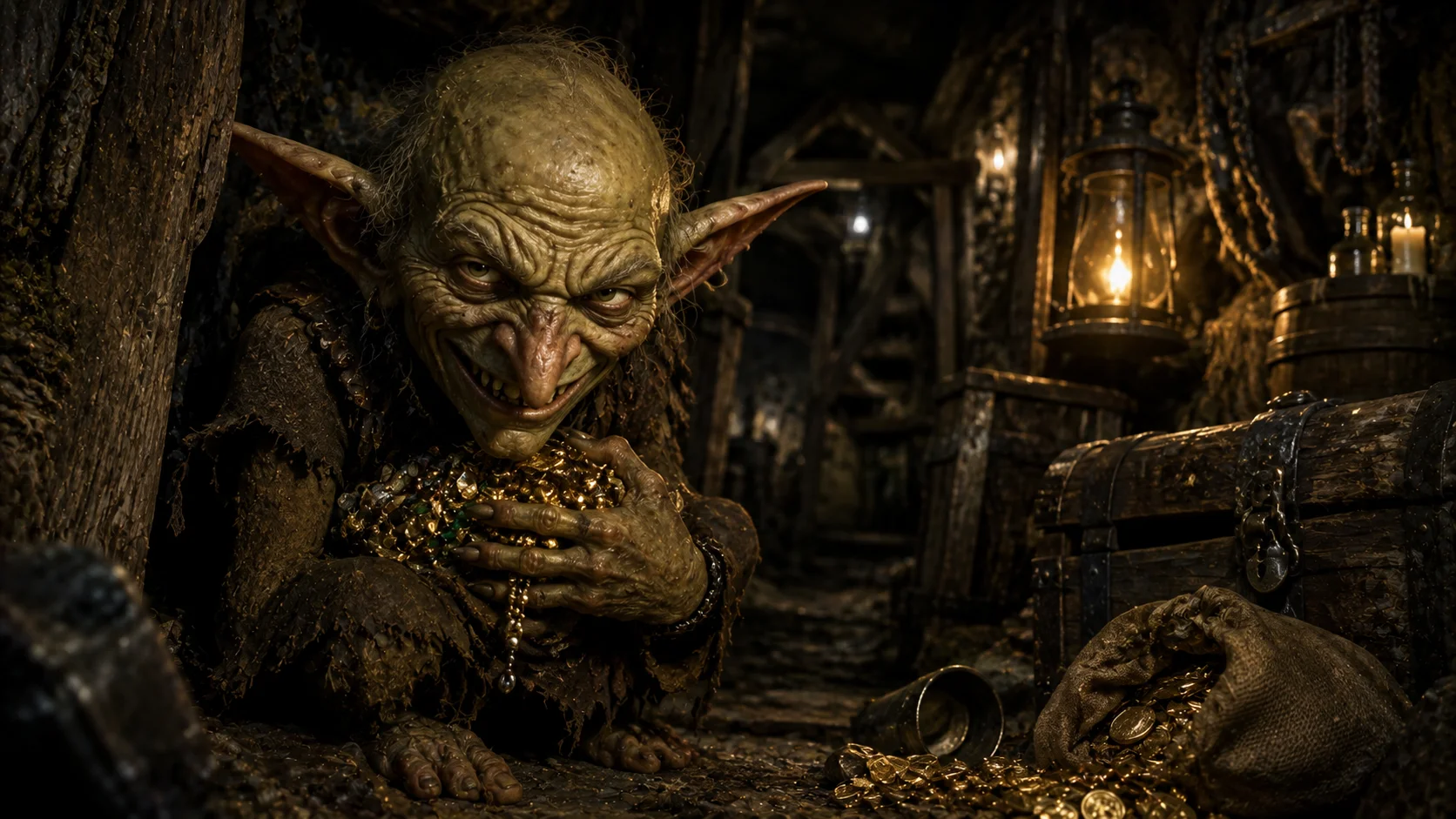
The Goblin is the small, ugly, malicious sprite of European folklore: a grotesque little creature, mischievous to malevolent, that haunts homes, mines, forests, and lonely places, playing nasty tricks, causing trouble and harm, greedy and grasping, and generally a thing of petty evil, the dark and ugly cousin of the fairy. It is the malicious little sprite, the petty monster of folklore, whose name and shape were assembled over centuries from scattered, localized, and often disputed sources rather than handed down whole from any single medieval account.
A Word Traced to Normandy
The word itself enters Middle English around the fourteenth century, arriving most likely by way of the Anglo-Norman gobelin. Etymologists have long connected this to a Medieval Latin form, gobelinus, applied to a spirit said to trouble the countryside around Évreux in Normandy. The figure is recorded by the churchman and chronicler Ordericus Vitalis in the early twelfth century, in his sprawling Historia Ecclesiastica, where this Gobelinus appears as a demon or malicious spirit harassing the vicinity. Later etymologists have treated this single named entry as one of the earliest textual anchors for the modern word — though it must be said plainly that the line from Ordericus's Norman demon to the fully formed English folklore-type is a scholarly reconstruction, not an unbroken chain of attested belief. The word's descent can be argued with some confidence; the continuity of the goblin's traits across those centuries cannot.
Whispers of Kobold and Kobalos
A second, equally disputed thread ties the word to the German Kobold, the household and mine spirit familiar across Central European folklore, and further back still to the Greek kobalos, a term for a rogue or mischievous spirit invoked by tricksters and knaves. The Greek connection in particular belongs to the realm of scholarly conjecture rather than documented medieval usage — no medieval writer draws that line explicitly. What these competing etymologies share is a family resemblance: whether the goblin's ancestry runs through Norman French, German household spirits, or classical Greek slang for a rascal, every proposed root converges on the same idea of a small, unruly, faintly disreputable presence lurking at the edge of respectable life.
No Single Creature, Only a Loose Company
What medieval sources conspicuously do not offer is a standardized goblin with a fixed set of traits, a settled appearance, or an agreed habitat. Instead, the goblin belongs to a broad and loosely bounded category of malevolent or mischievous household and wilderness spirits that overlaps, sometimes to the point of indistinguishability, with hobgoblins, boggarts, and puck-figures. The type does not consolidate into anything resembling a recognizable folk archetype until the early modern period, the sixteenth and seventeenth centuries, when English popular literature began sharpening and standardizing what medieval oral tradition had left diffuse. A medieval listener encountering the word would not necessarily have pictured a single settled image; they would have understood it as pointing toward a general class of small, troublesome, otherworldly nuisances.
The Trickster Distinguished from the Fiend
Even so, one trait recurs with enough consistency across sources to count as attested rather than merely inferred: the goblin is typically small, grotesque, and either malicious or trickster-natured, associated above all with mischief, petty theft, and minor harm inflicted on travelers and households. This sets it apart, at least in principle, from the more ambivalent and occasionally helpful hobgoblin — the figure best remembered through Robin Goodfellow — a distinction folklore scholarship draws between the goblin proper and its gentler hobgoblin cousin, even as the two categories blur constantly in period sources, with writers sliding between "goblin" and "hobgoblin" as though the terms were interchangeable. The goblin proper tends toward the harmful end of that spectrum: a creature of spite and greed rather than of ambivalent domestic bargain-striking.
Gervase of Tilbury's Catalogue of Spirits
Context for this broader category of household and nature spirits comes from Gervase of Tilbury's Otia Imperialia, composed around 1211. This encyclopedic work catalogues folk beliefs in various malevolent or trickster spirits found across Europe, offering a window onto the wider medieval taxonomy of minor supernatural nuisances into which the goblin would later be slotted. It is worth noting precisely what Gervase does and does not say: he does not use the specific word "goblin" himself. His value lies instead in demonstrating that the underlying belief-pattern — small, troublesome, locally rooted spirits haunting particular households or stretches of countryside — was already well established across the medieval landscape, ready to be gathered under an English name once that name took hold.
Grouped Among Demons in Theological Writing
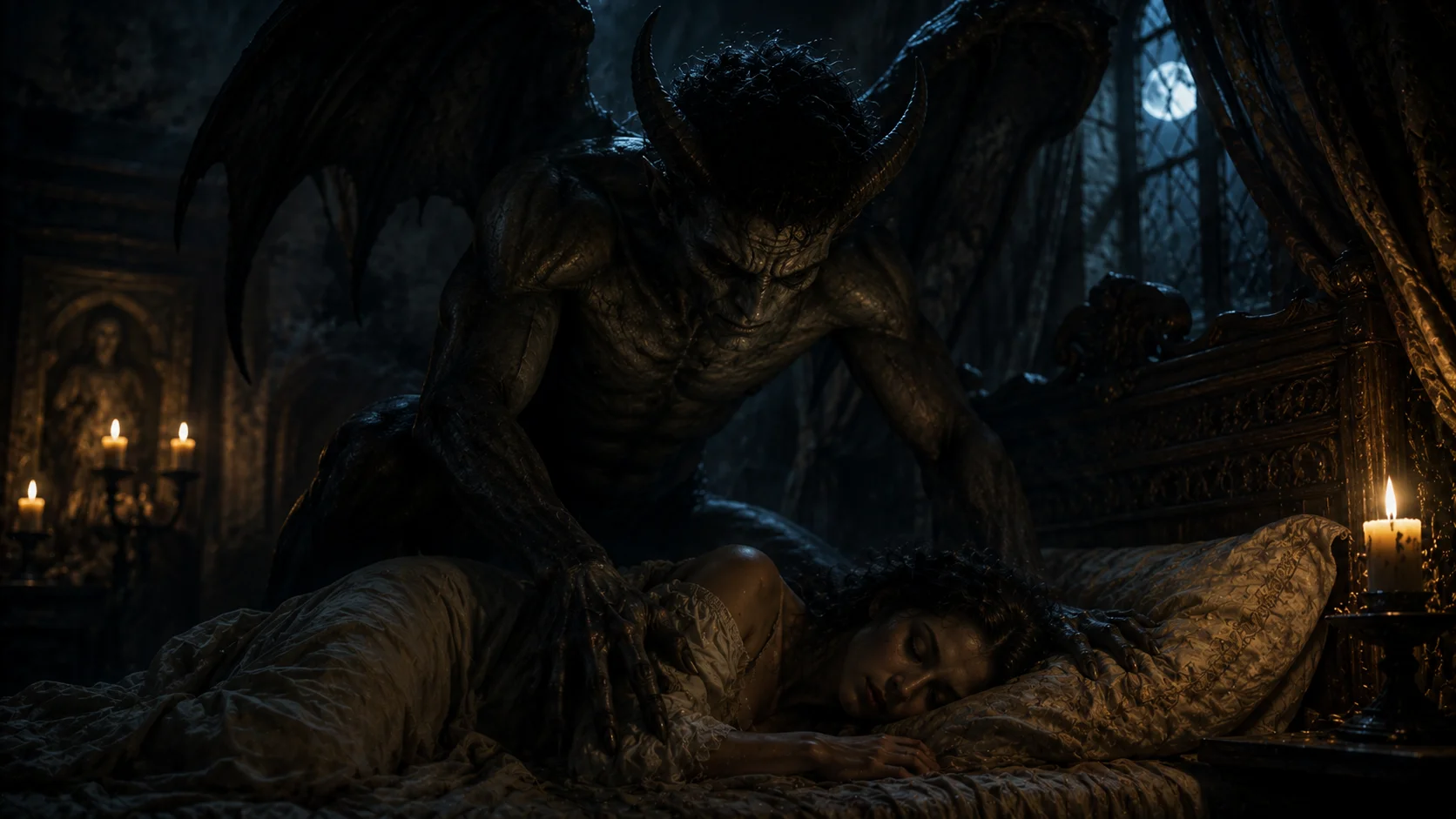
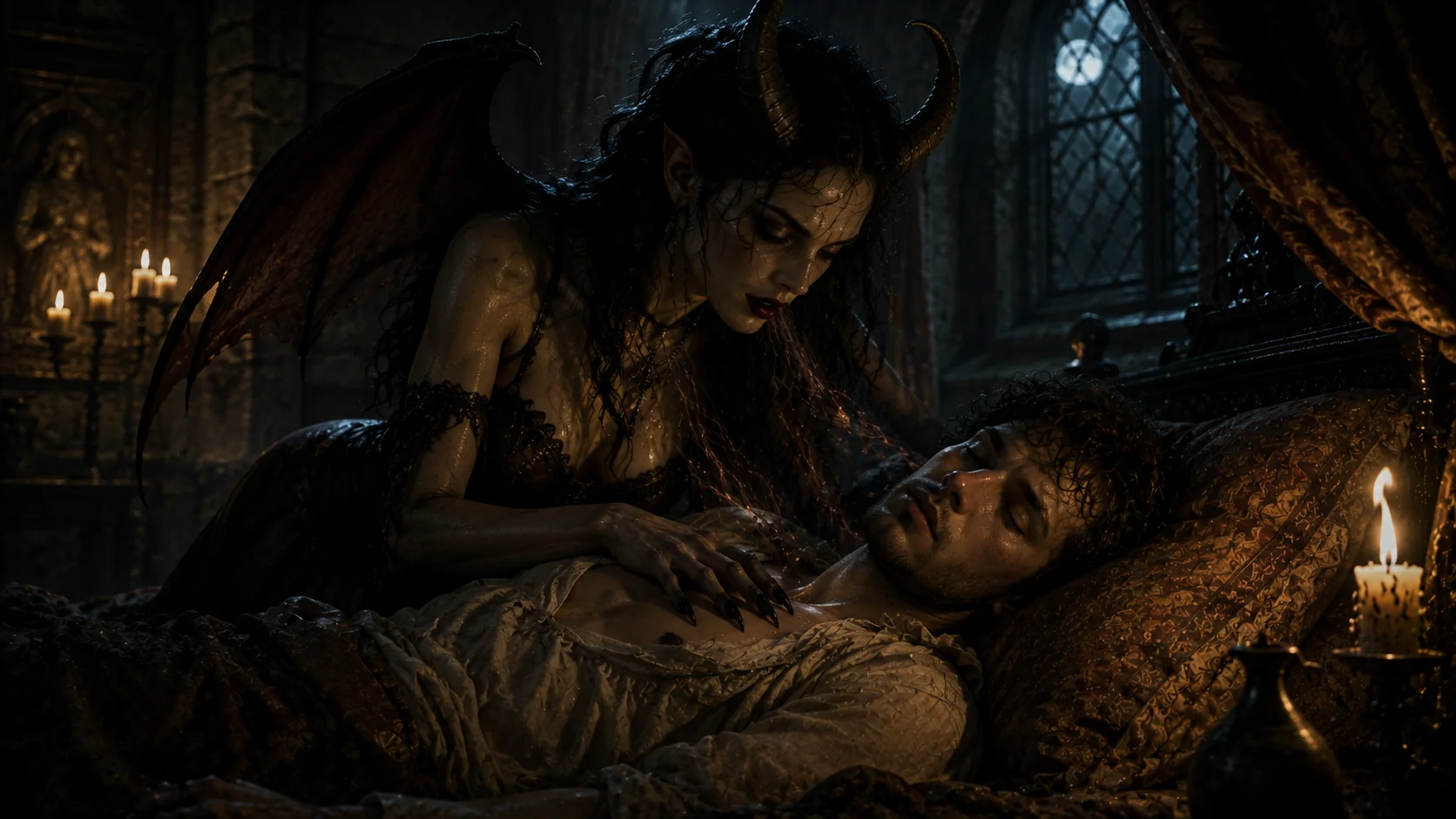
Medieval theological writing did not treat these household and wilderness spirits as harmless folklore curiosities. English folklore compendia frequently group goblins alongside hobgoblins, boggarts, imps, and bogies as related or overlapping subspecies of a single malevolent family, and theological writers of the period placed this entire loose category within a broader taxonomy of malevolent spirits that also included incubi and demons proper. The goblin's kinship, in other words, was not solely with lighter fairy-tale mischief-makers but with the darker company of the demonic — a reminder that medieval audiences did not always draw a firm line between a prankish sprite and a genuinely dangerous supernatural threat.
A Creature Absent from the Bestiary
One negative fact matters as much as any positive claim: the goblin is notably absent from the classical Latin bestiary tradition descending from the Physiologus, the lineage that gave the medieval world its formal, moralized catalogue entries for creatures such as the basilisk. There is no dedicated bestiary entry for the goblin, no standard illumination type, and no fixed manuscript iconography. Where medieval and early modern moralizing writers did put goblin-type spirits to use, it was in a folk-didactic role rather than a formal bestiary moral: cautionary figures invoked to warn against wandering at night, straying from the safe path, or neglecting the proper order of a household. This was a lesson delivered through oral tradition and vernacular storytelling, not through the illuminated, Latin-glossed page.
No Place on the Heraldic Shield
The same absence extends to heraldry. No standardized heraldic usage of the goblin is attested anywhere in the medieval record — a point that sets it apart sharply from creatures such as the basilisk or the dragon, both of which do appear as recognized heraldic charges, carrying fixed symbolic weight on shields and crests. The goblin never achieved that kind of formal, sanctioned status. It remained, throughout the medieval period, primarily an oral and vernacular folklore figure, passed by word of mouth through household and village rather than codified into the visual language of arms and honor.
An Image Borrowed from Later Centuries
Much of what a modern reader pictures when the word "goblin" is spoken — the small, gnarled, grotesque humanoid, wizened and sharp-featured — is not a medieval image at all. Because no dedicated bestiary entry or standard illumination type exists for the goblin as such, that visual standardization belongs to later folklore collection and nineteenth-century literary and illustrative traditions, particularly fairy-tale compendia, which retroactively fixed an appearance for a figure that medieval sources had left essentially undescribed in any consistent way. Reading that later, settled imagery back into the medieval material is a common but mistaken habit; the medieval goblin was, visually speaking, an open question.
Thin Roots, Wide Branches
The goblin's cultural trajectory is one of modest beginnings and outsized later growth. Its medieval roots are comparatively thin and sharply localized — tied above all to Normandy and the Anglo-Norman linguistic world of Ordericus Vitalis's account — when set against what followed. The category persisted and then expanded dramatically through early modern English popular literature: pamphlets, ballads, and cheap print gave the goblin a wider audience and a firmer shape, and it became a stock figure in the folklore studies that emerged in later centuries. What began as a localized Norman demon-name grew, through this slow accumulation of print and popular retelling, into a fixture of English and eventually global storytelling — a pan-English phenomenon built on a comparatively narrow medieval foundation.
The Question Etymology Cannot Settle
Some popular sources go further than the evidence supports, asserting a direct, unbroken etymological and conceptual descent running from Ordericus Vitalis's Gobelinus, through Old French gobelin, to the modern English goblin, complete with continuous traits along the way. Etymological dictionaries do assert this continuity for the word's descent, and that claim is reasonably well supported. But the intermediate folk-belief record — the centuries of oral tradition that would need to connect a twelfth-century Norman demon to sixteenth-century English household sprites — is sparse. The word may well have traveled that route; whether the same bundle of traits traveled with it is a claim that current evidence cannot confirm. It should be treated as uncertain rather than settled fact, a caution that applies to any tidy just-so story about how a single named medieval demon became an entire folklore species.
Kin Without Fixed Boundaries
Within the wider category, several attested variant names and epithets mark out the goblin's closest relatives without ever quite pinning down a single family tree. "Hobgoblin" carries the "hob-" prefix, denoting a rustic or household familiar, and stands as the best-known cousin. Regional English terms such as "boggart" and "bogle" appear repeatedly as well, treated by folklore scholarship as related but not strictly synonymous — each carrying its own regional flavor and shading of temperament even as all of them circle the same basic idea: a small, otherworldly presence capable of mischief or minor harm, depending on which storyteller was doing the telling and which corner of the countryside they came from.
Sources & traditions
- EncyclopediaWikipedia — Goblin
- TraditionMedieval European texts, inscriptions and later retellings
Myths change from area to area and from time to time. This chronicle follows the most widely told versions; tellings in other villages, regions and eras may differ.