Barbarika — Barbarīka, worshipped today as Khatu Shyam Ji — is the grandson of Bhima and the rakshasi Hidimbi through their son, the giant Ghatotkacha: a warrior of such terrifying power that he could have ended the entire Mahabharata war in moments, and who instead became its detached witness and a sacrifice to its fairness. His story does not belong to the Sanskrit critical-edition core of the epic; it survives instead in regional and later traditions — above all the Rajasthani and Braj-region folk and Puranic literature, with strands sometimes traced to the Bhavishya Purana — and should be read as a regional-tradition figure rather than a pan-Indian epic-core one, whose particulars shift from telling to telling.
A Line Born of Bhima and the Forest
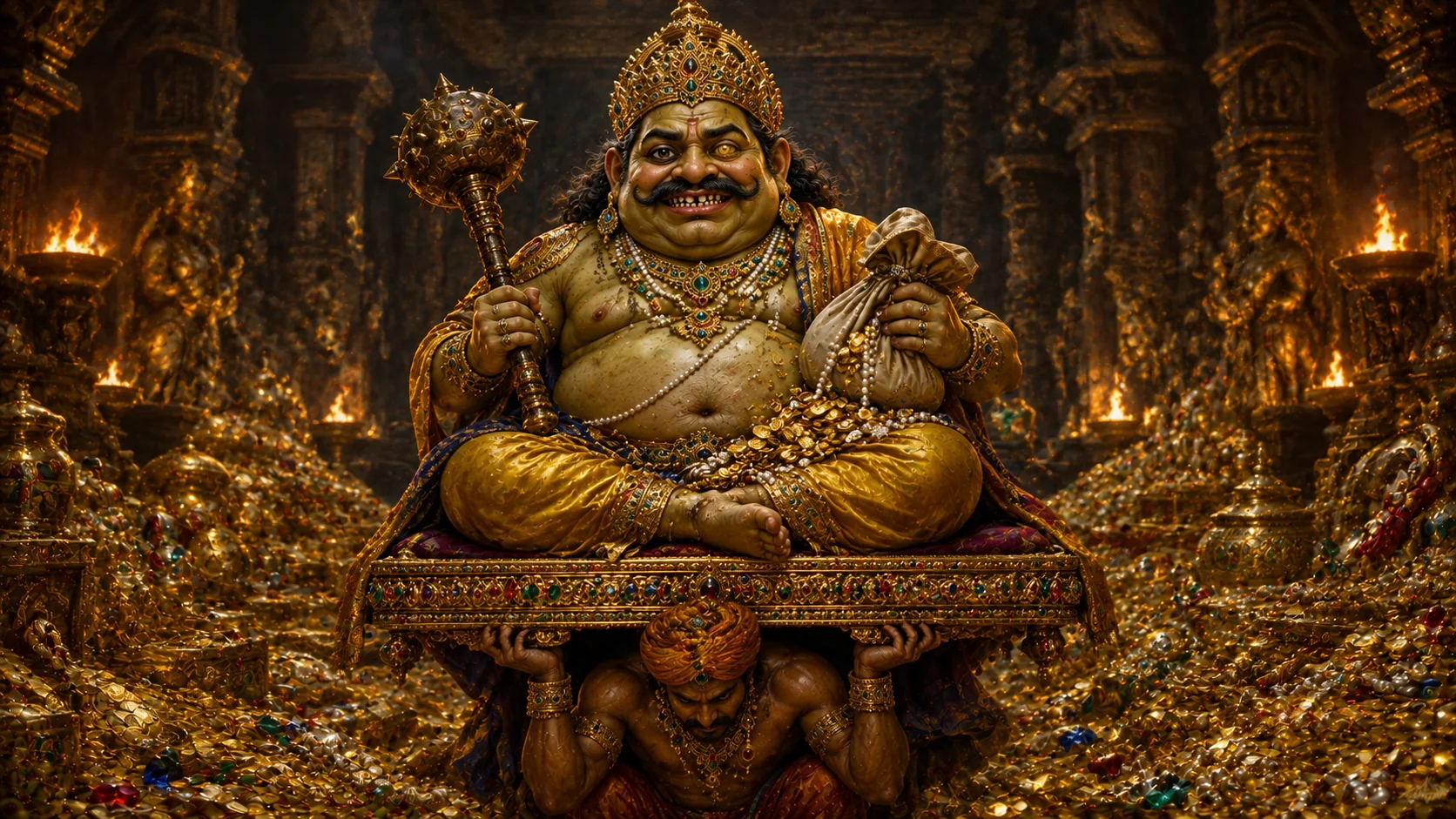
Ghatotkacha's own union with Hidimbi had already produced one of the epic's most formidable half-rakshasa warriors, and Barbarika inherited that same blend of divine Kshatriya blood and rakshasa strength through his father. His mother's name is remembered differently across the regional sources — as Ahilawati, or in other tellings as Kamakatankata or Morvi — a variation the traditions themselves do not try to resolve, and one worth holding lightly rather than flattening into a single "correct" answer. What every version agrees on is the shape of the household he was raised in: a warrior line already touched by austerity, by exile, and by the forest world of the rakshasas, now producing a third generation whose power would exceed even Bhima's and Ghatotkacha's combined.
Austerities and the Bow of Three Arrows
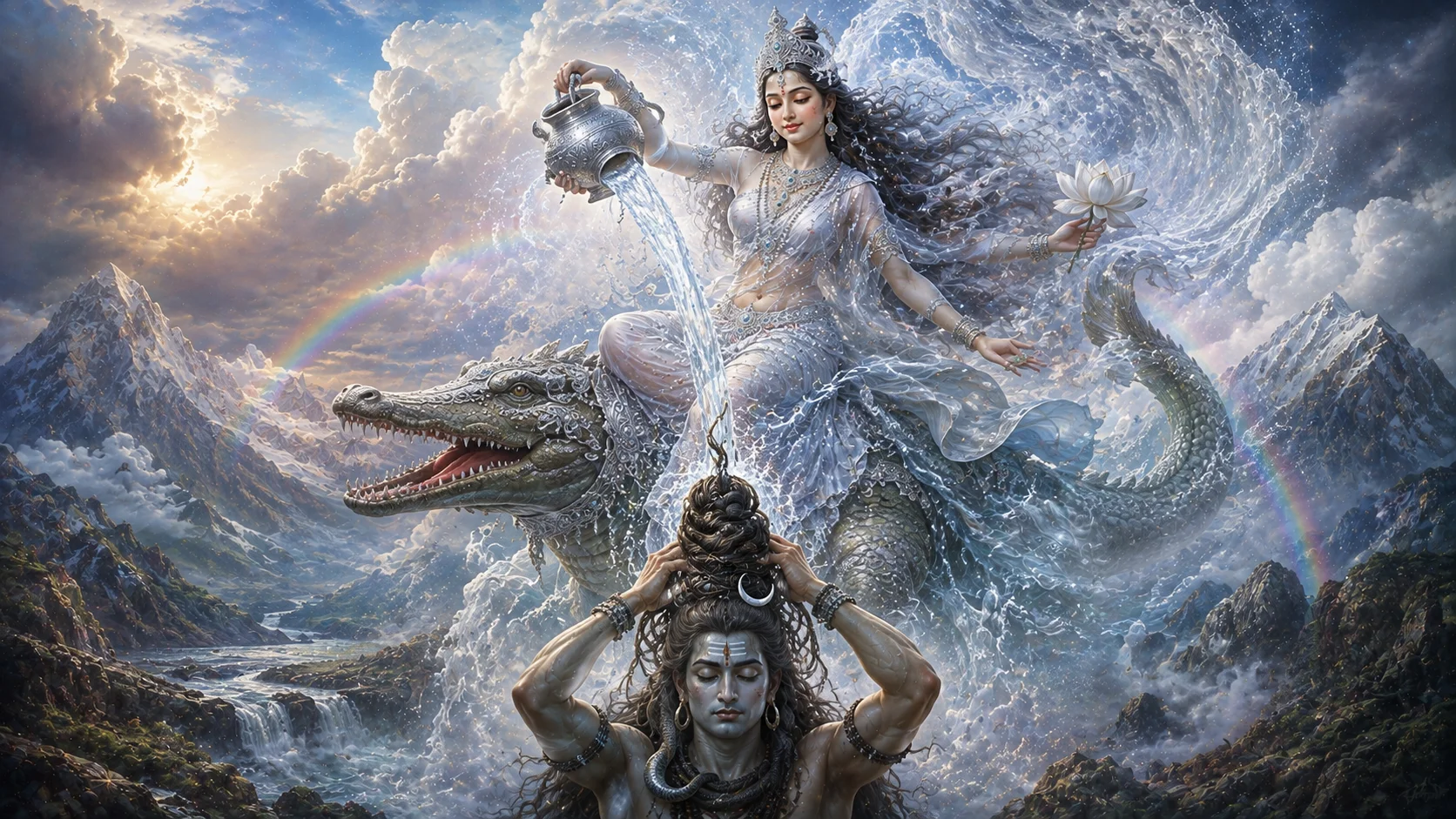
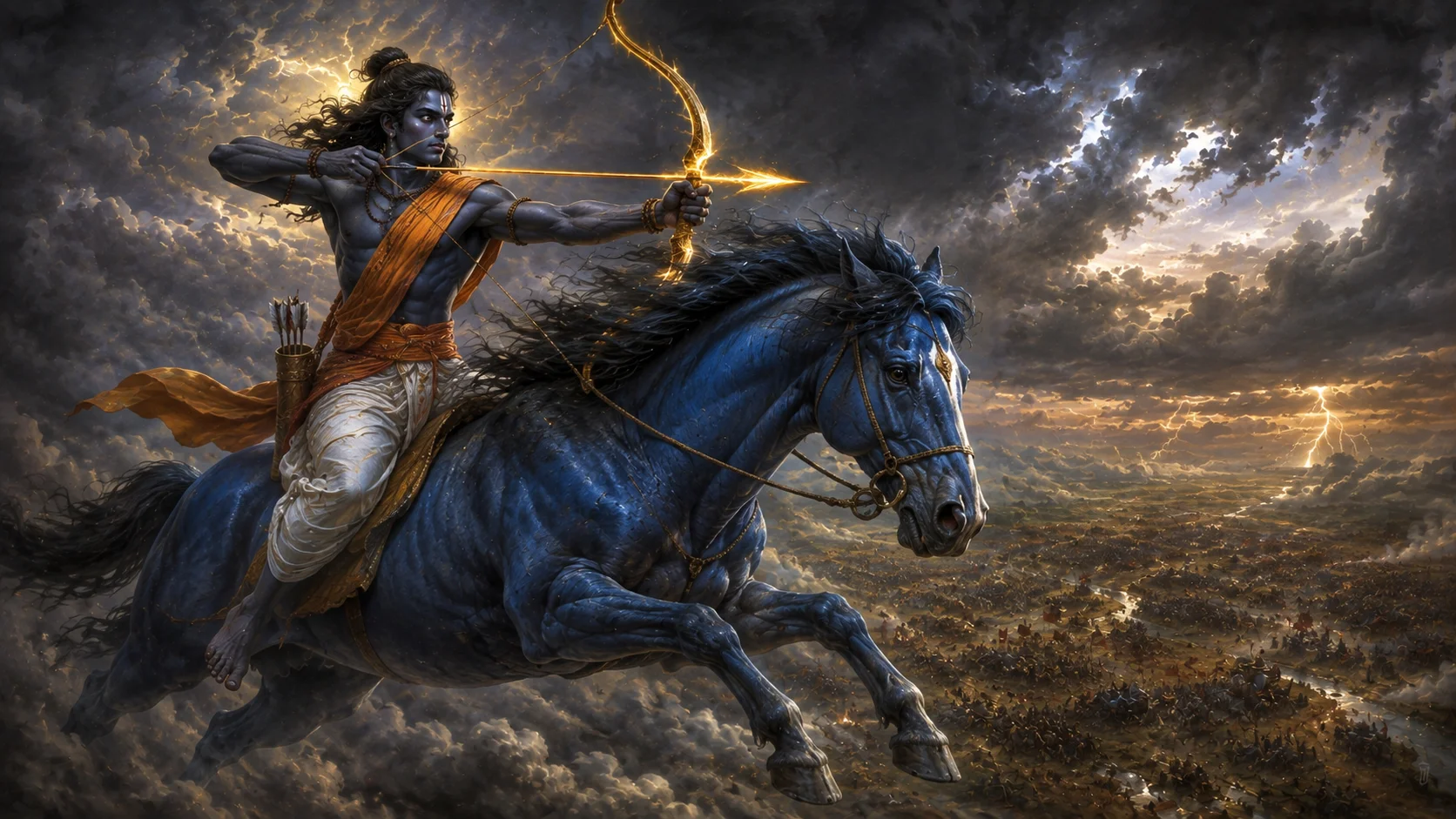
Barbarika did not simply inherit his strength; he earned a weapon beyond it. Through severe austerities directed at Lord Shiva, he was granted — depending on the telling — either three infallible arrows or a single divine bow strung with three such arrows. Their power was total rather than merely great: loosed with intent, they could mark every target destined for destruction and end a battle, any battle, in a single shot. It was not a weapon suited to a contest between armies. It was a weapon suited to erasing one.
A Vow to Stand with the Weaker Side
Before the war at Kurukshetra gathered, Barbarika made a private promise to his mother: he would not fight for kin, or for a cause he judged righteous, or for any prior loyalty at all. He would fight for whichever side was weaker, so that the contest between them would be balanced rather than a rout. It was framed as a warrior's fairness — the strongest weapon in existence, placed in service of an even fight rather than a decided one. What it did not account for was what such a vow would mean once actually set loose on a battlefield of that scale.
The Brahmin on the Road
Krishna foresaw the danger in that vow before Barbarika ever reached the field. A warrior who would always reinforce whichever army was losing could not, in fact, produce a fair fight — he would simply keep the balance tilting back and forth by his own hand, arrow by arrow, until both armies had been ground down to nothing and he stood alone over the wreckage of the very war he had meant to keep even. Disguised as a wandering Brahmin, Krishna intercepted him on the road and, in the manner of a teacher testing a claim too large to be believed, asked to see what the three arrows could actually do.
The Charity a God Requested
Barbarika answered the test as any grandson of that line would — without hesitation, demonstrating the arrows' power exactly as asked and confirming that everything said of them was true. It was then, and only then, that Krishna made his real request. As dakshain — the ritual gift owed to a guru or a Brahmin in exchange for what has been received — he asked Barbarika for his own head, given freely, given before the war had even begun. It was not a punishment and not a trick played for its own sake; it was the only charity large enough to answer a weapon large enough to end the world. Barbarika understood the shape of what was being asked of him, and he complied, drawing his own sword and severing his head with his own hand.
A Hilltop Over the Battlefield
Krishna did not let the gift go unanswered. He granted Barbarika's severed head a boon in return: it would be set upon a hilltop with a clear view over the whole of Kurukshetra, so that the warrior who would never lift a weapon in the war could still watch every day of it unfold beneath him. For eighteen days the head looked down on the field — on the armies, the duels, the reversals, the deaths of men whose fates had already been fixed before the first arrow flew, deaths Barbarika's own three arrows could have delivered in an instant had he been permitted to fight at all.
What the Head Had Actually Seen
When the war ended and the victorious Pandava brothers fell to arguing over which of them deserved the greatest credit for the outcome, someone remembered the head on the hill and put the question to it directly, since it alone had watched the entire war without taking part. Barbarika's answer humbled the room. He had not, he said, seen the Pandava brothers winning the war at all. He had seen only two things moving across that field with any real agency: Krishna's discus, and the goddess — present in her fierce form as Kali, or Mahakali — moving through the ranks. Every death, as far as the watching head could tell, belonged to them. The human heroes, however celebrated, had been instruments carried along by a will not their own.
The Name Given for the Age of Kali
Krishna's response to that answer was itself a blessing rather than a rebuke. He declared that in the age now dawning — the Kali Yuga, the current cosmic age — Barbarika would be worshipped not under his own name but under one bound to Krishna himself: Shyam. Later devotion layered further names onto the same figure, among them Lakhdatar, "the giver of lakhs," a great giver whose generosity was said to match the scale of the gift he himself had once given without hesitation. The self-sacrificing witness of the war's last day became, in that moment, a deity for the age that followed it.
One Head-Gift Among Several
Barbarika's shirdaan, his donation of his own head, is not an isolated motif within the wider body of regional Mahabharata lore; it belongs to a small family of head-donation episodes that recur across Hindu folk tradition, each built around the same underlying idea — that the ultimate offering a warrior can make is not victory but his own head, given in full knowledge of what it costs. Barbarika's version is distinct in its particulars and its consequences, but it draws its power from a motif his audiences would already have recognized, which is part of why it took hold so quickly outside the epic's core text.
Khatu Shyam Ji and the Falgun Pilgrimage
The principal center of his worship stands at Khatu, in Rajasthan's Sikar district, where the Khatu Shyamji temple has grown into one of northern India's major pilgrimage sites. Devotion peaks each year during the Falgun Mela, when pilgrims arrive in vast numbers to honor the god who was once a warrior denied his own war. The temple's prominence is itself part of the figure's story: a character absent from the critical Sanskrit epic has, through regional devotion alone, become one of the most fervently worshipped names associated with the Mahabharata tradition anywhere in the north.
A Tradition That Varies by Design
Because Barbarika's narrative rests primarily on later regional Puranic material and on oral and folk tradition rather than on texts attributed to Valmiki or Vyasa, the exact contours of his story are not fixed the way a critical-edition episode would be. The precise nature of Krishna's boon, the exact wording of the test on the road, even his mother's name — these differ from region to region and teller to teller, and the differences are not errors to be resolved but a mark of how the tradition itself has been carried: living, regional, and never quite settled into a single authoritative form.
Sources & traditions
- EncyclopediaWikipedia — Barbarika
- TraditionHindu texts, oral tradition and village tellings (South Asia)
Myths change from area to area and from time to time. This chronicle follows the most widely told versions; tellings in other villages, regions and eras may differ.